
When employees think back on their most engaged moments at work, they rarely mention software or processes — they talk about people. Workplace connection isn't a cultural luxury anymore; it's a measurable driver of engagement, retention, and performance. Whether your team is in-office, hybrid, remote, global, or spans five generations, building connection intentionally is one of the most strategic things your organization can do.
Key Takeaways:
If you ask employees to think about a time when they were truly engaged at work, their answers usually have little to do with workflows or software. They talk about people. They talk about the teammate who encouraged them during a hard quarter. The colleague who laughed with them during long days. The manager who treated them like a human being, not a headcount.
These aren’t small details. They are the foundation of employee engagement, company culture, and long-term retention.
For years, workplace friendships were seen as a nice bonus. Today, they’re a business necessity. Organizations navigating hybrid work models, global expansion, digital overload, and rising burnout must confront a new reality: employee connection is breaking down.
And when connection suffers, performance suffers.
Companies that are improving engagement, reduce turnover, and build a resilient culture treat workplace connection, recognition, and belonging as strategic priorities—not social perks.
This is the new frontier of employee experience, and the companies that embrace workplace connection are leading the future of work.
Friendship at work isn't about socializing. It’s about building trust, psychological safety, and a sense of belonging, all of which influence:
Employees who have strong relationships at work are significantly more likely to stay, contribute at their highest level, and perform. Motivosity customers see measurable improvements in eNPS, morale, and recognition participation, proving that connection is not abstract—it’s actionable and trackable.
Whether in-office, hybrid, or remote...employees shape your culture through their day-to-day experiences. And it's those experiences that strengthen relationships and increase morale. But, it can be really hard to feel connected to your peers and like you have a friend at work, especially when the modern workplace is spread across regions and ethers.
Here are a few tips and ideas to help make friends at work, spanning teams, timezones, and generations:
These aren't just fluffy workplace tactics, they're human habits that help shape the cultural climate of your team and contribute to a healthier workplace.
Employees can spark connection and build relationships, but HR and leadership need to build the systems and environment that sustain them. Culture isn't (and shouldn't be) a byproduct; it's an intentionally designed experience.
These are some organizational strategies that can help elevate workplace connection from "nice to have" to a competitive advantage:
These kinds of cultural inputs help create the social-emotional environment where friendships—and teamwork—thrive.
Global and remote teams have become a defining feature of modern organizations, bringing incredible diversity and flexibility, but also a new set of cultural challenges. When people no longer share the same physical space, connection doesn’t happen organically. Leaders can’t rely on hallway conversations, informal coaching moments, or shared lunches to build rapport. In distributed environments, connection must be deliberately designed—not casually expected.
But here’s the opportunity: when organizations get intentional about supporting connection across geography, culture, and time zones, remote teams often become more cohesive, not less. The key is understanding what remote employees need to feel part of the bigger picture.
Remote employees often say the same thing: “My work is visible, but I’m not.”
When individuals feel invisible, they disconnect. Successful global organizations counteract this by creating consistent rhythms where employees are recognized, included in conversations, and seen as full contributors. This isn’t about adding more meetings—it’s about adding more moments where people are acknowledged as humans, not bandwidth.
In physical offices, culture forms in the in-between moments—before meetings, walking past desks, chatting in the break room. Remote teams lose these naturally occurring touchpoints. Leaders must intentionally create digital equivalents: employee spaces where people can gather informally, share personal wins, find common interests, and build social familiarity. These shouldn't be viewed as distractions, but as critical elements to building a people-first distributed culture.
Global teams bring different communication styles, humor norms, leadership expectations, approaches to problem-solving, and so much more. Instead of treating these differences as friction points, high-performing teams turn them into learning opportunities. Leaders who prioritize cultural sensitivity create environments where people feel respected and understood—two prerequisites for genuine connection.
Remote and international employees should feel as connected to the company’s identity and mission as those at headquarters. This requires clarity, intentional communication, and repeated reinforcement of values—not through slogans, but through behaviors and relationships. The most successful global cultures make employees feel part of something bigger than their location or role.
Remote-friendly team rituals, global celebrations, learning sessions, and virtual social moments help bridge physical distance. What matters isn’t the format; it’s giving people space to interact as people, not just teammates on a spreadsheet.
Rewards, language options, and communication should adapt to regional needs. Find an employee rewards platform, like Motivosity, that supports global reward options and multilingual access.
Distributed teams aren’t at a disadvantage; they simply require a different cultural blueprint. When visibility, inclusion, and connection are intentionally built into the employee experience, global and remote teams can be some of the most connected, innovative, and resilient groups in an organization.
Five generations working side-by-side is a historic first. It’s also a tremendous opportunity—if organizations support connection intentionally.
Consider the following when asking yourself, "how do I create a culture that engages every generation?"
In today's digital climate, hybrid and distributed teams are a non-negotiable—but they can't rely on water cooler moments or physical proximity. Employee recognition and rewards software that prioritizes the entire employee experience to impact culture, connection, and communication in one ecosystem can be one of the best tools in your toolbox.
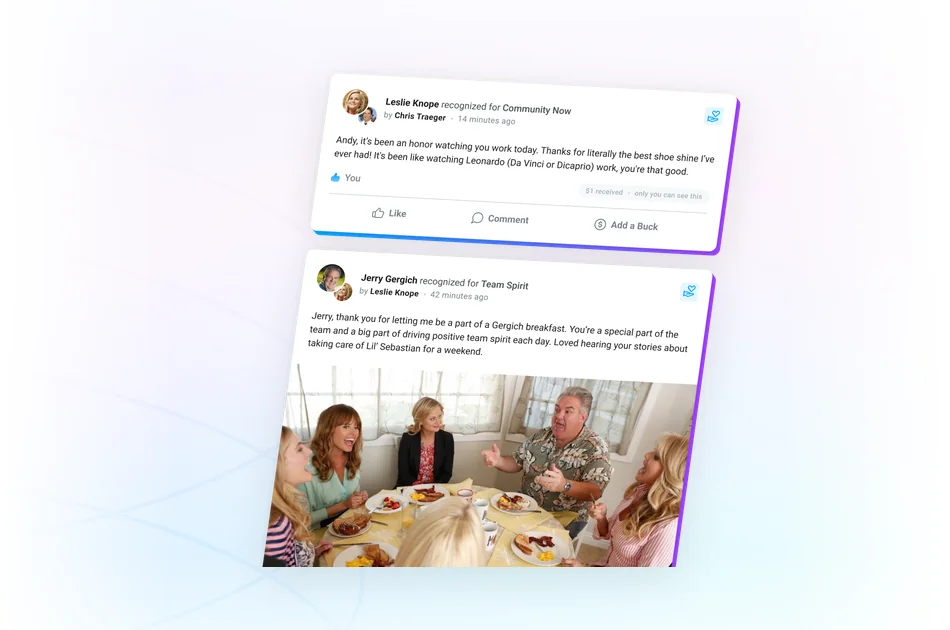
Motivosity is the only people-first employee recognition and rewards software that actually makes a positive impact on culture. It's uniquely built to strengthen the human side of work through features like:
Whether your workforce is global, hybrid, multigenerational, or fast-growing, you can no longer leave connection to chance. You need systems, rituals, and tools that help employees feel seen and supported every day.
Motivosity helps organizations build workplaces where:
If you’re ready to build a workplace where people belong, thrive, and stay—let’s create it together.