
Employee engagement has quietly become one of the most critical business performance indicators in modern organizations. In an era defined by hybrid work, burnout, cost pressure, and rising expectations from employees, engagement is no longer an HR initiative—it’s a leadership and business imperative. Companies with highly engaged employees don’t just feel better to work for; they outperform peers in productivity, retention, customer satisfaction, and profitability.
Yet despite widespread investment in engagement programs, many organizations struggle to see real impact. The issue isn’t effort—it’s approach. Engagement doesn’t come from perks, one-off initiatives, or annual surveys. It’s built through consistent recognition, meaningful connection, aligned values, and systems that make engagement easy to sustain at scale. The organizations that win are the ones that treat engagement as a strategy, not a side project.
Key Takeaways:
Employee engagement describes the emotional commitment employees have to their work, their team, and their organization. Engaged employees don’t just show up—they care. They understand how their work connects to company goals, feel recognized for their contributions, and experience a sense of belonging.
Engagement goes beyond satisfaction or happiness. An employee can be satisfied but disengaged—doing the minimum required. Engagement reflects motivation, connection, and discretionary effort. It shows up in how people collaborate, innovate, support one another, and stay with the organization over time.
At its core, employee engagement answers three fundamental questions:
When those questions are answered consistently and positively, engagement follows.
The workforce has changed—and the stakes are higher. Today’s organizations are navigating remote and hybrid models, tighter budgets, higher workloads, and increased pressure on leaders to do more with less. At the same time, disengagement and burnout are rising.
Research consistently shows that engaged employees:
From a business perspective, engagement directly impacts:
For executives, engagement isn’t “soft.” It’s one of the clearest signals of organizational health—and one of the strongest predictors of long-term success.
While engagement can feel abstract, it’s built on a small set of consistent, repeatable elements. The most successful organizations focus on strengthening these four areas.
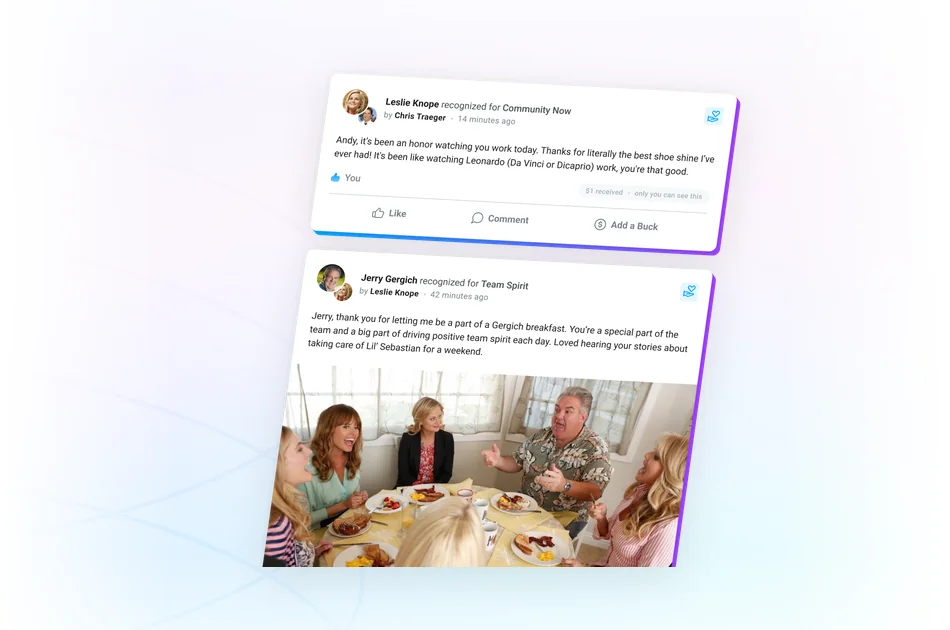
Recognition is the foundation of engagement. Employees want to know their work matters—and that others notice it. When recognition is timely, personal, and visible across the organization, it reinforces positive behaviors and builds momentum.
What works:
What doesn’t:
Recognition isn’t about rewards alone—it’s about gratitude, appreciation, and being seen.
Engagement thrives in connected cultures. Employees who feel isolated—especially in remote or hybrid environments—are far more likely to disengage over time.
Connection comes from:
When people feel like they belong, engagement becomes self-sustaining.
Employees are more engaged when they understand why their work matters. Clear values and purpose provide context for recognition, decision-making, and behavior.
High-engagement organizations:
Values aren’t posters on the wall—they’re reinforced through daily actions.
You can’t improve engagement without understanding it. Regular feedback and engagement measurement allow organizations to identify trends, address risks, and course-correct before disengagement turns into turnover.
Effective engagement measurement includes:
Engagement data should inform decisions—not sit unused.
Despite best intentions, many organizations struggle to move engagement in a meaningful way. Common obstacles include:
The result? Engagement becomes another initiative that launches with enthusiasm—and fades over time.
The strongest engagement strategies share a few defining characteristics:
This is where modern employee engagement platforms play a critical role. When engagement is easy to participate in and simple to manage, adoption increases and impact follows.
In today’s talent market, culture is a differentiator. Organizations that invest in engagement don’t just retain employees—they attract them. Engagement shows up in employer brand, Glassdoor reviews, referrals, and customer experiences.
For executives, the question isn’t whether to invest in employee engagement. It’s whether your approach is strong enough to deliver real results.
When engagement is built into how your organization operates—through recognition, connection, and alignment—it becomes a durable advantage that drives performance, resilience, and growth.