
Employee engagement should be a top priority for companies wanting to see success in 2026. Organizations with highly engaged employees consistently outperform their peers across productivity, retention, profitability, and culture health. Engagement isn’t about perks or one-off programs; it’s about building systems that create connection, recognition, alignment, and feedback at scale.
The most effective engagement strategies combine culture, leadership behavior, recognition, communication, and data-driven measurement into a single, cohesive approach. When employees feel valued, heard, and connected to both their peers and the company’s mission, they don’t need to be pushed to perform—they engage themselves.
Key Takeaways:
Employee engagement is best defined as the emotional connection and level of commitment an employee has to their organization and its goals. Engaged employees don’t just complete tasks—they care about outcomes, collaborate willingly, and actively contribute to the success of the business.
It’s important to distinguish engagement from motivation:
A motivated employee may perform temporarily. An engaged employee sustains performance, advocates for the organization, and stays longer—even in challenging conditions.
The data is unequivocal. Organizations with high employee engagement consistently see:
Conversely, low engagement is expensive. Globally, trillions of dollars in productivity are lost each year due to disengaged employees. At the organizational level, disengagement shows up as missed goals, cultural erosion, management fatigue, and rising attrition costs.
Simply put: you cannot scale a business sustainably without engaged employees.
Most workforces fall into three broad engagement categories:
These employees feel disconnected or negative toward the organization. Left unaddressed, they can undermine morale, culture, and team performance.
Effective Interventions:
Often the largest group, these employees meet expectations but rarely exceed them. They’re at risk of disengagement without intentional support.
Effective Interventions:
These are your culture carriers and performance multipliers. They take ownership, collaborate naturally, and elevate others.
Focus here: retain, develop, and empower them—while using their energy to lift the broader organization.
While engagement looks different across organizations, several drivers consistently have the greatest impact:
Employees engage more deeply when company values align with their own and when they understand how their role contributes to a shared mission.
Workplace friendships, peer interaction, and a sense of community dramatically increase engagement—especially for remote and hybrid teams.
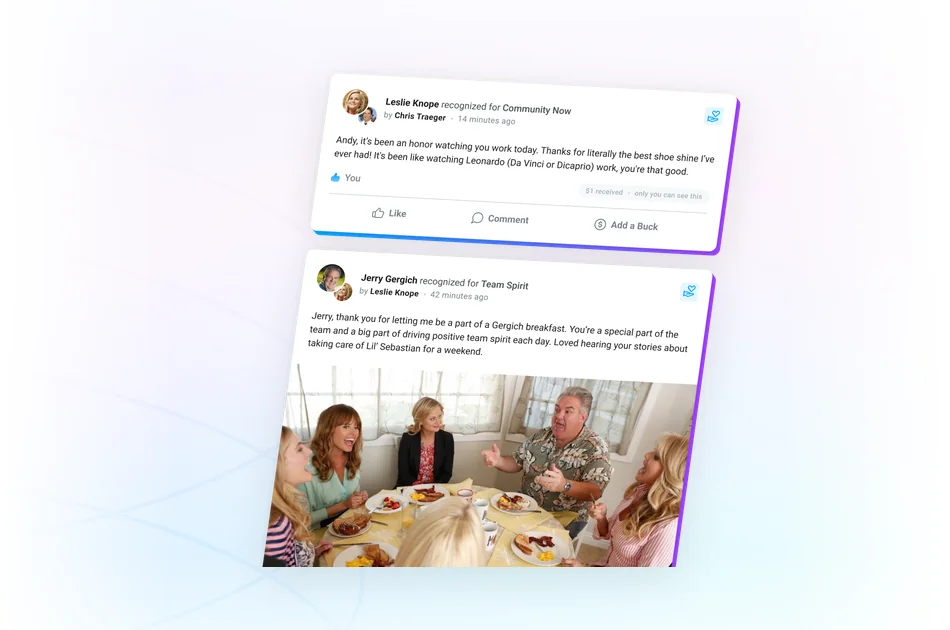
Recognition is one of the most powerful and underutilized engagement levers. Frequent, visible, and values-based recognition reinforces desired behaviors and builds momentum.
Employees who see a future at the organization—through learning, career paths, and skill development—are far more likely to stay engaged long-term.
Engagement rises when leaders are visible, communicative, and supportive. Employees want to be heard, informed, and involved.
Trust, flexibility, and autonomy signal respect. When employees feel trusted, they bring more energy and ownership to their work.
Engagement can’t be improved if it isn’t measured. The most effective organizations use a combination of qualitative and quantitative signals:
Rather than relying on annual surveys alone, high-performing companies measure engagement continuously—allowing leaders to identify risks early and act decisively.
Define what engagement improvement means for your business—retention, productivity, culture, or all three.
Use surveys and feedback to understand current engagement levels and identify priority gaps.
Engagement initiatives should reinforce—not distract from—your business goals and culture.
Employees need consistent, safe ways to share input and feel heard.
Move beyond ad-hoc appreciation. Build recognition, milestones, and development into daily workflows.
Treat employees as humans, not resources. Flexibility and empathy are competitive advantages.
Engagement is not a one-time initiative. Review data regularly and evolve your approach as the organization grows.
If you’re looking to take immediate action:
Small, consistent actions—done well—compound over time.
Employee engagement isn’t a perk. It’s the foundation of performance, retention, and culture. The organizations that win aren’t those with the most programs—they’re the ones that make engagement easy, visible, and embedded into everyday work.
Motivosity helps organizations do exactly that by bringing recognition, rewards, connection, communication, and feedback into one people-first platform—so engagement isn’t something you chase, it’s something you sustain.