Employee engagement is no longer an HR initiative—it’s a performance system. In today’s remote, hybrid, and high-pressure work environment, engagement has become a leading indicator of retention risk, productivity, leadership effectiveness, and culture health. Organizations that fail to measure and manage engagement consistently are flying blind, often reacting too late, after turnover, burnout, or performance issues have already surfaced.
The most effective companies treat engagement as a continuous, measurable discipline, not an annual survey or a collection of perks. By combining clear engagement models with consistent measurement, leaders gain real-time insight into how their people are actually experiencing work—and where to intervene before disengagement impacts the bottom line.
Key Takeaways:
Employee engagement reflects the strength of an employee’s connection to their work, their manager, their peers, and the organization as a whole. It influences how motivated people feel, how much discretionary effort they give, and how committed they are to staying and performing at a high level.
Engagement is shaped by many factors, including:
As remote and hybrid work have become the norm, traditional engagement signals—face time, hallway conversations, manager intuition—have disappeared. At the same time, disengagement has increased. The U.S. Surgeon General has declared loneliness a workplace epidemic, reinforcing what many executives are already seeing: connection and engagement are harder to maintain, but more critical than ever.
When engagement declines, the consequences show up fast:
High-performing organizations don’t guess how employees feel—they measure engagement consistently.
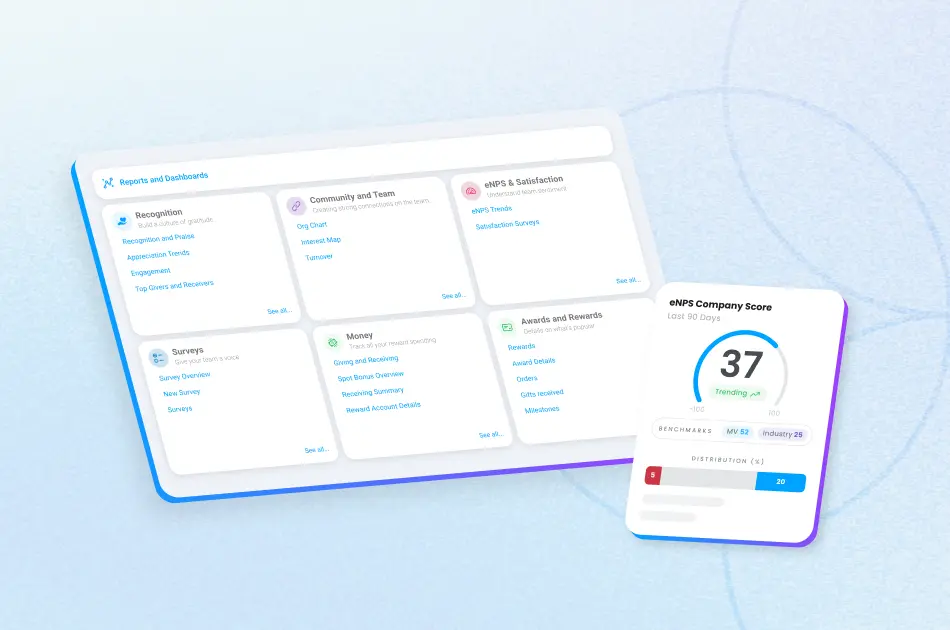
While engagement can be assessed in multiple ways, pulse surveys and sentiment measurement remain the most reliable and scalable approach. Done well, they allow leaders to:
Modern engagement measurement follows three core principles:
1. Consistency
Annual surveys are no longer enough. Engagement changes with leadership shifts, workload spikes, reorganizations, and life events. Quarterly or 90-day pulse surveys provide a dynamic, real-time view of employee sentiment.
2. Conciseness
Survey fatigue kills participation. The most effective engagement surveys focus on 6–8 high-impact questions tied to recognition, leadership, connection, growth, and satisfaction.
3. Actionability
Measuring engagement without acting on it erodes trust. Leaders must be prepared to respond, communicate changes, and show progress over time.
Most engagement frameworks categorize employees into three groups:
Consistent measurement allows leaders to track movement between these groups—turning engagement into a leading indicator of performance and retention, not a lagging metric.
There is no single “right” engagement model. The most effective organizations select—or combine—models that align with their culture, leadership maturity, and business goals.
Developed by David Zinger, this model emphasizes connection, recognition, wellbeing, and purpose through 14 engagement drivers. It is particularly effective in organizations where manager capability directly influences engagement outcomes.
The Gallup model focuses on measurement through structured survey questions that assess whether employees’ fundamental needs—clarity, development, teamwork, and growth—are being met. It’s especially useful for identifying manager-driven engagement gaps.
This model defines engagement as the intersection of contribution and satisfaction. It highlights a common tension in organizations: performance expectations rise while recognition and feedback lag behind. The model reinforces the importance of visible appreciation and meaningful contribution.
Aon Hewitt connects engagement drivers (leadership, brand, performance, basics) to outcomes employees say, stay, and strive. This model resonates with executive teams because it ties engagement directly to talent retention, customer satisfaction, and financial performance.
William Kahn’s research emphasizes three psychological conditions: meaningfulness, safety, and availability. Engagement increases when employees feel their work matters, they can be themselves, and they have the resources to succeed.
This model identifies actionable building blocks such as quality management, two-way communication, wellbeing, and development. Its strength lies in its operational clarity—leaders know exactly where to intervene.
The Schmidt model focuses on hiring and retaining for culture fit. It reinforces the idea that engagement begins before day one—and that retaining the wrong talent can do more damage than slow growth.
Despite their differences, successful engagement models consistently emphasize:
This is where many organizations struggle. Engagement breaks down not because leaders don’t care—but because they lack a system to operationalize these behaviors at scale.
Employee engagement is not an HR problem—it’s a CEO and CFO priority. High engagement correlates with:
Organizations that win don’t treat engagement as a one-time initiative. They build it into daily work through recognition, connection, communication, and continuous feedback.
Motivosity is a people-first recognition and engagement platform designed for today’s workforce. It brings together:
By making engagement visible, measurable, and actionable, Motivosity helps organizations move from intention to impact—creating cultures where people stay longer, perform better, and feel genuinely connected.
Employee engagement hasn’t improved meaningfully in decades because most organizations still approach it reactively. The opportunity today is different. With the right model, consistent measurement, and systems that reinforce connection and recognition daily, engagement becomes a strategic advantage—not a guessing game.
If you’re ready to move engagement from an HR initiative to a business driver, now is the time to act.