
Employee motivation is no longer a soft concept—it’s a measurable indicator of productivity, retention, and business performance. Research consistently shows that motivated employees are more engaged, more productive, and significantly less likely to leave. In a labor market defined by burnout, disengagement, and constant change, motivation has become a leadership responsibility, not just an HR initiative.
The organizations winning today focus on consistent recognition, meaningful connection, and strong leadership, supported by systems that make motivation visible, scalable, and easy to sustain. This guide outlines what truly motivates modern employees, how to measure it effectively, and how leaders can operationalize motivation in a way that delivers lasting cultural and financial impact.
Key Takeaways
Between economic pressure, burnout, and widespread disengagement, today’s workforce is struggling. Gallup consistently reports that roughly two-thirds of employees are disengaged, and research from Oxford University shows that motivated employees are 13% more productive.
The takeaway for leaders is simple:
Motivation fuels performance. Disengagement erodes it.
When employees lack motivation, the downstream effects are costly:
Organizations that prioritize motivation, on the other hand, build cultures where people perform better, stay longer, and contribute more meaningfully to business outcomes.
Employee motivation is the energy, commitment, and willingness employees bring to their work. Motivated employees care about what they do, believe their work matters, and feel connected to their organization.
At a high level, motivation shows up as:
Disengagement is the opposite—and far more common than most leaders realize.
While experts often list many factors that influence motivation, in practice they consistently roll up into three core drivers:
People want to feel seen. Recognition—especially when it’s timely, specific, and public—reinforces the behaviors that drive performance. Consistent appreciation is one of the strongest predictors of engagement and retention.
Motivation thrives in environments where people feel connected to their peers, leaders, and the broader organization. Strong relationships reduce burnout, increase belonging, and make work more meaningful—especially in remote and hybrid environments.
Great leaders create clarity, trust, and psychological safety. They coach, recognize, and empower their teams. Poor leadership, micromanagement, or silence quickly undermines motivation.
Together, appreciation, connection, and leadership form the foundation of a motivated workforce.
Effective motivation strategies recognize that employees are driven by different forces—often a combination of both.
Intrinsic motivation comes from within. These employees are energized by:
They’re motivated when work feels challenging, impactful, and aligned with personal development.
Extrinsic motivation is driven by external rewards, such as:
While rewards alone don’t create engagement, they amplify motivation when paired with recognition and purpose.
The most effective organizations don’t choose one—they design systems that support both.
One of the biggest mistakes organizations make is assuming motivation without measuring it. In reality, only a small percentage of companies truly understand what drives engagement in their workforce.
High-performing organizations rely on a combination of:
Regular, lightweight employee surveys help leaders track motivation trends, identify risks early, and connect engagement data to business outcomes. Consistency matters more than length.
Motivation is personal. Frequent manager check-ins surface individual drivers, concerns, and growth opportunities that data alone can’t reveal.
Employees want more feedback—and not just annual reviews. Ongoing feedback builds trust, alignment, and accountability.
High or rising turnover is often a lagging indicator of low motivation. Monitoring this alongside engagement data provides a clearer picture of organizational health.
Motivation isn’t a one-time initiative. It’s a system leaders must reinforce consistently.
Recognition should be:
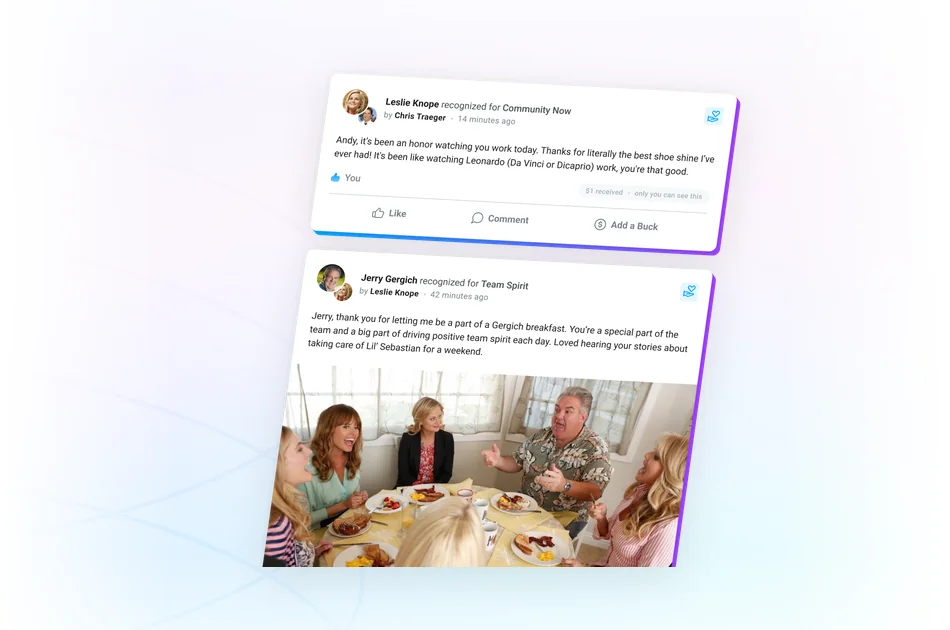
Automated, peer-to-peer recognition systems remove friction and ensure appreciation isn’t dependent on memory or hierarchy.
Rewards matter most when they’re:
Giving employees choice—rather than one-size-fits-all rewards—dramatically increases perceived value and impact.
Opportunities to learn and grow are powerful motivators. Employees are far more likely to stay when they see a future for themselves inside the organization.
Burnout kills motivation. Flexibility, autonomy, and clear boundaries help employees sustain performance without sacrificing wellbeing.
Managers play a critical role in motivation, but they need tools—not more manual work. The right systems enable leaders to recognize, communicate, and engage without adding administrative burden.
The organizations that excel don’t rely on ad-hoc gestures or occasional programs. They operationalize motivation through systems that:
This is where modern employee engagement platforms make the difference—transforming motivation from an intention into a measurable, repeatable business practice.
Motivosity is built on a simple belief: motivated, connected employees perform better and stay longer.
By unifying recognition, rewards, connection, and feedback in one people-first platform, Motivosity helps organizations:
The result is a culture where appreciation is visible, motivation is sustained, and people feel genuinely connected to their work and each other.
If you’re ready to turn employee motivation into a competitive advantage, get a Motivosity demo today.