Employee wellbeing is no longer a “nice-to-have” initiative—it’s a measurable business imperative. Wellbeing extends beyond physical and mental health to include connection, recognition, belonging, growth opportunities, and alignment with company values. Organizations that prioritize employee wellbeing consistently see higher productivity, stronger engagement, improved retention, and lower long-term costs.
High-performing companies treat wellbeing as an embedded system, not a one-off program. By measuring employee satisfaction, reinforcing meaningful recognition, strengthening peer connection, and aligning rewards with values, leaders create scalable environments where employees thrive. Platforms like Motivosity unify recognition, rewards, communication, and engagement into one system—turning wellbeing into a visible, trackable driver of performance.
Employee wellbeing is inherently multifaceted and interconnected. While physical and mental health are often the most visible components, wellbeing also includes:
These factors influence and reinforce one another. When employees feel connected, valued, and supported, their cognitive performance improves, engagement rises, and discretionary effort follows.
The COVID-19 era made this link impossible to ignore. Employees faced heightened stress and uncertainty, yet many organizations also saw productivity increase as flexibility, autonomy, and trust improved. The lesson was clear: wellbeing and performance aren't opposites, they're partners.
There is no universal template for employee wellbeing. What matters is whether organizations create the conditions for people to thrive consistently, visibly, and at scale.
Organizations that prioritize employee wellbeing benefit from clear, compounding advantages:
Well-supported employees bring more energy, optimism, and commitment to their roles. Satisfaction fuels motivation and motivation fuels performance.
Employees who are not overwhelmed by stress or disengagement can focus, problem-solve, and contribute more effectively.
Employees who feel good about where they work become powerful brand ambassadors, influencing hiring, reputation, and customer perception.
When employees believe their wellbeing matters, they are far more likely to invest in long-term initiatives and shared outcomes.
Consistently overlooking wellbeing leads to attrition—and turnover is expensive. Prioritizing wellbeing protects institutional knowledge and reduces recruiting and training costs.
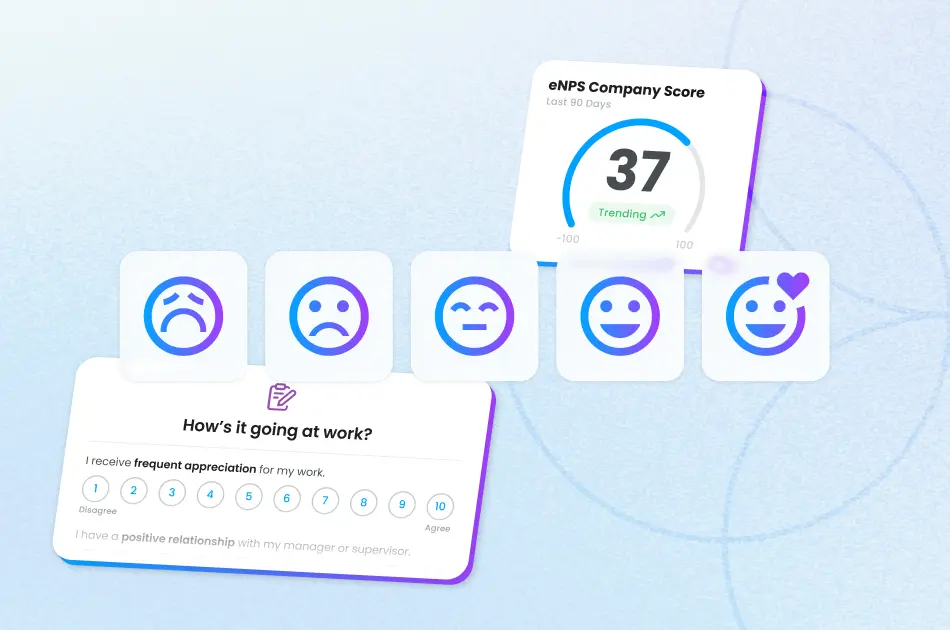
Wellbeing cannot be managed if it isn’t measured. High-performing organizations rely on a combination of quantitative and qualitative signals, including:
Employee satisfaction is often calculated as:
Employee Satisfaction = (Happy Employees − Unhappy Employees) ÷ Total Employees × 100
But leading organizations go further. They track behavioral indicators: how often employees recognize each other, participate in programs, engage with communications, and show up for milestones.
Measurement should be continuous, not episodic, giving leaders real-time visibility into cultural health and engagement risks.
While not everything influencing happiness is controllable, these five factors consistently fall within leadership’s reach:
Employees want to work for organizations that care — about people, values, and impact. Corporate responsibility and authenticity matter more than ever.
Nearly half of employees choose employers based on culture. Real connection — not surface-level perks — drives belonging.
Stress is inevitable. Burnout is not. Organizations that support balance, flexibility, and recovery see better outcomes across the board.
Employees who see a future at the company stay longer. Investment in learning and progression is a retention strategy.
Lack of recognition remains one of the top reasons employees leave. Consistent, meaningful recognition reinforces value and trust.
Years-of-service and milestone awards play a critical role in reinforcing commitment...when done correctly.
Modern service awards go beyond plaques and tenure tokens. They:
Organizations that invest in meaningful recognition programs see significantly lower voluntary turnover and higher engagement—not just among recipients, but across teams.
Service awards are most effective when they are:
Recognition triggers psychological responses associated with trust and belonging, strengthening long-term loyalty.
Wellbeing improves when it’s embedded into daily work — not bolted on as a separate initiative. High-impact actions include:
Create safe, regular channels for employee feedback. Anonymous surveys and sentiment tracking help surface issues early.
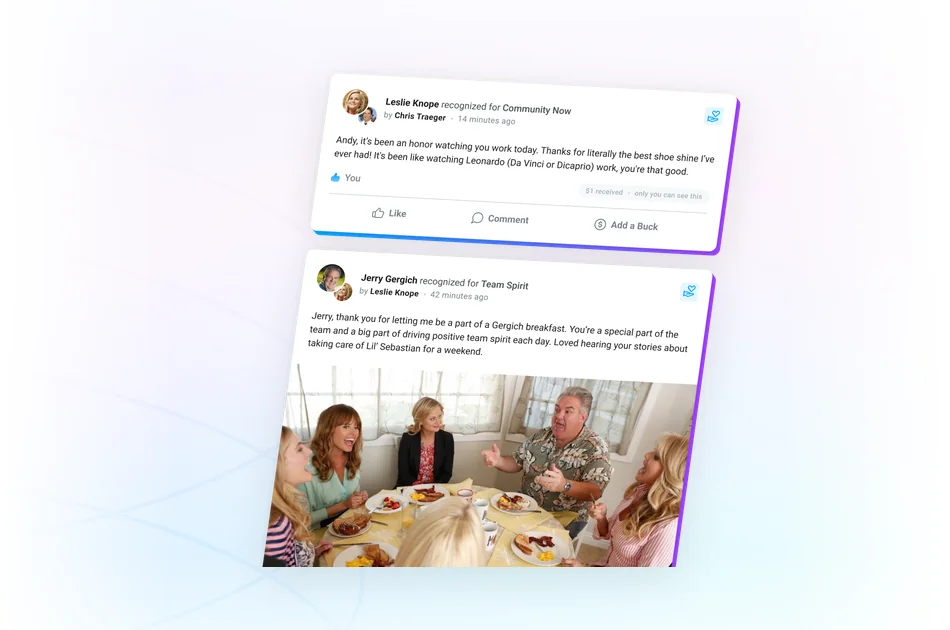
Peer recognition and social connection reduce isolation — especially in remote and hybrid environments.
Recognition tied to values reinforces culture through action, not slogans.
Flexible, personalized rewards ensure recognition resonates with individuals — not just policies.
Organizations with strong wellbeing cultures consistently demonstrate:
These environments don’t happen by accident. They are built through intentional systems that make connection, recognition, and communication easy and visible.
Employee wellbeing directly supports:
Organizations that invest early — and consistently — outperform those that react late.
Motivosity helps organizations strengthen employee wellbeing by making recognition, connection, and engagement part of everyday work — not one-off initiatives or disconnected programs.
As a people-first recognition and rewards platform, Motivosity brings together the core elements that drive a healthy, high-performing culture: frequent appreciation, meaningful rewards, social connection, and clear communication. Employees feel seen and valued through visible, peer-to-peer and leadership recognition, while leaders gain real-time insight into engagement, participation, and sentiment across the organization.
Instead of managing multiple tools for recognition, rewards, communication, and engagement, organizations use Motivosity as a single, unified system to support their people at scale — across teams, locations, and work models. The result is a more connected culture, stronger adoption of people programs, and a wellbeing strategy that delivers measurable impact on retention, performance, and morale.