Employee engagement is declining across industries, and the cost of inaction is rising. Employees increasingly report feeling invisible, disconnected, or undervalued—especially amid return-to-office mandates, distributed workforces, and sustained burnout. Recognition has moved from a “nice-to-have” HR initiative to a core strategy that directly impacts retention, productivity, and culture health.
What’s changed isn’t whether recognition matters—it’s how it must be delivered to work at scale. The organizations seeing results today are moving beyond outdated, one-size-fits-all programs and investing in people-first recognition strategies that are frequent, personalized, inclusive, and deeply connected to business outcomes.
Key Takeaways:
Employee engagement is under pressure.
30% of employees feel invisible at work, and 27% feel completely ignored—a dangerous signal for organizations already facing retention challenges. Gallup reports that only 31% of U.S. employees are engaged, the lowest level in a decade.
At the same time, organizations are navigating return-to-office mandates, tighter budgets, and distributed teams. Employees are being asked to do more—with less flexibility, less certainty, and often less connection. In this environment, recognition has become one of the most effective tools leaders have to rebuild trust, motivation, and belonging.
Research consistently shows that well-recognized employees are significantly less likely to leave and more likely to perform at a high level. Recognition isn’t about optics; it’s about reinforcing the behaviors, values, and connections that keep organizations functioning well.
At its core, employee recognition is how organizations consistently acknowledge effort, impact, and values-aligned behavior. Modern recognition goes far beyond a private “thank you” or an annual award. It is:
When recognition is treated as a system—not an event—it becomes a powerful driver of engagement and retention.
Over the last several years, many predictions about the future of recognition have proven true. What’s changed is the level of maturity and expectation. These aren’t emerging trends anymore—they’re table stakes for modern organizations.
One-size-fits-all employee rewards don’t work in a diverse, multi-generational workforce. Employees want recognition that reflects who they are, what they value, and how they contribute.
Personalization today means:
This shift is especially important for younger employees, many of whom feel misaligned with employer values. Personalized recognition signals that the organization sees employees as humans—not headcount.
Delayed recognition loses its impact. When appreciation shows up weeks or months after the moment, it feels transactional—not meaningful.
Employees want recognition:
Simple, timely expressions of gratitude—done consistently—are far more effective than infrequent, high-effort gestures.
Peer-to-peer recognition has proven to be one of the strongest drivers of engagement because it:
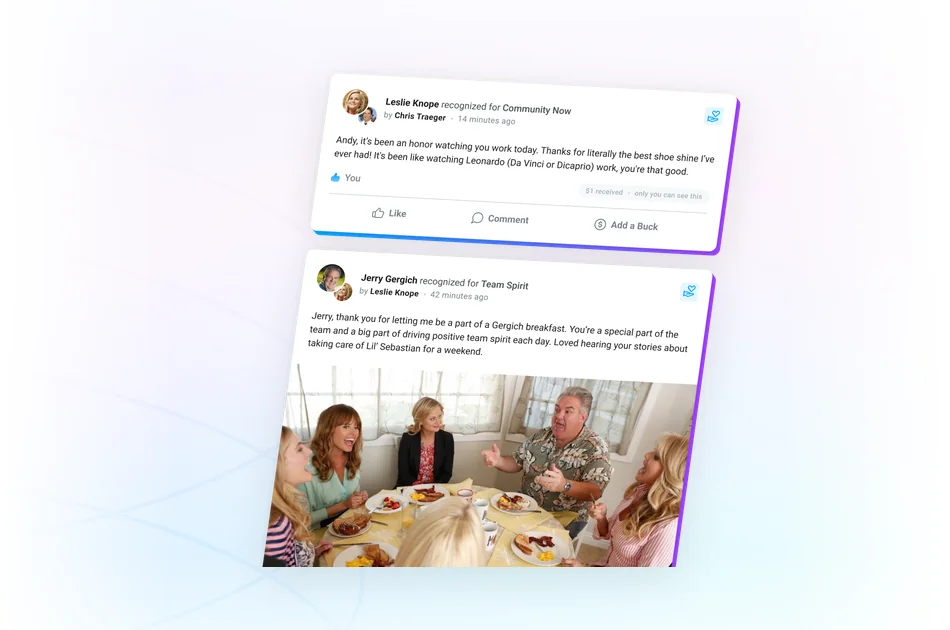
When recognition is shared across the organization—not centralized at the top—it becomes part of how work gets done, not just how it’s evaluated.
A large portion of the workforce doesn’t sit at a desk or log into a laptop daily. Historically, these employees have been underserved by recognition programs.
Leading organizations are investing in:
Inclusive recognition isn’t just fair—it’s essential for engagement, safety, and retention in frontline-heavy industries.
Recognition is most powerful when it reinforces how work gets done, not just what gets done.
Values-based recognition:
When employees clearly understand what behaviors are rewarded, culture becomes intentional instead of accidental.
Employees increasingly expect organizations to support wellbeing and social responsibility. Recognition programs are evolving to reinforce these priorities by:
These programs signal that leadership cares about long-term employee health—not just short-term output.
Hybrid and remote work have made global collaboration routine. Recognition programs must work across:
Digital platforms now make it possible to run global recognition programs without global complexity, while still allowing for local relevance.
As recognition has evolved, several legacy approaches have lost effectiveness:
These approaches don’t reflect how modern teams work—or what modern employees expect.
High-performing recognition programs share a few consistent characteristics:
Technology plays a critical role here—but only when it simplifies, rather than fragments, the employee experience.
Motivosity is built for today's workforce. As the only people-first recognition and rewards platform, it helps organizations:
Recognition isn’t about checking a box. It’s about creating a culture where people feel seen, connected, and motivated to do their best work—every day.