
Employee onboarding has a bigger impact than most organizations realize. The first few weeks shape whether new hires feel connected, confident, and motivated—or overwhelmed and disengaged.
Strong onboarding programs focus on culture, clarity, and connection—not just paperwork and training. When HR teams intentionally design onboarding around people, purpose, and communication, employees ramp faster, stay longer, and engage more deeply from day one.
Key Takeaways:
Employee onboarding has been around for as long as work itself. But while the workplace has evolved—becoming more remote, distributed, and fast-moving—many onboarding experiences haven’t kept up.
For HR teams, onboarding is no longer just about compliance or orientation. It’s about helping employees feel welcomed, supported, and connected to the culture as quickly as possible. When done well, onboarding builds confidence, engagement, and trust from day one.
Below are practical, people-first ways HR and People teams can modernize onboarding and create a stronger employee experience—without adding unnecessary complexity.
New hires want to understand more than policies and processes. They want to know what your company stands for and how people are expected to show up.
Effective onboarding clearly communicates:
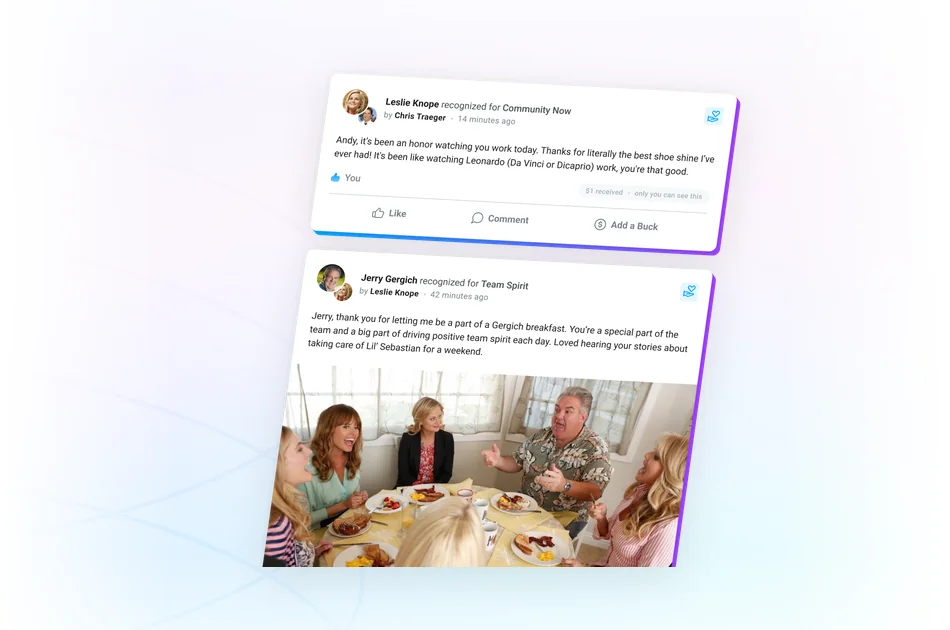
Instead of relying solely on presentations, HR teams can bring values to life by showing real examples of how employees recognize and support one another. Ongoing peer recognition tied to company values helps reinforce culture well beyond onboarding and makes expectations tangible from the start.
Employees feel more engaged when they understand how their work contributes to broader company goals.
Early in onboarding, HR teams should help new hires understand:
Transparency builds trust and reduces the “outsider” feeling many employees experience early on. Centralized internal communication tools help ensure new hires always know where to find company updates, resources, and context.
Onboarding starts the moment an offer is accepted—not on the first day.
Preboarding can include:
Giving new hires early visibility into the company helps reduce first-day anxiety and makes employees feel connected before they officially start. Many HR teams use employee profiles and social feeds to help new hires put faces to names and feel part of the community early.
Few things dampen excitement faster than an overwhelming amount of paperwork.
HR teams should aim to:
When administrative work is simplified, onboarding can focus more on learning, relationships, and culture—where it has the greatest impact.
One of the fastest ways to help new hires feel included is to give them meaningful work early on.
This doesn’t have to be complex. Even small tasks that invite participation or feedback:
Recognizing early contributions—whether through a public thank-you or a small spot bonus—reinforces positive behavior and shows new employees that their work matters from the beginning.
Connection doesn’t happen automatically, especially in remote or hybrid environments.
HR teams can accelerate belonging by:
Tools like employee spaces and interest groups make it easier for new hires to connect with peers naturally and build relationships beyond their immediate team.
Traditional onboarding often relies on one-way information sharing. Unfortunately, that leads to overload—and low retention.
More effective onboarding experiences:
Social onboarding moments—like welcome posts, comments, and reactions in a shared feed—help new hires see how collaboration and recognition really work inside the company.
Unclear expectations are a major source of early frustration.
Strong onboarding helps employees understand:
Pairing this clarity with ongoing recognition helps reinforce progress and keeps employees motivated as they ramp.
Consistent communication is critical during the first few weeks.
Helpful onboarding touchpoints include:
HR teams can also use pulse surveys or early eNPS check-ins to understand how onboarding is landing and identify friction points before they lead to disengagement.
Small moments matter.
Recognizing milestones like:
…helps reinforce belonging and progress. Automated employee milestones and celebrations ensure no important moment is missed—without adding manual work for HR.
Processes are important—but your people should always come first.
Encourage:
When onboarding feels authentic and human, employees form stronger emotional connections to their team and the organization.
A thoughtful onboarding experience helps HR teams:
Onboarding isn’t a one-time event—it’s the foundation of the employee experience.
The most effective onboarding programs don’t live across disconnected tools. They bring communication, recognition, milestones, and feedback into one shared experience.
Motivosity helps HR teams support onboarding with:
Improve your employee onboarding experience today with Motivosity.