
Remote and hybrid work are now standard operating models, not experiments. But many companies are still leading remote teams as if everyone is sitting in the same building. That disconnect shows up quickly in engagement, manager effectiveness, and retention.
Teams that do well in remote environments don’t rely on personality or hustle to hold things together. They design connection into the employee experience. That starts with onboarding, shows up in how managers lead, and is reinforced every day through recognition, communication, and feedback.
Key Takeaways:
Remote work didn’t just change where people work. It changed how culture is built, how managers lead, and how employees experience the company day to day.
In an office, culture shows up naturally. People overhear conversations. Recognition happens in the moment. New hires learn by watching others. When teams go remote, all of that disappears unless it’s replaced intentionally.
Many organizations underestimated this shift. They assumed culture would carry over on its own. Instead, they saw new problems emerge. Teams felt disconnected. Managers struggled to stay visible. Recognition became inconsistent. Engagement dropped quietly.
The companies that adjusted fastest stopped trying to recreate the office. They focused on helping people feel connected and appreciated wherever they work.
In an office, leaders can usually sense when something is off. In remote environments, those signals are easy to miss.
People still get work done. Meetings still happen. Slack stays busy. But underneath that activity, employees may feel disconnected, overlooked, or burned out.
This creates a leadership blind spot. Engagement problems build slowly and surface later as turnover, lower performance, or morale issues that feel sudden but aren’t.
The most effective leaders don’t rely on intuition alone. They make engagement visible. They look at participation, recognition, feedback, and sentiment regularly. They treat engagement as something to manage, not something to hope for.
Onboarding is one of the most important moments in a remote employee’s experience, and it’s often treated as a checklist.
When onboarding focuses only on tools and tasks, new hires miss the bigger picture. They don’t learn how the company works, what behaviors are valued, or how they fit into the culture.
Strong remote onboarding does a few simple things well:
When onboarding gets this right, employees feel grounded quickly. When it doesn’t, people may perform but never fully connect.
For remote employees, onboarding shapes how they view the company long term. If it feels transactional, they assume the relationship is transactional too.
When people feel welcomed and recognized early, they’re more likely to speak up, collaborate, and stay engaged. They trust leadership more. They invest more of themselves in the work.
Onboarding isn’t just an HR responsibility. It’s one of the first signals leadership sends about what kind of workplace this really is.
In remote and hybrid organizations, managers shape the employee experience more than ever.
They are the ones who notice effort, give feedback, reinforce values, and create a sense of belonging. At the same time, they’re doing this without hallway conversations or informal check-ins.
Many managers are expected to figure this out on their own. That’s not realistic.
Remote leadership works best when expectations are clear and systems make the right behaviors easy. Managers shouldn’t have to remember to recognize people or guess how engagement is going. They should have tools that support them.
When engagement slips, managers are often told to check in more, communicate better, or be more empathetic. Those are good instincts, but they don’t solve the root problem.
Managers are busy. Without structure, even good intentions fall apart.
What actually helps is removing friction. Simple ways to recognize work. Visibility into how teams are doing. Clear signals about what matters. When systems support managers, consistency improves across the organization.
Great management shouldn’t depend on personality or memory. It should be built into how work happens.
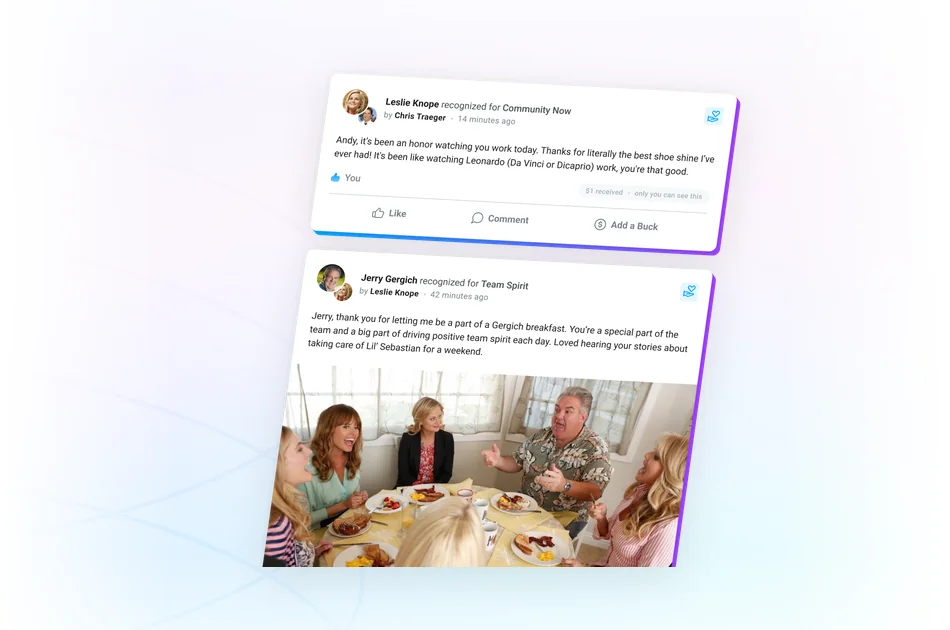
In offices, recognition happens naturally. In remote teams, it has to be intentional.
Recognition works best when it’s:
Recognition isn’t just about feeling good. It shows people what success looks like. It reinforces how work gets done. It connects teams that might never interact otherwise.
When recognition only comes from managers, it doesn’t scale. Peer recognition spreads ownership of culture and keeps appreciation flowing consistently.
Public recognition answers questions employees ask every day. What does good work look like here. What behaviors are valued. How do different teams contribute.
In remote environments, where people don’t see each other’s work as often, recognition fills in the gaps. It turns values into real examples. It makes culture visible.
That clarity helps teams stay aligned even when they’re spread out.
Remote work brings flexibility, but it also brings challenges. Boundaries blur. Social interaction drops. Stress can build quietly.
When people feel disconnected or unappreciated, performance suffers over time. Not because people care less, but because it’s harder to stay energized without reinforcement.
Supporting emotional health doesn’t require complicated programs. It starts with feeling seen. Regular appreciation. Clear communication. Opportunities to connect.
These things aren’t separate from performance. They support it.
Disengagement shows up in real numbers. Turnover. Absences. Lower productivity. Higher costs.
Organizations that invest in connection and recognition see better retention and stronger loyalty. Employees stay longer. Managers lead more effectively. Teams perform more consistently.
Emotional health isn’t a nice-to-have. It protects the business.
When teams are distributed, culture spreads unevenly unless there’s a shared place for it to live.
Without that, teams drift into silos. Communication gets scattered. Recognition becomes inconsistent. Leaders lose visibility.
The strongest remote cultures are built around a central experience where people connect, recognize each other, and stay informed. When connection is easy, participation follows.
Many companies use separate tools for recognition, surveys, communication, and rewards. Each one may work fine on its own, but together they create friction.
Employees don’t know where to go. Managers don’t see the full picture. Leaders get partial data.
When engagement lives in one place, adoption improves. Visibility improves. Culture becomes easier to manage.
The answers to these questions shape whether remote work becomes a strength or a liability.
Remote work is here to stay. The difference between struggling teams and strong ones comes down to how connection is handled.
Companies that succeed don’t rely on perks or one-off initiatives. They build systems that reinforce appreciation, communication, and belonging every day.
Motivosity was built with that idea at its core. When people feel recognized and connected, work gets better for everyone.
Culture still matters when teams are remote. It just requires more intention.
The companies that get this right don’t just manage remote work. They use it to build stronger, more resilient organizations.