Employee engagement is more than a soft, squishy, feel-good initative. Organizations that treat recognition and employee experience (EX) as strategic, shared responsibilities consistently outperform peers on retention, productivity, and profitability. The ROI is real, measurable, and increasingly expected by executive teams and boards.
The shift happening now is simple but significant: employee experience is no longer owned by HR alone, and recognition can’t live in disconnected, manual programs. The highest-performing organizations operationalize gratitude, connection, and recognition through modern platforms that scale across teams, locations, and leadership levels—without adding administrative overhead.
Key Takeaways:
Employee experience and employee recognition are often discussed separately—but in reality, they are deeply connected. Recognition is one of the most powerful drivers of employee experience, and employee experience is one of the strongest predictors of business outcomes.
In today’s workforce, defined by hybrid work, economic pressure, burnout, and rising expectations, organizations can no longer afford fragmented, outdated approaches to engagement. Leaders are being asked a new question:
What is the return on investing in employee experience—and how do we prove it?
The answer starts with recognition.
Employee experience isn’t created by a single program, team, or department. It’s shaped daily through interactions with managers, peers, leaders, and systems.
When organizations treat EX as “HR’s responsibility,” engagement initiatives tend to look like this:
High-performing organizations take a different approach. They recognize that:
Employee experience becomes everyone’s job—but only when it’s supported by the right infrastructure.
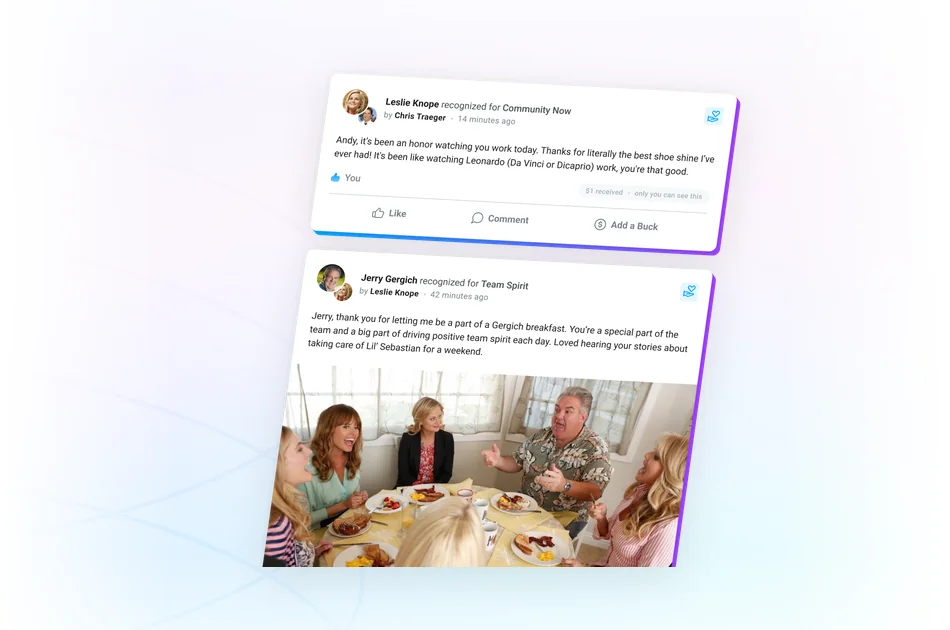
Recognition works when it’s frequent, visible, and meaningful. But manual or outdated recognition systems can’t deliver consistency at scale.
Modern employee recognition software changes that by making recognition:
Organizations that prioritize recognition and engagement consistently report:
In other words, recognition isn’t a perk. It’s a strategy.
The ROI of employee experience and recognition isn’t abstract. It shows up in three core areas executives care about:
Turnover is expensive—financially and culturally. Replacing an employee can cost anywhere from 30% to 200% of their annual salary when you factor in recruiting, onboarding, lost productivity, and institutional knowledge.
Organizations with strong recognition cultures see:
Retention alone often justifies the investment.
Engaged employees don’t just feel better—they perform better.
Recognition reinforces:
When employees feel seen and appreciated, they’re more motivated, resilient, and willing to go above and beyond. That directly impacts output, collaboration, and customer experience.
One of the most overlooked returns on employee recognition software is efficiency.
Without automation, HR and People teams spend significant time managing:
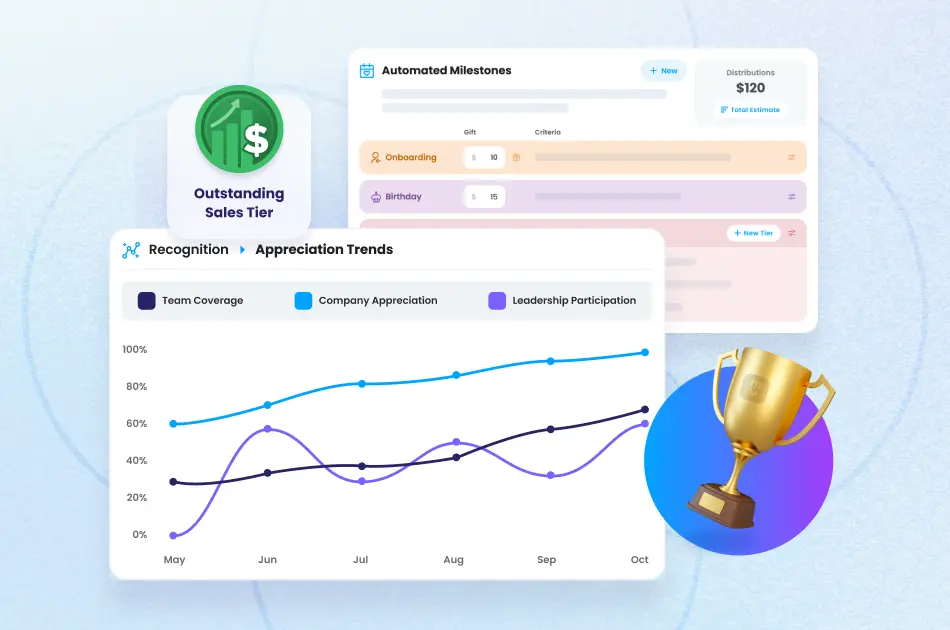
Modern platforms consolidate these efforts into a single system, saving time, reducing errors, and improving budget visibility. More of the investment goes to employees, not administrative work or vendor markups.
Many organizations already believe in recognition—but belief isn’t the same as execution.
Technology is what turns recognition into a scalable, repeatable, and measurable practice. The right platform:
Most importantly, it embeds recognition into how work happens, not as an extra task.
For executives, the conversation around employee experience has shifted.
It’s no longer:
“Is this nice to have?”
It’s now (or at least it should be):
“Can we afford not to do this?”
Recognition and EX influence:
Organizations that treat engagement as a leading indicator (not a lagging one) are better positioned to navigate uncertainty, scale sustainably, and outperform competitors.
Employee experience is everybody’s job—but it requires intentional leadership and the right systems to succeed.
Employee recognition software delivers ROI because it:
When recognition is done right, the return isn’t just happier employees—it’s a stronger, more resilient business.