

Wellness stipends are flexible employee benefits that give employees a set allowance to spend on fitness, mental health, nutrition, financial wellness, and other well-being expenses. Unlike traditional one-size-fits-all wellness programs, stipends empower personalized health choices—driving higher engagement, stronger retention, and measurable ROI for employers.
Organizations that offer wellness stipends report improved employee fulfillment (67% see greater engagement), reduced absenteeism (which costs businesses $225B annually), and stronger employer branding—especially as 90% of candidates consider wellness benefits when evaluating job offers. When implemented strategically and supported by scalable platforms, wellness stipends become a cost-effective, high-impact way to promote holistic employee wellbeing.
For a long time, employee health and wellness were more of an afterthought than a primary focus for many companies around the world.
But times have changed.
Now, many of the world's most successful businesses prioritize employee well-being, offering wellness programs, gym memberships, mental health support, and other benefits to help their employees thrive.
Some have taken this concept even further, offering health and wellness stipends to their workforces. A wellness stipend is a flexible, forward-thinking benefit that empowers employees to elevate their health and well-being, and it could be the perfect upgrade to your existing wellness program.
In this guide, we'll take a look at what wellness stipends are, the benefits they bring, and how best to use them.
Health and wellness stipends are recent additions to the ever-expanding array of employee health-related benefits offered by businesses. More conventional examples include health savings accounts (HSAs) and insurance policies, but a wellness stipend is different in several key ways.
Here's how it works:
A wellness stipend or allowance is a financial benefit aimed at supporting employee health and well-being. Each employee is typically allocated a set budget and has the freedom to spend it as they see fit on various services oriented around health, like fitness and nutrition classes or mental health support services.
The core benefit of these employee stipends is flexibility. Employers can choose how much funding to allocate across their workforce and which sorts of services employees can spend it on. Employees, meanwhile, get the freedom to pick and choose tools and services to help them live happier, healthier lives.
It's worth noting, though, that health and wellness stipends are typically considered taxable income.
So, let's say you assign a $50 monthly wellness stipend to an employee. The IRS will see it as a $50 taxable benefit paid to that person, equivalent to $50 of extra income.
As an employer, you can handle the tax aspect of health and wellness stipends in one of two ways:
An increasing number of businesses are opting to set up their own wellness stipend program and offer flexible health and wellness benefits to their employees.
There are many benefits behind this, and businesses that make clever use of well-being stipends see improvements across numerous critical KPIs, including retention, cost-efficiency, and employee engagement.
Let's dive into some of the reasons why wellness stipends can help move the needle on employee engagement and key business results.
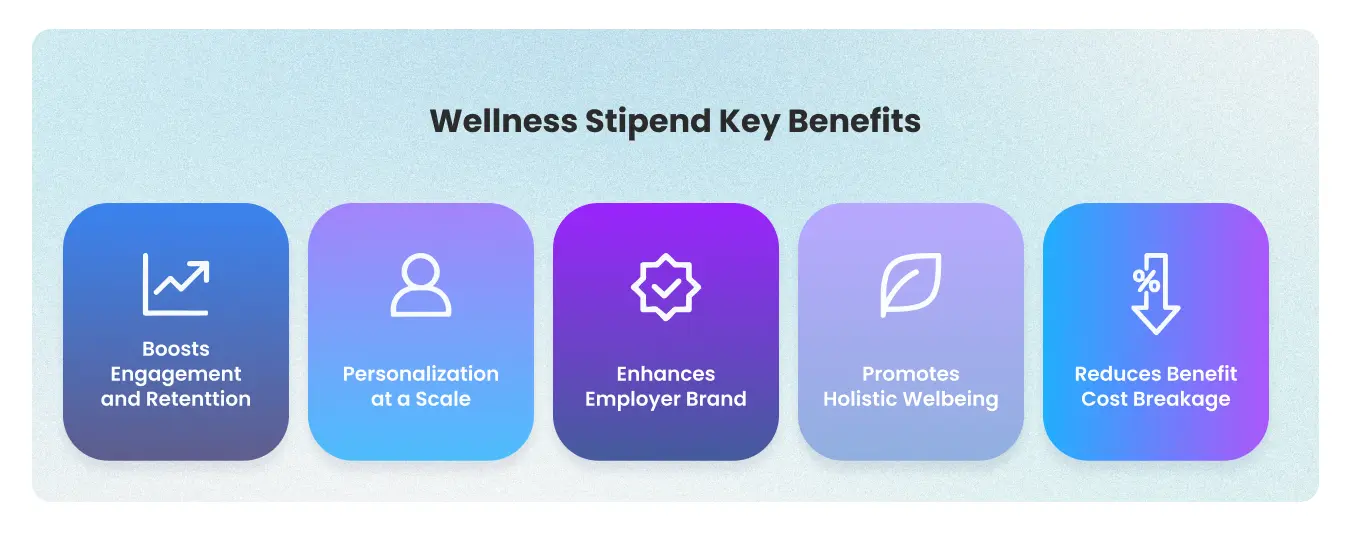
The vast majority of businesses using health and wellness stipends experience increased employee engagement levels, with 67% of employees finding greater fulfillment in their work and being more likely to recommend their employers to others.
And the happier workers get, the less likely they are to leave or consider other options. Businesses with strong wellness benefits therefore also experience enhanced employee retention and avoid the extortionate costs that come with high turnover rates.
Physical and mental health are equally important elements of a person's overall health and wellness. However, many business health programs tend to focus more on one than the other.
Some businesses focus purely on physical fitness, for example, offering gym memberships and classes. Others are more focused on mental well-being, giving employees access to counselors and therapy apps.
The beauty of a wellness stipend program is that it promotes a more holistic approach to wellness, as employees can pick and choose from a range of services to support all aspects of their health.
We've already highlighted the flexibility of wellness stipends, allowing employees to embark on their personal health and wellness journey and achieve their wellness goals.
Everyone is different, after all. Some members of your team might seek to reach peak levels of physical health and fitness. Others may be more concerned with their emotional and spiritual well-being. By offering diverse, versatile benefits, you can empower each of their pursuits without leaving anyone out.
Absenteeism is a costlier problem than you might think, accounting for more than $225 billion in annual costs. That works out to more than $1,600 lost per employee, purely due to them taking time off. And some of the most common reasons for absenteeism are physical and mental health issues.

Prioritizing employee health and well-being is a great way to keep your workforce's absenteeism levels low, as employees with easier access to health benefits will be less likely to fall ill or need time off. Furthermore, reducing anxieties around healthcare costs directly contributes to improved mental well-being and a lower risk of burnout.
Today's top talents are more discerning than ever. When considering offers and options, they don't just look at which employers offer the biggest salaries or benefits package. They care more than ever about other benefits that help them strike the right type of work-life balance.
Indeed, close to 90% of today's professionals consider health and wellness packages when assessing a prospective employer. Many will be drawn to those that offer quality wellness stipend programs. So, setting one up could be your ticket to drawing more top talent to your team.
Many businesses would love to offer more health and wellness benefits to support employee well-being, but they worry about the costs involved with wellness expenses, health insurance premiums, and so on.
A wellness stipend may prove far cheaper and more cost-effective in the long term than any existing wellness programs you have set up. This is because it's easier to control the budget, and employees can choose the benefits that suit them best, maximizing your ROI.
Wellness stipends come in numerous forms, offering a veritable spectrum of flexible benefits for you to share with your employees. These can range from general lifestyle benefits to more specific services and solutions to address particular problems or pain points among your workforce.
Here are just some of the many types of health stipends you might like to offer.
Statistics show that just 1 in 4 Americans today gets sufficient levels of physical health activity. And the poorer a person's physical fitness levels are, the more likely they will be to suffer various health issues that could keep them out of work or prevent them from performing at peak levels.
Employers can change all of that by offering fitness-focused stipends to cover fitness classes and gym memberships.
Tens of millions of Americans struggle with their mental well-being, experiencing issues like anxiety, stress, and depression. Many actively seek mental health support services that help them discuss their concerns, share their emotions, and regain control of their lives.
Mental health stipends can help to cover the costs of therapy services, mental health apps, and other solutions for those who need them.
Statistics show that large percentages of people have poor nutritional habits, failing to intake sufficient levels of key vitamins and minerals through the foods they consume, or eating excessive amounts of fats, sugars, and processed goods.
Wellness stipends can be used to cover expenses that help people eat healthier, e.g., healthy meal delivery services, nutrition classes, and nutrition programs that educate people on good dietary habits.
Health and wellness stipends don't necessarily have to be dedicated entirely to traditional or conventional medical services. They can also lean towards more alternative therapies and preventative wellness-related expenses.
That could include services such as chiropractic care or natural healing methods. These alternative therapy stipends offer employees different ways to pursue their health goals, and while they may not interest everyone, they can be greatly appreciated by some.
Here's one you might not consider in a traditional wellness program. Money is a major source of stress for a large percentage of people today. Many are concerned about their financial well-being or struggle when it comes to budgeting and managing their funds.
To help out, some companies now offer financial wellness stipends that allow employees to pursue financial education workshops, classes, and other support services to enjoy greater financial literacy and control.
If you want to offer the most flexible health stipends, consider a hybrid stipend program with wellness spending accounts.
In this program, employees are each assigned their own account balance (with a set monthly, quarterly, or annual amount, as decided by their employer) to spend on whatever services suit their needs best. They typically have a diverse range of goods and services to peruse, from wearable fitness trackers to professional-grade skincare products.
Health and wellness stipends can cover a vast, varied range of wellness expenses, including:
This list is far from exhaustive. Many other wellness-related expenses can fall under the umbrella of wellness stipends.
To get the most out of a stipend program, you need to set it up correctly. That involves making sure you prioritize employee wellness throughout the process, involving your team in the big decisions, as well as assessing your budget to ensure your program is cost-efficient.
Let's take a look at how to create a successful wellness stipend program, one step at a time.
Firstly, you need to know what your workforce actually wants. With so many possible services to offer, it's easy to feel overwhelmed or pick health and wellness stipend types that don't necessarily align with your employees' best interests or desires.
So, speak with your team early on in the process. Carry out employee surveys or interviews to learn more about them. That will help you identify the right types of employee health stipends and expenses to focus on as you build your program.
With your team's ideal health benefits and targets identified, you can select an appropriate stipend program from the wide range of health and wellness stipends available.
It's also a good idea to invest in a proven stipend platform that will make it easier for your employees to spend their stipend on what they need. Consider running your stipend through your employee recognition and rewards vendor to get the most engagement and participation in your program. Motivosity makes it easy to administer and manage wellness stipends with Lifestyle Spending Accounts directly in their platform.
Next, you’ll need to set a strict budget for your wellness stipend, deciding how much each employee will be allocated, as well as how often the stipend will be renewed or replenished. All businesses have their own approach to this - some offer monthly stipends while others prefer quarterly or even annual ones.
Just remember: stipends are taxable benefits. Keep that in mind and decide how you wish to manage this additional taxable income, either taking on the tax payments yourself or taking them out of employee allowances.
The next step is to set out a clear list of eligible expenses that employees can spend their health stipends or personal wellness allowances on.
Again, this varies greatly from business to business, and it all depends on the needs and preferences of your team, as well as your working culture and philosophy. Some businesses might lean more towards focusing on mental wellness expenses, while others may prefer a broad mixture of eligible expenses.
With your stipend program established, it's important to let your workforce know all about it. By clearly outlining program details from the outset, you encourage early employee participation, enabling them to understand their benefits and realize the value firsthand.
If you're transitioning from more conventional wellness programs, employees may have a bit of confusion at first regarding how the new system works. This is why clear communication is important and can make all the difference in your program's long-term success.
In general, it's not wise to simply launch an employee wellness stipend program and expect it to be perfect right away. Often, programs like this require fine-tuning over time.
With that in mind, you should continuously track the effectiveness of your stipend scheme, ensuring program sustainability by asking for employee feedback and monitoring key metrics to see what works well and what needs improvement.
While wellness stipend programs bring benefits for both employees and employers, they can also present unexpected challenges, particularly early on, when you're first trying to get employees involved. Solving these issues often comes down to adjusting company culture and communicating more effectively.
Here are some common challenges, as well as ways to overcome them:
With all of the benefits taken into account, it's not hard to see why so many businesses are implementing health and wellness stipend programs to promote employee wellness. By covering some of your team's healthcare costs and granting them the flexibility to pursue improved employee health benefits in the ways that suit them best, you can see boosts to engagement, retention, morale, and productivity.
In short, wellness stipends are 100% worth it, as long as you put in the necessary time, preparation, and effort to set up a scheme that suits your team just right.