
Teamwork is no longer a byproduct of proximity—it’s a leadership responsibility. In today’s hybrid and distributed workplaces, collaboration doesn’t happen organically. Without clear communication systems, visible recognition, and intentional connection, teamwork breaks down—slowing execution, stalling decisions, and increasing disengagement.
High-performing teams are built through clarity, trust, and consistent reinforcement of the right behaviors. Leaders who simplify communication, model healthy conflict, and embed recognition into the flow of work create scalable systems that strengthen alignment and performance. In modern organizations, teamwork isn’t a soft skill—it’s an execution strategy.
Teamwork used to benefit from proximity. People overheard conversations, asked quick questions, and built relationships naturally just by being in the same place. That context is mostly gone.
Now, teams collaborate across locations, time zones, and tools. Employees spend more than half their time working with others, yet many still feel disconnected from the broader organization. Important updates get missed. Feedback feels sporadic. Recognition happens unevenly, if at all.
When teamwork breaks down, the impact shows up quickly:
At that point, teamwork isn’t a culture issue; it’s an execution problem. And execution is squarely a leadership responsibility.
In high-performing teams, there’s a sense of momentum. People know what they’re working on and why it matters. They understand how their work connects to the bigger picture. When something changes, they hear about it quickly and clearly.
Just as important, people feel comfortable speaking up. They ask questions without worrying how it will be perceived. They give feedback—and receive it—without defensiveness. They recognize each other’s contributions naturally, not because a policy says they should.
That environment isn’t accidental. It’s the result of consistent behaviors reinforced by simple systems.
Most organizations don’t suffer from a lack of communication. They suffer from poorly designed communication.
Messages are scattered across too many tools. Meetings try to cover too much. Context gets lost as information moves from team to team. Over time, people stop paying attention—not because they don’t care, but because it’s hard to tell what matters.
Effective communication starts with simplification.
Strong teams are clear about where different types of communication live. They don’t expect employees to hunt for updates or guess where conversations are happening. When something is important, it’s shared in a visible, consistent place. When a meeting is scheduled, it has a clear purpose. When expectations change, context is provided.
Good communication removes friction. Great communication builds confidence.
Teams don’t collaborate well if they don’t feel connected. That doesn’t mean everyone needs to be close friends, but it does mean people need a basic sense of trust and familiarity.
When connection is missing, collaboration becomes transactional. People hesitate to ask for help. Feedback gets filtered or withheld. Small issues turn into bigger problems simply because no one feels comfortable addressing them early.
Connection is built through everyday moments, not big initiatives. It grows when people see each other’s work recognized, when milestones are acknowledged, and when there’s space for human interaction alongside task-focused communication.
In modern organizations, connection has to be woven into the flow of work. If it’s treated as something separate, it won’t scale.
Recognition is often underestimated because it feels intangible. In reality, it’s one of the fastest ways to reinforce what matters.
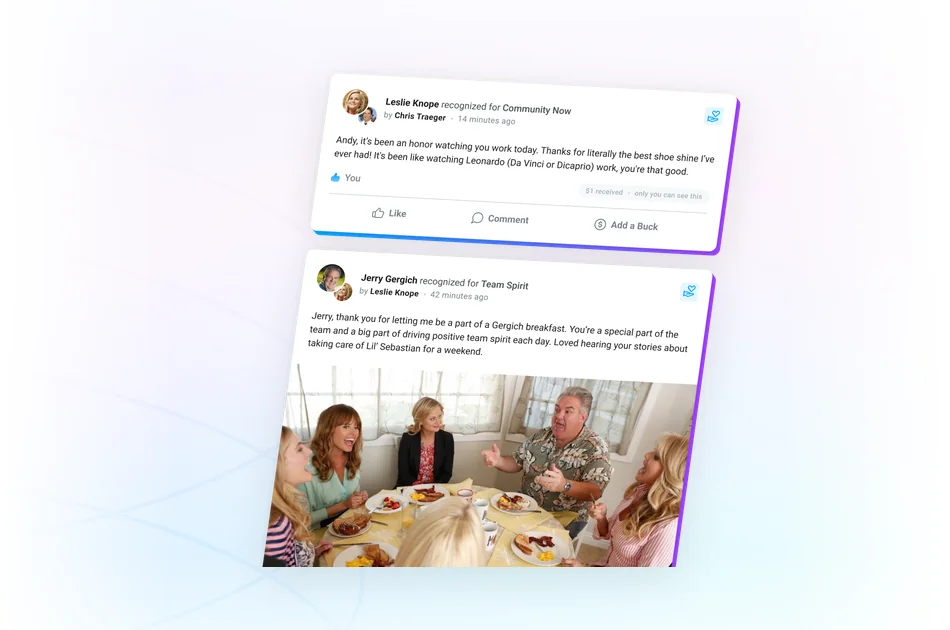
When people see good work recognized—especially by peers—it sends a clear signal about priorities. It shows what behaviors are valued. It reminds employees that their contributions are seen, even when the work itself is demanding or repetitive.
The most effective recognition isn’t elaborate or expensive. It’s timely, specific, and visible. It happens close to the moment of impact, and it’s shared in a way that others can see and learn from.
Over time, recognition doesn’t just improve morale; it strengthens alignment.
Strong teamwork doesn’t mean constant agreement. In fact, teams that never disagree often struggle to innovate.
Healthy teams know how to navigate differences. They listen before responding. They validate perspectives, even when they don’t align with them. They focus on outcomes rather than personalities.
This kind of cohesion is built on trust. People need to believe that disagreement won’t be punished and that their ideas will be taken seriously. Leaders play a critical role here; not by controlling conversations, but by modeling curiosity, humility, and respect.
Leaders don’t create teamwork through speeches or slogans. They create it through behavior.
Teams pay close attention to what leaders do consistently: how they communicate, how they recognize effort, how they respond to feedback, and how they handle mistakes. Those signals shape culture faster than any formal program.
Managers, in particular, need support. They’re often expected to drive engagement, alignment, and recognition without clear systems or the right tools. When leaders simplify expectations and provide consistent platforms, managers can focus on leading rather than administrating.
As organizations grow, complexity creeps in. More tools. More programs. More processes. Eventually, even good intentions start working against engagement.
The most effective organizations simplify and consolidate the employee experience. They bring communication, recognition, and connection together in one place, making it easy for people to participate without extra effort.
When teamwork is easy to engage in, it becomes habitual. When it’s fragmented, it fades.
High-performing teams aren’t built on charisma or chance. They’re built through clear communication, consistent recognition, and genuine connection supported by systems that scale.
When teamwork is intentionally designed, everything else gets easier: alignment, execution, retention, and culture.
That’s not soft.
That’s smart leadership.