
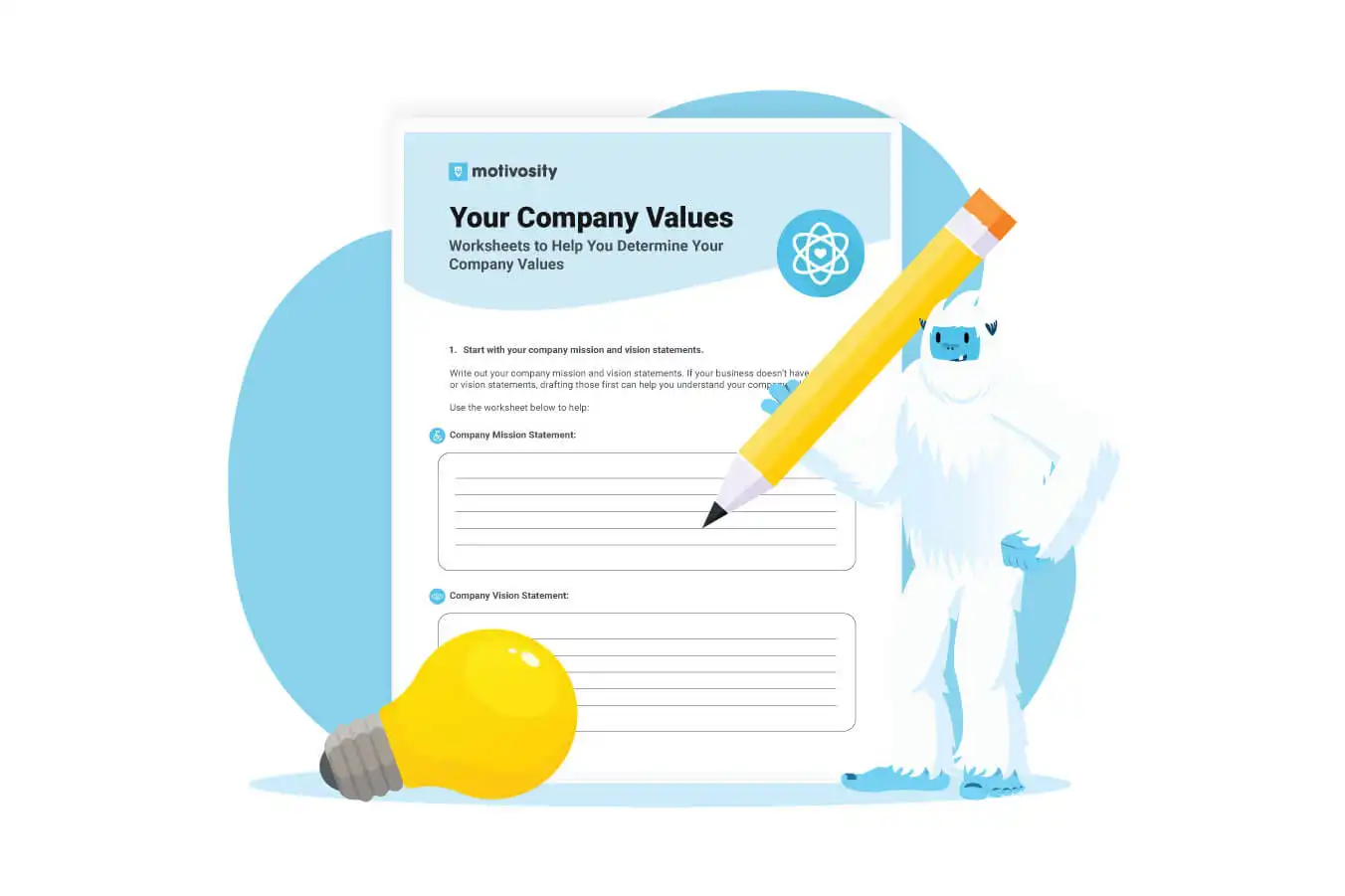
Company values are most effective when they’re clear, authentic, and created with intention—not when they’re copied from another company or left abstract. This worksheet-based approach simplifies what often feels like an overwhelming exercise by breaking value creation into a structured, collaborative process. By grounding values in mission and vision, gathering broad input, and refining thoughtfully, organizations can define values that genuinely reflect who they are and how they want to operate.
The power of this approach lies in shared ownership and simplicity. Values developed collaboratively are more likely to be remembered, referenced, and lived day-to-day. When values are limited in number, easy to articulate, and tied to real behaviors, they become practical tools for decision-making, culture-building, and long-term alignment—rather than posters on a wall.
Key takeaways
When company values are defined with clarity and care, they don’t just describe culture—they actively shape it.
Company values shape how work gets done, how decisions are made, and how people show up every day. But defining meaningful values can feel overwhelming—especially if you don’t know where to start.
This worksheet-based approach breaks the process into simple, manageable steps so your team can create company values that are clear, authentic, and actionable.
Whether you’re defining values for the first time or refining existing ones, this guide will walk you through the process.
Strong company values are grounded in a clear sense of purpose.
Before defining values, take time to articulate (or revisit) your company’s:
If you don’t yet have formal mission or vision statements, that’s okay. Drafting them as part of this process will make your values clearer and more meaningful.
Ask yourself:
Next, bring together employees and leaders to brainstorm potential values.
Each participant should write down five values they believe align with the company’s mission and vision. These can be:
This step works best when everyone contributes individually before discussing ideas as a group.
Once you’ve collected ideas, it’s time to refine.
Review the full list and:
The goal is to narrow your list down to five to eight core values—enough to be meaningful, but not so many that they become hard to remember or apply.
Clarity is more powerful than quantity.
Now it’s time to finalize your values.
You can choose one of two formats:
To keep values effective:
Clear language helps values become part of everyday conversations—not just documents.
This worksheet-driven approach helps teams:
Values created collaboratively are far more likely to be lived—not just listed.
Company values shouldn’t feel abstract or aspirational—they should feel practical and real.
By starting with your mission, gathering input, refining thoughtfully, and choosing clear language, you create values that guide behavior, shape culture, and support long-term success.
Ready to walk through this process with your team?
👉 Download the printable Company Values Worksheet to use in workshops, leadership sessions, or team discussions.