TL;DR
Onboarding is not a one-day HR event—it’s a critical business process that directly impacts time-to-productivity, engagement, and retention. The strongest onboarding experiences are intentionally designed to start before day one and continue through the first 90 days, ensuring new hires feel prepared, welcomed, and connected early. When onboarding is structured and consistent, employees ramp faster, build relationships sooner, and are significantly more likely to stay.
The organizations that treat onboarding as a competitive advantage focus on connection, clarity, and follow-through. From thoughtful pre-boarding and a strong first-day experience to ongoing manager check-ins, feedback loops, and surveys, effective onboarding creates alignment between the employee, their manager, and the company. It shifts onboarding from a checklist to a culture-building moment—one that sets expectations, reinforces values, and accelerates long-term success.
Key takeaways
- Onboarding starts before day one—pre-boarding sets confidence and momentum
- First impressions matter: the first day shapes the emotional employee experience
- Early connection (team welcomes, mentors, manager 1:1s) drives faster integration
- Structured onboarding across the first week, first month, and first 90 days improves retention
- Managers play a critical role—ongoing check-ins and clarity fuel engagement
- Feedback loops (30- and 90-day surveys) help catch issues early and improve the process
- Strong onboarding accelerates productivity, belonging, and long-term performance
- When done intentionally, onboarding becomes a strategic advantage, not an HR task
The Ultimate Employee Onboarding Checklist: From Pre-Boarding to 90 Days
A great onboarding experience doesn’t happen by accident.
It’s the result of intentional planning, consistent communication, and thoughtful follow-through—long after a new hire’s first day. When onboarding is done well, employees ramp faster, feel connected sooner, and are far more likely to stay.
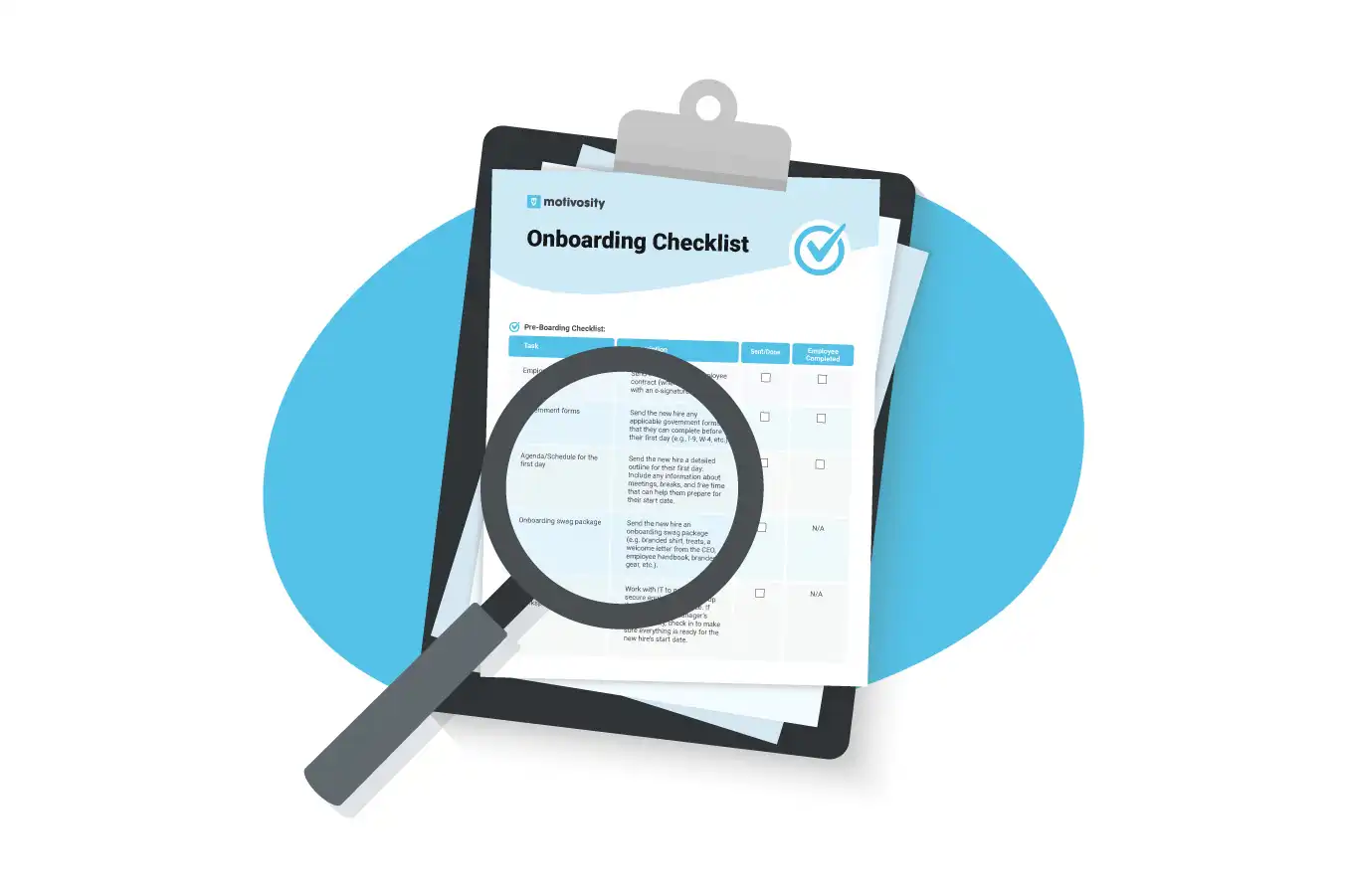
This checklist walks through everything you need to build a strong onboarding experience, from pre-boarding to the first 90 days and beyond.
Pre-Boarding: Set the Tone Before Day One
Onboarding starts the moment a candidate says “yes.”
Pre-boarding helps new hires feel prepared, welcomed, and confident before they even walk through the door (or log in remotely).
Key Pre-Boarding Steps
- Send the employment contract
Provide the contract with an e-signature option so paperwork doesn’t slow down day one. - Distribute required government forms
Share documents like I-9s and W-4s ahead of time to reduce first-day friction. - Share a first-day agenda
Outline meetings, breaks, and expectations so new hires know exactly what to expect. - Send an onboarding swag package
Branded gear, a welcome note from leadership, or an employee handbook goes a long way in making someone feel valued. - Prepare equipment, logins, and workspace
Coordinate with IT to ensure systems access, devices, and workspaces are ready on day one.
First Day: Create a Strong First Impression
The first day sets the emotional tone for the entire employee experience.
First-Day Essentials
- Facility or virtual tour
Introduce the new hire to the office—or tools and systems if remote. - Team welcome activity or lunch
Help new hires connect socially with their team through a shared experience. - Complete benefits paperwork
Make sure benefits enrollment and explanations are completed. - Wrap up any remaining paperwork
Payroll, HR forms, and compliance items should be finalized early. - Announce the new hire to their team
Let everyone know who’s starting and when, so they feel expected and welcomed. - Manager preparation
Ensure managers have clear information about their direct reports’ roles and responsibilities. - Introduce company values and mission
Early alignment helps new hires understand how their role connects to the bigger picture.
First Week: Build Confidence and Connection
The first week should focus on learning, relationship-building, and early momentum.
First-Week Priorities
- Introduce a mentor (if applicable)
Mentorship accelerates learning and helps new hires feel supported. - Confirm job training is underway
Check in with managers to ensure role-specific training has begun. - Complete HR and safety training
Ensure compliance training is completed promptly. - Schedule the first manager 1:1
Early check-ins establish trust and open communication. - Administer personality assessments
These insights help teams collaborate more effectively. - Facilitate introductions across teams
Connect new hires with cross-functional partners they’ll work with regularly. - Manager-specific training (if applicable)
New managers may need training in leadership, communication, DE&I, budgeting, or conflict management.
First Month: Reinforce Engagement and Alignment
By the first month, new hires should feel settled—but still supported.
30-Day Checkpoints
- Send a 30-day new hire survey
Gather feedback on the onboarding experience while it’s fresh. - Send a 30-day manager survey
Assess how well the new hire is integrating into the team. - Ensure ongoing team-building activities
Regular connection helps strengthen relationships and culture. - Share performance and feedback expectations
Introduce performance reviews, KPIs, OKRs, and feedback processes. - Confirm manager 1:1s are happening
Ongoing conversations are critical for engagement and growth. - Schedule additional introductory meetings
Especially important for managers who need visibility across departments. - Assign a mentor for newly promoted managers
Support internal promotions with experienced guidance.
First 90 Days and Beyond: Measure and Adjust
Onboarding doesn’t end after the first month.
Long-Term Onboarding Actions
- Send a 90-day satisfaction survey
Measure engagement, clarity, and overall experience. - Conduct a 90-day manager check-in
Review progress, performance, and long-term success indicators.
These touchpoints help organizations continuously improve onboarding and identify gaps early.
Why a Thoughtful Onboarding Experience Matters
Strong onboarding helps new hires:
- Integrate into their teams faster
- Build relationships sooner
- Feel connected to the company’s culture
- Become productive more quickly
It also helps organizations increase retention, engagement, and long-term performance.
Bringing It All Together
Great onboarding isn’t about checking boxes—it’s about creating connection.
When organizations invest in structured onboarding across the first day, first week, first month, and beyond, employees feel supported, valued, and set up for success.
That’s how onboarding becomes a competitive advantage.
Download a printable version here.