
Employee communication is no longer an operational “nice-to-have”—it’s a direct driver of productivity, engagement, and business performance. When communication is fragmented across email, chat tools, meetings, and shared drives, employees waste time, miss critical information, and disengage. The cost is real: lost productivity, weaker culture, and higher turnover. Organizations that get communication right, on the other hand, outperform peers by creating clarity, confidence, and alignment across the workforce.
The organizations that win simplify and centralize communication in one trusted, social destination designed for employees—not just for work tasks. Modern employee communication must be engaging, targeted, and connective. When company news, resources, recognition, and community live together, employees stay informed, feel included, and build stronger relationships—regardless of where they work. The result is a more connected culture, higher participation in programs, and better business outcomes.
Key takeaways
Effective communication between a business and its employees is harder than it should be.
Most organizations struggle to:
Yet employee communication is one of the biggest drivers of productivity, engagement, and culture. When employees receive clear, consistent communication, they work more effectively—and businesses perform better.
In fact, companies with strong communication strategies are 3.5x more likely to outperform their competitors. Leaders also report immediate benefits, including:
In this guide, we’ll explore the biggest challenges in business-to-employee communication, how to fix them, and what to look for in a modern employee intranet.
Employees need access to information at every stage of their journey, including:
When communication breaks down, the impact is real. Up to 13% of an employee’s workday can be wasted due to communication inefficiencies. That lost time adds up quickly—hurting productivity, engagement, and morale.
Most companies rely on too many tools to communicate important information:
The result? Critical information gets scattered, buried, or missed entirely. HR, IT, and leadership teams end up duplicating effort by sharing the same message across multiple platforms.
The bottom line:
When communication lives everywhere, employees don’t know where to look—and important messages get ignored.
To improve engagement, many organizations create employee groups or try to “gamify” announcements inside productivity tools.
But productivity tools are built for work, not connection.
Tactics like “react with an emoji when you’ve seen this” or “first five people win a prize” often only reach the same highly engaged employees—while others miss the message entirely.
The bottom line:
Engagement suffers when communication competes with deadlines, inbox overload, and work-related noise.
Remote, hybrid, and distributed teams make connection even harder.
To compensate, companies often:
Unfortunately, these tactics rarely build real connection. Meetings focus on work—not relationships. Remote employees are often left out of informal moments, culture-building activities, and spontaneous recognition.
The bottom line:
When employees feel disconnected from each other and from leadership, culture erodes and turnover increases.
Disconnected communication doesn’t just hurt morale—it impacts the bottom line.
Organizations with engaged employees see:
To improve business-to-employee communication, organizations must rethink how and where communication happens.
Employees should know there is one place to go for company information.
A centralized communication hub makes it easier to:
When everything lives in one place, communication becomes clearer, faster, and more consistent—for everyone.
Effective communication isn’t just about delivery—it’s about interaction.
When employees can engage with announcements, join interest-based groups, and participate in company programs within the same platform, engagement increases naturally.
This leads to:
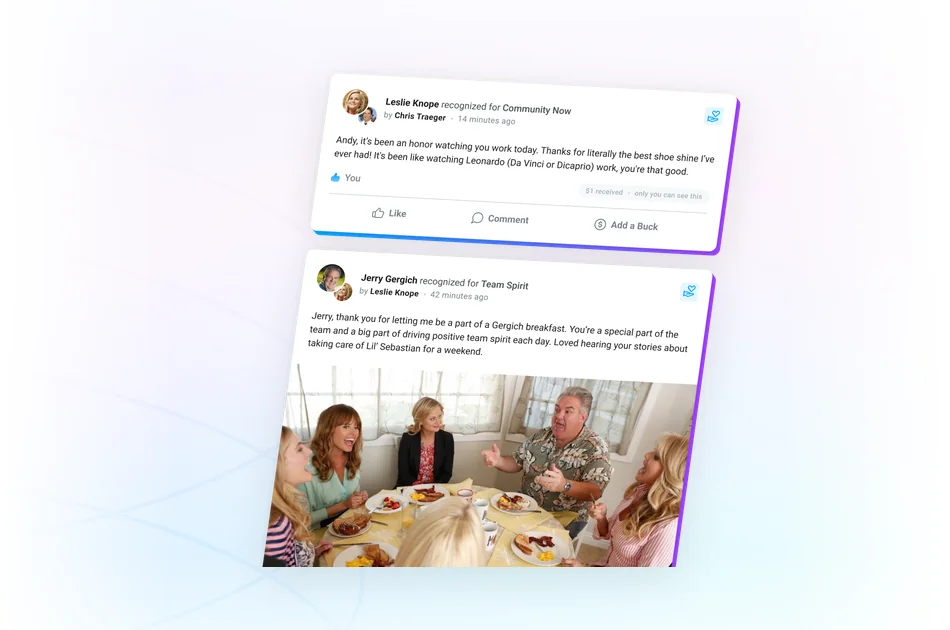
When recognition and communication coexist, culture grows stronger.
Connection fuels engagement.
By creating spaces for teams, departments, new hires, and interest-based groups, businesses help employees build relationships beyond their immediate role.
A social feed within an employee intranet allows employees to:
This helps everyone—remote, hybrid, or in-office—feel included and connected.
A modern employee intranet can support nearly every part of the employee journey, including:
New hires feel welcomed immediately, gain access to all onboarding resources, and connect with peers through groups and announcements.
Messages reach everyone in a consistent, visible way—without getting lost in inboxes or productivity tools.
Employees can quickly find policies, documents, and media files through a centralized, searchable library.
RSVPs, calendars, livestreams, and recurring events are easier to manage—and easier for employees to engage with.
Employees receive content that’s relevant to them, reducing noise and eliminating repetitive questions.
When evaluating an employee intranet, look for a solution that includes:
Without these features, it’s easy to add yet another tool that doesn’t actually improve communication or engagement.
Effective employee communication isn’t about sending more messages—it’s about sending the right messages, in the right place, at the right time.
When communication is centralized, engaging, and social:
And when employees thrive, the business thrives too.