Employee engagement isn’t a survey, a perk, or a once-a-year program—it’s the ongoing outcome of whether people feel valued, supported, and connected to meaningful work. While engagement as a concept has been around for decades, most initiatives fail because they treat engagement as something you “measure” instead of something you build through daily habits: timely recognition, clear leadership, and community. That’s why engagement levels stay stubbornly low—organizations keep investing in tactics that don’t change the employee experience.
Modern engagement is driven by three consistent needs: genuine recognition and appreciation, a strong relationship with a manager, and a real sense of belonging—especially in a hybrid world where connection is easier to lose. The future of engagement is employee-driven and authentic: frequent, specific, public recognition; peer-to-peer participation (not just manager-led); and flexible rewards employees can actually use in ways that matter to them. When these elements are in place, engagement stops being a “program” and becomes part of culture.
Key takeaways
If you’ve spent any time in the workplace over the last few decades, you’ve probably heard the phrase employee engagement. Maybe you’ve filled out an annual survey, answered questions about whether you have a “best friend at work,” or walked past a dusty suggestion box in the breakroom.
But here’s the truth: employee engagement is so much more than surveys, parking spots, or once-a-year rewards.
Most organizations still aren’t sure what successful employee engagement actually looks like—or how to build something employees genuinely want to participate in. Let’s change that.
In this post, we’ll explore:
The concept of employee engagement isn’t new.
Back in 1990, psychologist William Kahn introduced the idea that when people feel safe at work and find meaning in what they do, they naturally bring more of themselves into their roles. That insight laid the foundation for modern engagement theory.
Today, Gallup defines employee engagement as:
“People who are involved in, enthusiastic about, and committed to their work and workplace.”
Despite decades of effort, engagement levels have remained stubbornly low—hovering around 30% for years. So why haven’t traditional programs worked?
Let’s look at some of the most common approaches—and why they fall flat.
Plaques, trophies, and branded pens sound nice in theory. But without meaningful recognition attached, they quickly become clutter.
Why it doesn’t work:
Rewards alone don’t tell employees why they matter.
What works instead:
Authentic, specific recognition. People may forget the exact words you use—but they’ll never forget how you made them feel.
A photo on the wall or a temporary parking spot doesn’t exactly inspire long-term motivation.
Why it doesn’t work:
Generic recognition lacks context and meaning. If employees don’t understand what behaviors led to recognition, it doesn’t encourage others—or even the recipient.
What works instead:
Specific, behavior-based recognition that highlights what “great” actually looks like.
One-on-one praise feels good—but keeping recognition behind closed doors limits its impact.
Why it doesn’t work:
Private recognition doesn’t build culture or inspire others.
What works instead:
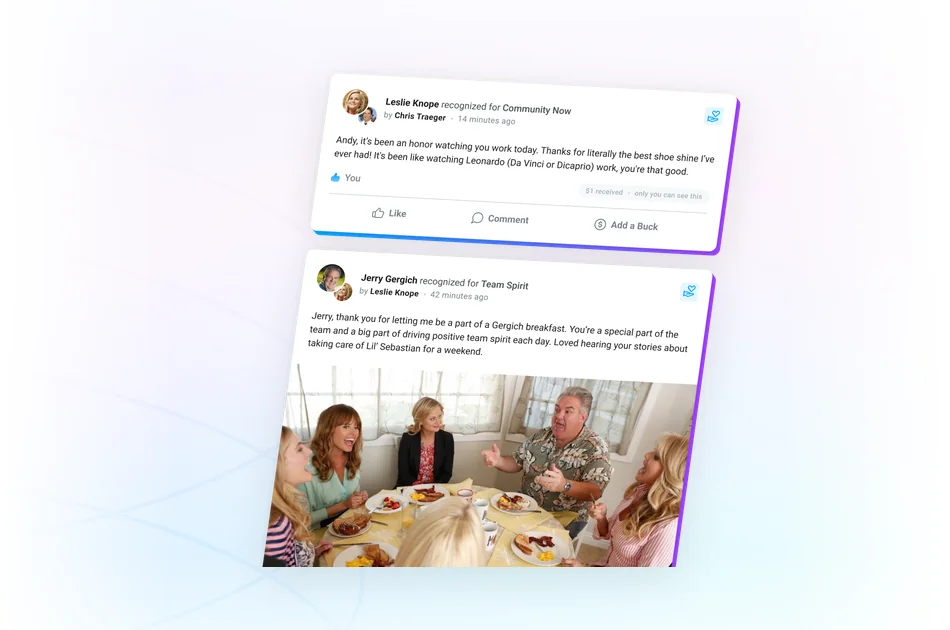
Public recognition. When wins are shared openly, it breaks down silos, strengthens relationships, and encourages positive behaviors across teams.
Focusing solely on outcomes ignores the behaviors that lead to success.
Why it doesn’t work:
If goals aren’t met, employees may feel their effort, teamwork, and growth don’t matter.
What works instead:
Value-based recognition. Celebrate how work gets done—not just the final numbers.
If recognition only happens during performance reviews, it’s too little, too late.
Why it doesn’t work:
Engagement isn’t built once a year—it’s built daily.
What works instead:
Frequent, ongoing recognition. And it shouldn’t fall solely on managers—peer-to-peer recognition plays a critical role.
Despite changing workplaces and evolving expectations, employee needs consistently come down to three core drivers.
Recognition isn’t optional—it’s essential.
In fact, 58% of employees say they’re working harder than ever, but without increased recognition, they’ll eventually pull back. Feeling appreciated fuels motivation, commitment, and performance.
Managers account for up to 70% of an employee’s workplace experience.
Great managers communicate clearly, mentor intentionally, and genuinely care about their people. When employees trust their managers, engagement follows naturally.
Do employees feel connected? Seen? Heard?
With more remote and hybrid work than ever before, 53% of employees report feeling less connected to their organization. Creating belonging requires intentional connection—to peers, leaders, and company goals.
When people understand how their work matters, engagement increases.
The future of engagement isn’t about flashy perks or gimmicks.
As Motivosity leaders put it:
“The fundamental contract between corporations and their employees is dead. It’s no longer enough to provide a paycheck and a few perks. Employees are demanding a new social contract—one based on genuine gratitude, transparency, and humanity.”
Modern engagement is built on freedom, flexibility, and authenticity.
Organizations that succeed give employees:
When recognition is timely, personal, and employee-driven, participation skyrockets—and engagement follows.
Employee engagement doesn’t require a massive overhaul or trendy perks.
It starts with something simple:
Create opportunities for everyone—not just leaders—to participate in recognition. Celebrate behaviors, not just outcomes. And give employees the freedom to be rewarded on their own terms.
When employees feel appreciated, connected, and trusted, engagement stops being a “program” and becomes part of your culture.
And that’s the future of employee engagement.