
Guide
-
15 min read

The HR Leader’s Guide to Employee Recognition Programs

Published on
September 24, 2024
Download PDF

TL;DR

Employee recognition is no longer an HR-side initiative—it’s a leadership responsibility with measurable business impact. When leaders intentionally invest in recognition, they unlock higher productivity, stronger engagement, lower turnover, and a more connected workforce. At its core, recognition works because it taps into genuine gratitude and positive psychology: employees repeat the behaviors that are seen, valued, and appreciated. In a workforce facing disconnection, loneliness, and disengagement, recognition isn’t just motivating—it’s stabilizing.

The most effective organizations don’t rely on ad-hoc thank-yous or manager goodwill alone. They design a recognition strategy that combines multiple approaches—milestones, awards, peer-to-peer recognition, spot bonuses, customer feedback, and flexible rewards—supported by technology that makes consistency, visibility, and scale possible. When recognition is paired with meaningful, personalized, and timely rewards, its impact multiplies. Leaders who step up and systematize recognition build cultures of trust and performance that outperform competitors who don’t.

Key takeaways

  • Recognition is a leadership lever, not just an HR program
  • Employees who feel recognized are more productive, more engaged, and more likely to stay
  • Peer-to-peer recognition drives broader impact than manager-only recognition
  • Recognition directly addresses disconnection, disengagement, and turnover risk
  • Rewards don’t have to be expensive to be effective—but they must be timely and tangible
  • A mix of recognition types creates consistency and inclusivity across the workforce
  • Digital platforms like Motivosity make recognition scalable, visible, and easy to sustain
  • Organizations with formal recognition programs outperform those without them

Time for leaders to step up! Motivosity can help.

Employee recognition—everything from a verbal thank you in the hallway to a fully integrated, peer-to-peer program—has proven time and time again to be a successful (and easy!) way for organizations to motivate employees, improve productivity, and decrease turnover. In most cases, formal employee recognition programs are led by HR teams, a People Ops team, executive leadership, or even individual departments—but it all depends on the size of your business and what type of program aligns with your mission and values.

While recognition programs can be executed in a multitude of ways and run by any number of groups or leaders, they all share the same focus: showing appreciation, celebrating a significant moment, or recognizing outstanding work, contributions, or achievements from your workforce.

Most recognition programs fall into one of these categories:

→ Company or executive-led recognition programs: The company recognizes specific employees for specific work (like an MVP award)

→ Manager-to-team recognition programs: Leaders recognize their direct reports for good work

→ Peer-to-peer recognition programs: Employees and leaders recognize their peers for good work

Recognition Programs Make a Big Impact—In a Lot of Ways!

The most common question HR teams and leaders ask about recognition programs is—Why? The answer? So many reasons! Adding in a recognition program is about more than checking a box. It’s about all the incredible benefits that both the business and its employees receive by participating in a formal program that recognizes good work.

At the center of a successful recognition program lies the greatest motivator for outstanding work—genuine gratitude. By running your program centered on gratitude, you’re showing your employees that you are grateful for their hard work, grateful for their contribution to the business, and grateful that they take care of your customers. The reason that works? It’s all rooted in positive psychology—rewarding the behavior and work you want to see again and again.

When employees feel seen, valued, and appreciated, they repeat their good actions. All of this leads to a culture of appreciation, trust, engagement, and connection—fueling better business results in the long run for your organization.

More than 90% of employees say recognition makes them more likely to repeat a specific action.

80% of employees say that if they felt more appreciated at work, they would be more productive.

And when recognition is paired with meaningful, personalized, and instant rewards, the benefits skyrocket even more. Those rewards can be marketed (and seen by employees) as a serious perk and benefit at your business.

Did you know? Recognition programs do more than boost employee motivation and productivity. They solve real business and people problems like disconnection, loneliness, and disengagement—all of which lead to higher turnover, poor employee reviews, high costs to the business, and lower innovation.

Nearly 40% of employees say that recognition is the best way to improve their engagement at work.

→ Employees with regular recognition say they’re more satisfied with their jobs .

→ Employees that participate in a formal recognition program stay longer reducing turnover by 31% .

→ Companies that implement a formal employee recognition program outperform their competition without a formal program.

7 Types of Employee Recognition Programs

Recognition programs come in all shapes and sizes. Choosing the right programs for your business should be rooted in the solution that aligns best with your mission, values, and culture.

Milestone Celebrations

Recognition programs that center around milestone celebrations focus on work or service anniversaries, birthdays, and other key moments in an employee’s journey at the business like a promotion, retirement, wedding/civil union, new baby, etc.

The Benefits:

Easy to set up with a simple calendar notification

Every employee gets recognized for some type of milestone and employees can anticipate it (and look forward to it)

Plenty of milestones to choose from so employees get recognized with some consistency

Common Mistakes:

Without HR or other leadership oversight, it’s left in the hands of each individual manager

Inconsistency is likely to happen if each manager is responsible for recognition

Employees can feel forgotten or resentful if they’re missed or if their recognition is different than their peers

Pro tips for milestone celebrations:

  • Automate recognition with software.
    Ensure every employee gets celebrated on the correct day and in the same way with consistency across the organization.
  • Recognize employees in a public forum.
    Celebrate each employee with everyone by investing in a tool that features a social feed so everyone can see new recognitions.
  • Add rewards to make recognition more meaningful.
    Build excitement and even more appreciation into your recognition program by adding in rewards—gifts, points, dollars, etc.
  • Create special gifts for specific milestones.
    Help employees feel appreciated for their loyalty and longevity by creating a special reward for each milestone (e.g. their 3-, 5-, 10-, or 15-year anniversaries).

Effort required without a digital solution: Medium

Effort required with Motivosity: Low

Nomination-Based Awards

Recognition programs that focus on nomination-based awards highlight employees who have made an impact on their peers and their leaders. Typically, these programs ask for recommendations from employees and managers on who they think should be awarded.

The Benefits:

High-profile way to recognize employees who have done exceptional work, hit a significant achievement, or who represent your company’s values

A less expensive recognition option because only a few employees are recognized each year

Common Mistakes:

Collecting nominations can be an arduous, time-consuming process for employees and HR alike

Employees may feel left out or like certain employees are favored (whether that’s true or not)

Pro tips for nomination-based awards:

  • Tie awards to company values.
    Reinforce the type of behavior you want to see at your business by aligning nomination awards to your company values.
  • Give flexible rewards.
    Switch out the generic gift card or a gift with a flexible, more personalized and thoughtful option, allowing employees to select the gift that they want.

Effort required without a digital solution: Medium

Effort required with Motivosity: Low

Achievement-Based Awards

Recognition programs that spotlight achievement-based awards typically only include employees when they complete a task or challenge, or hit a predetermined achievement. This can range from hitting or exceeding quota to participating in your wellness program’s challenge. Whatever the achievement, these awards often required employees to show proof of the accomplishment.

The Benefits:

Available to a broad group of employees—allowing the majority of team members to participate

Motivates employees to complete a specific task or goal that likely benefits them and the business

Common Mistakes:

An overemphasis on results could lead to employee burnout or unhealthy competition between peers or teams

Could unintentionally exclude employees who deserve recognition for high-effort work that isn’t easily measured

Pro tips for achievement-based awards:

  • Look for ways to include more employees.
    Recognize all work that’s worthy of recognition—reaching a sales quota, closing a new deal, improving customer satisfaction scores, implementing a new software platform, onboarding a new team member, etc.
  • Celebrate team and individual milestones.
    Highlight the achievements of employees and entire teams, elevating important work from team members that help get important tasks over the finish line.

Effort required without a digital solution: High

Effort required with Motivosity: Low

Peer-to-Peer Recognition

Recognition programs that include peer-to-peer recognition give employees the power to highlight the good work of their peers, rather than relying solely on HR and management to see and recognize good work. Instead of only allowing top-down recognition, these programs employ everyone to look out for actions and work worthy of a public or private acknowledgement.

The Benefits:

Encourages everyday appreciation and acknowledgement of good work—both effort and accomplishments

Includes everyone in the company and helps recognize work that might go unnoticed by leaders or managers

Promotes a culture of gratitude that motivates everyone to look for ways to recognize their peers

Common Mistakes:

Recognition could lose impact if it’s not surfaced in a public forum or reciprocated by everyone, both employees and leaders

Without a formal program—with set dollars or points to give away—and an example to follow from other employees, some people may hesitate to participate

Pro tips for peer-to-peer recognition:

  • Make peer recognition highly visible.
    Create a social space or forum (or invest in the right solution) so employees can share their peer recognition in a public way—helping everyone see what good work looks like and inspiring them to participate in the program.
  • Encourage recognition for company values.
    Make it easy for employees to assign a company value to the recognition of their peers. This can help everyone see how people are living out and exemplifying the values that business wants to be part of the everyday culture.
  • Add in rewards to make recognition more fun.
    Give everyone a set number of dollars or points to give away to increase participation and make recognition more meaningful for the receiver.

Effort required without a digital solution: High

Effort required with Motivosity: Low

Spot Bonuses

Recognition programs that prioritize spot bonuses often tie specific moments of accomplishment to a real-time monetary offer. For many businesses, this looks like a manager or leader giving a direct report a one-time bonus to reward extra effort or a big accomplishment.

The Benefits:

Employees get recognized quickly for good work or above-and-beyond efforts that help the team or the business

Leaders are empowered to act quickly and personalize recognition for the work they see worthy of acknowledgement

Programs are often flexible enough to include every department or team and every type of role or type of work

Common Mistakes:

Recognition could be inconsistent if it’s not tied to a specific rubric or scorecard, leaving people out that don’t showcase their work naturally

Without a digital solution, managing and monitoring spot bonus allocations can be tedious and monotonous work

Pro tips for spot bonus recognition:

  • Use a platform to share recognition publicly.
    Build trust and promote a culture of appreciation by publicly showcasing work worthy of a spot bonus. In a social feed, employees can see the type of efforts that leaders praise and want to see more of at the business.
  • Standardize the criteria for spot bonuses and track program usage.
    Consider creating a scorecard or general guidelines for leaders to follow when they want to give a spot bonus. Allow employees to see what qualifies them for this type of recognition.

Effort required without a digital solution: High

Effort required with Motivosity: Low

Customer-Driven Shoutouts

Recognition programs that highlight customer-driven shoutouts capture praise directly from customers and share it internally with employees. By sharing positive feedback from customers, employees can see who is directly impacting the customer experience and helping the business’ bottom line.

The Benefits:

Employees have the opportunity to hear positive recognition directly from customers—helping them feel more fulfilled as they see their work influence the customer journey

Adds an authentic, third-party to the recognition mix, often giving employees a greater sense of recognition and appreciation

Common Mistakes:

Internal praise can be overlooked if the program only focuses on the few customers that take the time to reach out with positive praise

Without a formal feedback program from customers, you may miss praise that could be helpful for employees to hear

Work from more back-end employees may be overlooked as important with more customer-facing work elevated in customer feedback

Pro tips for customer-driven shoutout recognition:

  • Recognize the work from all employees.
    Increase the visibility of the meaningful work that happens at every touchpoint in the customer experience and encourage good customer-facing habits.
  • Give customers an easy way to send in positive feedback.
    Offer customers a quick survey, a numbered option, or a way to send in a written review to encourage more feedback from happy customers after they’ve recognized your employees.

Effort required without a digital solution: High

Effort required with Motivosity: Medium

Lifestyle Spending Accounts

Employee programs accompanied by lifestyle spending accounts give employees flexible reward funds that can be used when and where your employees want. In practice, this can look like rewards that allow employees to spend dollars, points, gift cards on wellness, learning, merchandise, trips, and more.

The Benefits:

Employees are empowered to select the rewards they actually want (and they’ll actually use) instead of a pre-selected, static gift that someone in HR or a leader chose instead

Every employee feels like rewards are personalized and tailored to their likes

Common Mistakes:

A lack of communication about reward options can promote low participation from employees

Without a strong connection to how employees can get recognized to receive the rewards (or how to use their rewards), employees can feel confused and frustrated

Pro tips for lifestyle spending account recognition:

  • Fund recognition immediately with reward dollars/options.
    Let employees use their rewards immediately after they receive recognition. A quick timeline reinforces the positive praise and helps employees stay engaged (and more likely to repeat the work worth recognizing!).
  • Give employees opportunities to share how they used their rewards.
    Create a space or social feed for employees to share how they spend their reward dollars or points—showcasing fun products, experiences, vacations, and more. With a public forum, employees can get ideas and be motivated to work for future recognition.

Effort required without a digital solution: High

Effort required with Motivosity: Medium

How to Recognition Programs and Rewards Go Together?

While recognition and rewards serve different purposes, their synergy together makes them an unbeatable match for businesses that want to improve employee engagement, boost productivity, create a better culture, and increase their bottom line.

How do recognition and rewards make all of this happen? First, let’s look at what happens when you have recognition without rewards.

When employees are recognized for their good work, that’s a huge leg up on businesses that overlook opportunities for positive acknowledgement. But the benefits have a limit. Employees might be excited about verbal or written praise in the beginning, but the bottom line is simple—recognition that isn’t tangible is quickly forgotten and easily dismissed.

Rewards give employees a physical element (even if it’s digital dollars) that help them see how much their efforts or good work or accomplishments are worth to the business. And bonus tip, when recognition and rewards are tied to company values, employees see very clearly how the business wants everyone to conduct themselves at work and contribute to the culture.

Employee recognition without rewards is still a good first step. But the benefits of verbal and written praise can only go so far. Rewards add a tangible piece to the recognition, helping everyone see how valued the employee is by their peers, leaders, and the company.

The best part? Rewards don’t have to be expensive to make a big impact. A scalable, effective recognition program might include one or a few of these rewards:

  • Gift cards
  • Dollars or points
  • Cash or a bonus
  • Charitable donations
  • Swag

Before you dive into adding rewards to your recognition program, consider this: With the right digital solution, it’s easier to scale rewards and recognition for your entire organization. Through automated workflows, you can reduce the manual labor that is often paired with a reward strategy (purchasing gift cards, managing points, organizing physical gifts, etc.). A digital solution can connect to an online store, manage automated recognition (for milestone rewards, like anniversaries), and keep track of everyone’s dollars, points, gift cards, and more.

How to Craft Your Employee Recognition Strategy

An effective employee recognition strategy will help your business intentionally create the culture you want, reinforce company values, help employees feel seen and appreciated, and boost all of those good engagement metrics that every organization wants to see—less turnover, more profit, happier employees, and improved productivity.

Ready to get started? Here’s how to craft your employee recognition strategy (that will work for your business):

Step 1: Get clear on your workforce.

The first step is to understand exactly who will be involved in the employee recognition program. To include everyone, you need to understand how each employee is classified, where they work, and the special requirements that may need to be considered to make the program work across the board.

Key things to consider:

  • What type of employees do you have?
    Do you employ all full-time employees? Are some of them contract workers? Do all of them have a company email address?
  • Where does everyone work?
    Do you have any deskless workers? Are your employees all located in the same time zone or location?
  • How much interaction does everyone have right now?
    Are your employees engaging with other departments consistently? Do employees typically only interact with their direct team members?

Step 2: Identify your main goal.

Before you can implement a successful recognition program, you need to get very clear on what outcome you want to see. Without a direct end result, you may prioritize the wrong type of strategy which could result in frustration for everyone (and no obvious benefits from your efforts).

Ask yourself which goals is the most important to you:

  • Employee engagement
  • Retention / turnover rates
  • Productivity / performance
  • eNPS or other employee satisfaction or happiness scores

Step 3: Ask for employee feedback.

Too many organizations skip one of the critical steps in this process—asking employees what they want and need from the business. Consider sending out a survey to see what your employees value the most.

Use these questions to start your survey brainstorm:

  • How often do you feel recognized at work?
  • When was the last time you were recognized at work?
  • What was the last thing you were recognized for at work?
  • What type of recognition feels the best to you? Public shoutouts, money, verbal praise, rewards?
  • What type of work do you feel deserves public recognition?

Step 4: Understand your budget.

While you don’t need a large budget to get a recognition program up and running, you do need to understand what your boundaries are so you can build a program that’s sustainable.

Key things to consider about budget:

  • Do you want to fund your program on a per-employee basis? Is this per month, per quarter or per year?
  • Will your program include spot bonuses? If so, how much will be allocated for this type of recognition?
  • Will all departments, roles, and locations be treated the same? Will they all have the same budget or are there different needs for different groups?

Pro tip:

For some businesses, using a percentage of your revenue is a great way to allocate budget for recognition—even 1% can make a big difference. For others, segmenting the budget into rewards, software, and other expenses can help leadership buy in to the different needs of a full recognition program.

Step 5: Start simple with a milestone recognition program.

If you haven’t already started with a milestone recognition program, it’s likely the easiest to get off the ground. Set up a schedule to recognize employees on their birthdays and on specific company anniversaries (e.g. 3, 5, 10, and 15 years of service at the business). This can help you build a predictable rhythm for your first program.

Not sure how much to spend on milestone gifts or rewards? Something between $25 - $50 for birthdays and $50 - $100 for work anniversaries is a great start (with longer tenure rewards scaling with more time).

Step 6: Layer in spot bonuses, and nomination- and achievement-based awards.

The next best step is to add in spot bonuses and nomination- and achievement-based awards. These programs are fairly easy to set up and they can involve your workforce (helping to get everyone on board).

First - send out a nomination form so employees can nominate their peers for awards. Best practice here is to start with your company values—no need to come up with new names for awards that are already built-in to your business culture.

Next - ask leadership to highlight employees that deserve achievement-based recognition. Consider using a scorecard or a guideline sheet to help leaders make their selection fairly.

Finally - make a plan to spotlight your nomination-based and achievement-based awards in a quarterly or annual company meeting. Don’t forget to include a monetary reward with each recognition—pairing rewards with recognition extends the benefits of acknowledging good work by making it meaningful and memorable (for both the receiver and the employees watching).

For spot bonuses—consider using a similar scorecard or guideline that you used for achievement-based awards. Give managers a specific dollar amount and the flexibility to give their team members a spot bonus for good work that might not be recognized within the nomination or achievement-based awards.

Step 7: Add customer-driven shoutouts.

A great quick follow to the nomination and achievement-based recognition programs is to add in customer-driven shoutouts. If you’ve already created a cadence of recognition in a quarterly or annual company meeting (or even in a department or team meeting), customer-driven shoutouts can be easily added.

Follow this quick set-up plan:

  • Create a 1 or 2 question form, a numbered scale, or a place where customers can write out a full review.
  • Send the link to your customers with a request for feedback (and a thank you to them for being a customer!).
  • Funnel all answers to a single person or team.
  • Use AI or another tool to filter out positive sentiments (send negative feedback to the right teams).
  • Share the positive customer shoutouts in the right meetings (team, department, company) and highlight all of the work (and employees) that helped make the customer experience great.

Step 8: Introduce peer-to-peer recognition.

If your goal for implementing a recognition program is to truly make a big impact at your business, you can’t skip step 8. Peer-to-peer recognition is truly the most superior recognition program you can offer your business and your employees. By asking everyone to be a company ambassador and look for good work to highlight, you’re creating a bottom-up approach to an incredible culture. It’s scalable, effective, inclusive, and it works.

Here’s how to get started:

  • Encourage peer-nominated awards.
    If you’ve already done this with nomination-based awards, you’re ahead of the game! Keep expanding your recognition opportunities outside of your company values (hint: you could survey your employees to see what type of recognition they’d like to nominate their peers for and what they’d like to be nominated for as well).
  • Create a social space for public peer-to-peer recognition.
    Whether you’re sending employees to a Slack channel, Microsoft Teams, or another tool, build out a space that’s specifically for peer recognition. Give everyone permission to highlight positive interactions with their teammates, people from other departments, and others across the organization. To make this strategy really work, managers need to be in on it, leading by example (and very active in the channel).
  • Invest in peer-to-peer recognition software
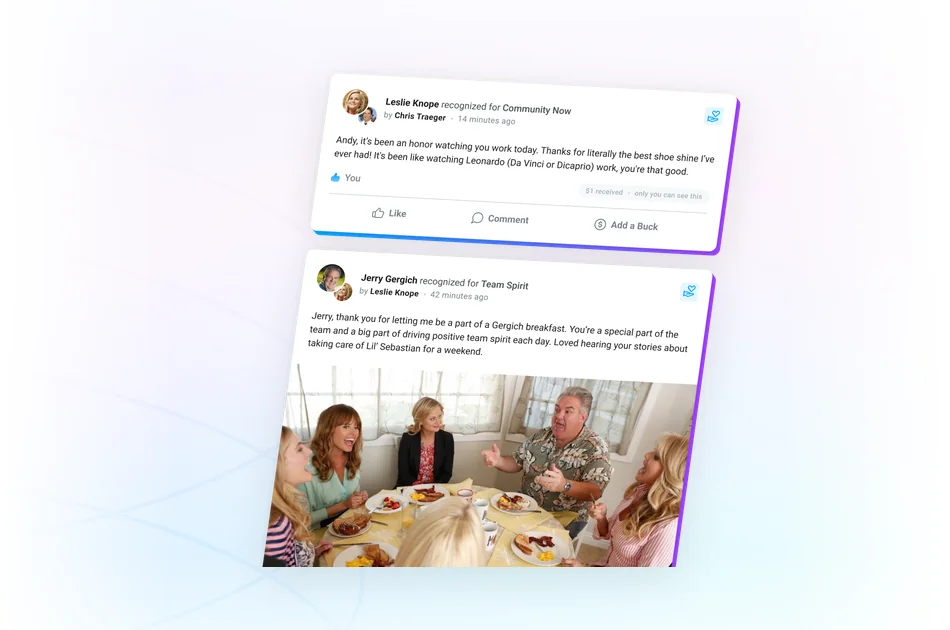
    To make the entire process easier (and to help tie in rewards with peer-to-peer recognition), consider investing in the right software tool. A good platform will be easy to use, help you automate your other programs (milestone, spot bonuses, nomination awards, etc.), and have a social space so everyone can see recognition in real time (and have an option for 1:1 recognition for employees that don’t want to be recognized publicly).

→ Peer-to-peer recognition programs are 35.7% more likely to have a positive impact than manager only recognition.→ Peer feedback can enhance employee performance by as much as 14%.

Step 9: Launch lifestyle spending accounts.

To uplevel your recognition programs even more, consider launching lifestyle spending accounts—giving employees even more flexibility in the rewards they receive. As a benefit, it allows employees to pick which perks they want to spend a predetermined amount on (from gym memberships to team lunches or other eligible expenses). Added to your recognition program, you can allocate points or dollars for employees to give to their peers (as part of their recognition) and collect points and dollars as they receive recognition.

With a pooled amount, employees have the choice to spend their reward money in the way that works for them—making it personalized and meaningful (while creating less headaches for admin to manage).

Build a Better Employee Recognition Program with Motivosity

Modernize your recognition program with Motivosity, the people-first Recognition and Rewards solution for today’s workforce that creates more engaged employees, automates your programs, and connects people across teams.

Find out more about Motivosity here.
Table of Content
Ready to see how Motivosity can connect your company?
Get a Demo