We compared 15 of the best employee engagement software platforms for healthcare so you don't have to sit through fifteen demos. Here's what each one gets right, who it fits best, and what to watch for before you commit budget.
Key Takeaways
If you've made it to this list, you already know why you need it. Burnout, turnover, communication gaps, and staffing shortages aren't abstract problems in healthcare. They're the reason someone on your team opened a browser and searched for this.
What's harder to come by than a reason to act is a clear read on which platforms are actually worth your budget. There are at least fifteen credible employee engagement software options competing for healthcare HR dollars right now, and most of them sound similar in a demo: recognition tools, pulse surveys, peer-to-peer giving, rewards programs. The differences that actually matter—whether frontline staff will open it, whether it integrates with what you're already running, whether your team can realistically implement it—don't always make the slide deck.
Employee engagement software for healthcare is any platform that helps hospitals, clinics, and health systems keep employees informed, connected, and recognized. Done right, it can meaningfully improve retention, morale, and internal communication. Done wrong, it'll just become another subscription that lives in an admin dashboard while the people it was built for never see it.
This list covers fifteen platforms, what each one does well, and who it's built for. There's also a short section on what to prioritize when you're evaluating options. Use both to find the platform your organization will actually use.
Price can help you break a tie between two similar options, but it shouldn't be the first filter. What matters more is whether the software has the features your employees actually need. Here's what separates a real engagement platform from a basic messaging tool:
Peer-to-peer recognition and feedback tools are easy to overlook on a spec sheet, but they're often what actually reaches the most isolated employees: night shift nurses, satellite facility staff, units that rarely interact with leadership. Peer recognition doesn't require a manager to initiate it. It just requires someone who cares enough to say something.
One more thing worth asking before you shortlist anything: how much can your organization realistically handle at launch? Some platforms need a dedicated IT team for custom workflows and integrations. Others go live in a matter of weeks with minimal hand-holding. Your honest answer to that question should shape the shortlist as much as any feature comparison does.
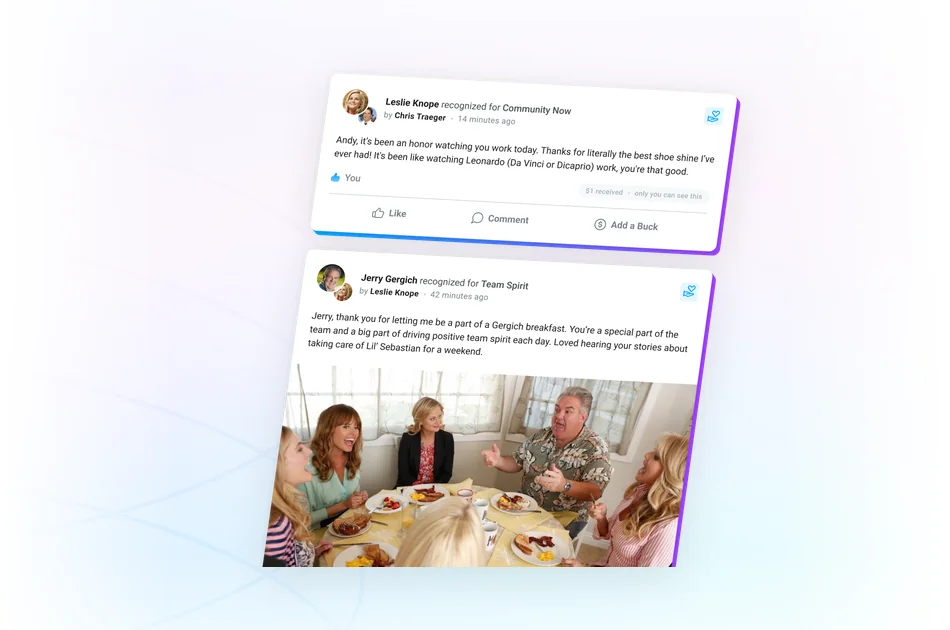
Motivosity takes a people-first approach to employee engagement that starts with connection, not a rewards catalog. Employees connect with each other first, recognition follows naturally from that connection, and rewards reinforce it, rather than the other way around. That order matters for healthcare organizations managing burnout, retention pressure, and morale across shifts, departments, and locations that rarely cross paths.
Healthcare teams use Motivosity to build consistent recognition habits that help employees feel appreciated no matter which unit or building they work in. That includes recognition that comes directly from patients. Motivosity's Service Shoutouts feature lets patients and families call out specific members of their care team for exceptional care—so the moment a nurse sits with someone a little longer than she had to, or a tech goes out of their way to explain something clearly, doesn't just disappear when the shift ends. It gets seen.
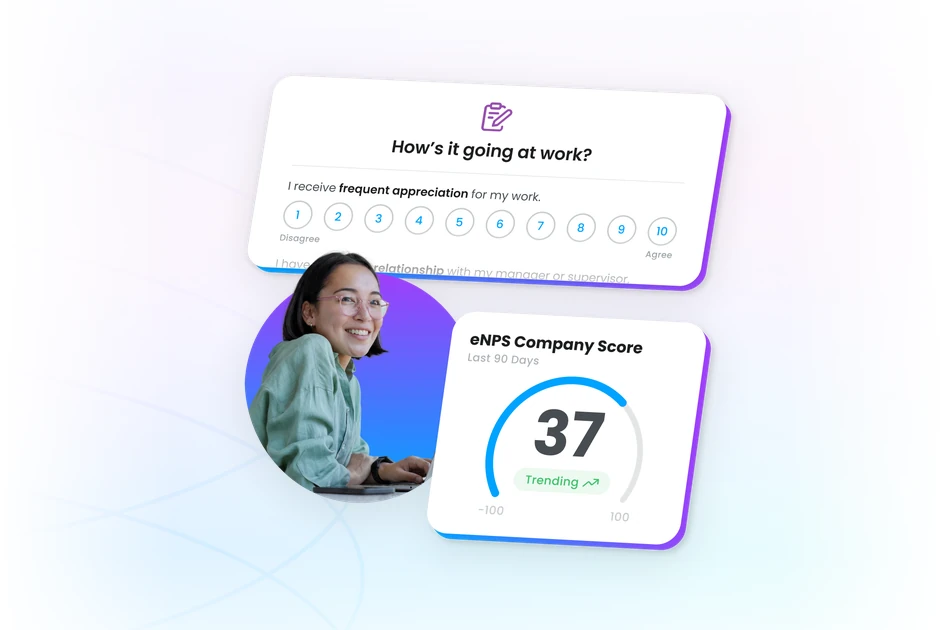
Motivosity customers see an average 52% increase in eNPS scores, and employees send and receive recognition an average of 4.7 times a month, a very different rhythm than the once-a-year service award most hospital staff are used to.
Pulse surveys and manager tools help leaders spot morale issues before they turn into resignation letters. And because Motivosity integrates with the communication and HR systems your organization already runs on, adoption doesn't require overhauling everything else.
Best For: Healthcare organizations that want to build culture, recognition, and retention without adding complexity to an already demanding workday.
Key Strengths:
Achievers is an enterprise employee engagement and recognition platform for established and multi-location enterprise healthcare organizations. It boasts strong data analytics and reporting features that help healthcare organizations understand the metrics behind engagement and recognition.
The recognition program offers local rewards and both monetary and non-monetary recognition to help organizations build the program that's right for the cultures it serves.
Best For: Large healthcare systems and distributed workforces.
Key Strengths:
Workhuman is a human-centered employee recognition platform that emphasizes emotional connection, storytelling, and employee appreciation. It's widely used by enterprise healthcare organizations and mission-driven organizations that seek to build a sense of belonging among employees.
In addition to conversational and recognition features, Workhuman takes a project management approach to manager feedback and employee growth, with structured 1:1 documentation.
Best For: Enterprise and mission-driven healthcare organizations.
Key Strengths:
NectarHR offers flexible employee recognition and rewards alongside team communications and employee feedback tools.
With strong integrations and automation features, NectarHR works well for midsize healthcare organizations that need to implement a tool without extensive IT overhead. It also integrates with many of the tools the organization already uses, meaning it fits into existing workflows.
Best For: Mid-market healthcare organizations.
Key Strengths:
Bonusly is a points-based employee recognition platform that encourages frequent employee appreciation across teams. Employees recognize peers with a short message and a point value, and employees can redeem their points for a wide variety of gift cards, company swag, and other rewards.
Bonusly has a strong integration with other workplace tools like Slack and Teams, and the platform displays recent employee recognition alongside 1:1 and growth planning documents, letting management draw a direct line between recognition and the employee's actual work.
Best For: Small and mid-market healthcare systems implementing their first recognition tool.
Key Strengths:
Awardco is a recognition and reward platform with a strong integration with Amazon Business, providing worldwide rewards and reduced shipping fees. Awardco also has automated milestones like work anniversaries and birthday celebrations and enterprise-scalable tooling.
Available Workday, Slack, and Teams integrations plus many other workplace tools give teams access to recognition from where they work.
Best For: Larger healthcare systems, especially those already using Amazon Business.
Key Strengths:
Culture Amp is an employee performance management software that employs advanced listening and engagement analytics from pulse surveys, workforce insights, and communications. Culture Amp's goal is to help HR teams build high-performing workplace culture.
Culture Amp works alongside your current human resource information system (HRIS), analyzing metrics and key people data to design performance-enhancing programs. Employee recognition and rewards programs are included in the Culture Amp platform, but are not a central focus of the software.
Best For: Data-driven healthcare HR teams at midsize to large organizations.
Key Strengths:
Quantum Workplace is an employee engagement software with a strong focus on building useful and data-driven engagement surveys. Benchmarking tools within Quantum Workplace help guide HR professionals, while recognition and feedback capabilities help the team connect and grow.
While Quantum Workplace does have built-in tools to build a positive growth culture throughout the organization, the software is mostly focused on improving retention metrics and workforce experience.
Best For: Midsize and enterprise healthcare organizations.
Key Strengths:
Workvivo is an employee engagement and communication tool built in collaboration with Zoom video software. The tool uses a social media-style communication experience on desktop or a mobile app to keep employees connected and informed.
Because it's mobile-friendly and has strong employee communications features, Workvivo is a portable intranet that helps improve alignment across distributed teams.
Best For: Multi-location healthcare organizations.
Key Strengths:
Assembly, recently acquired by Quantum Workplace, is a standalone recognition and engagement tool that combines communications, recognition, rewards, celebrations, and milestones.
Automated features included in Assembly improve efficiency for HR teams to set up and run engagement programs like challenges and awards.
Best For: Hybrid healthcare teams looking to consolidate engagement tools.
Key Strengths:
Press Ganey is an employee experience and engagement platform built for healthcare organizations. The platform combines patient, employee, brand, and safety feedback in a single analytics view that covers the full healthcare system.
Advanced analytics move leaders from data to feedback on key retention and engagement trends.
Best For: Hospitals and larger health systems.
Key Strengths:
UKG Pro is a fully featured HRIS with workforce management and employee engagement tooling built-in. The sheer number of features included in UKG Pro may be overwhelming to smaller organizations, but for larger teams it may combine all the features needed.
UKG Pro's scheduling features are useful for shift-based healthcare teams, and its communication and engagement tools improve workforce visibility and operational alignment.
Best For: Large and complex healthcare organizations.
Key Strengths:
Kudos is a peer recognition and employee appreciation platform. It supports values-based recognition programs and is flexible enough to customize workflows for your needs. Healthcare teams can build community across distributed teams with Spaces, an employee communication tool that focuses on specialized interests. With rewards, e-cards, and challenges, Kudos helps reinforce organizational culture.
Best For: Small to midsize healthcare organizations with distributed workforces.
Key Strengths:
Vantage Circle adds wellness and gamification into the recognition mix, giving employees more ways to engage with each other and build community. It puts real weight on employee participation, not just program existence, and leans into morale as much as recognition itself.
Best For: Larger distributed healthcare workforces with a wellness focus.
Key Strengths:
Mo is a lightweight employee recognition and engagement platform that seeks to make invisible work visible and part of the company culture. The tool encourages peer appreciation and morale-building in the form of instant recognition tools. Mo helps leaders better engage their teams, and HR uses engagement data to improve the workplace. Because it's lightweight, Mo is easy to implement and use across organizations.
Best For: Smaller healthcare organizations that need a lightweight tool to add to their stack.
Key Strengths:
Start with the challenges actually driving your search. Retention pressure, burnout, communication breakdowns—whatever is most acute for your organization right now should be the first filter. A platform that solves your most pressing problem and actually gets used is worth more than a comprehensive one that doesn't.
A few questions worth working through before you shortlist:
Who needs to use it? If your primary users are frontline clinical staff—nurses, techs, support roles—mobile access isn't a nice-to-have. It's the whole game. A platform that works great for your HR team but requires a desktop login for everyone else will stall out on the floor.
What can your IT team realistically support? Some platforms need dedicated configuration, custom integrations, and ongoing admin work. Others go live in weeks with minimal IT involvement. Be honest about what your team can stand up and sustain. A simpler platform your staff will actually use beats a sophisticated one that's still "in implementation" eight months later.
What does success look like in year one? Get specific. If you're measuring adoption, look for platforms with strong onboarding and intuitive interfaces that don't require training to get started. If you're measuring retention impact, you need reporting that shows the relationship between engagement activity and turnover—not just login counts. Know the outcome you're measuring before you sign a contract.
How will you make the case to leadership? Most platforms can produce usage reports. Fewer can show the financial case: turnover cost savings, reduced time-to-fill, changes in overtime hours tied to engagement gaps. If you need to justify the spend to a CFO or a board, build that into your vendor evaluation early. Ask prospective vendors how their customers measure ROI and what the typical timeline looks like to see it.
The right platform isn't always the most feature-rich option or the most recognizable name in your inbox. It's the one your frontline staff will actually open, and that your HR team can run without adding hours to someone's week.
Motivosity is built around the idea that connection comes first: employees connect socially, recognition follows, and rewards reinforce it. That order is what makes engagement actually stick in healthcare organizations managing burnout, retention pressure, and morale across shifts and locations that rarely overlap.
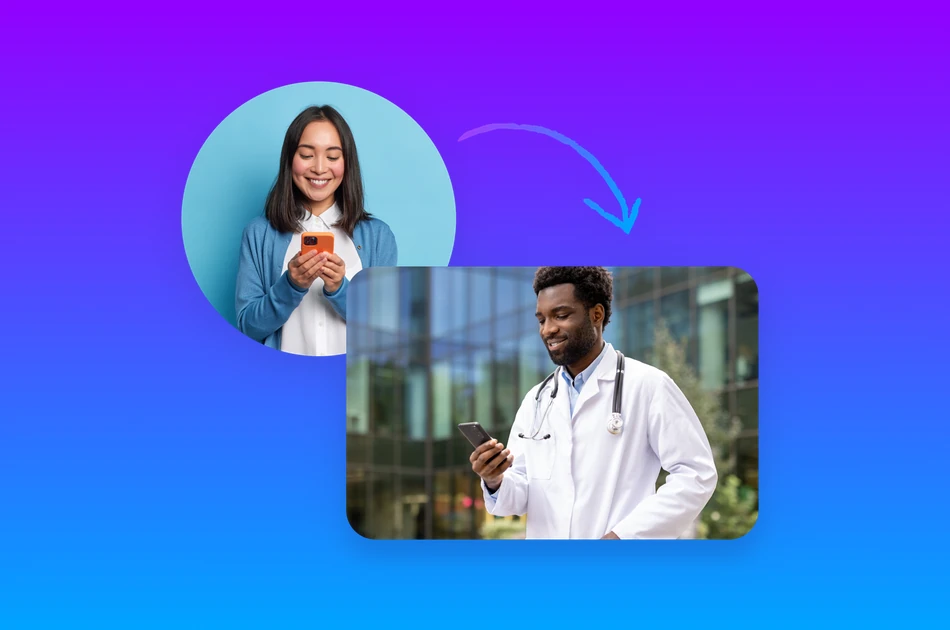
Employees can access Motivosity from their phones, which matters for distributed and frontline teams, and it's simple enough that even tech-light employees pick it up fast. That everyday accessibility is what turns recognition into a habit instead of something that happens once a year at a service awards banquet. By fostering connection and making employees feel seen in their everyday work, Motivosity supports retention, builds positive culture, and improves morale.
If you're ready to see what that could look like for your team, book a demo today.