
Hospital employees face some of the most demanding work conditions in any industry. Recognition is one of the few direct levers HR leaders have to improve retention, reduce burnout, and build lasting engagement.
This post breaks down the five recognition program types that work best in healthcare settings, from peer-to-peer and manager-led to milestone, rewards-based, and integrated platforms. It also covers how to evaluate which approach fits your hospital's size, culture goals, and workforce distribution.
Key Takeaways
It's 7 p.m., and a charge nurse is finally clocking out after a twelve-hour shift that included two code blues, a grieving family in the waiting room, and a new hire who needed steadying by hour nine. She grabs her bag. Nobody says a word on her way out.
Every hospital HR leader has watched some version of this happen enough times to know what it costs. Burnout. The slow drift of people who stop believing anyone notices what they give up to show up.
There's no single fix, but hospitals that keep their best people tend to lean on five approaches: recognition between coworkers, recognition led by managers, recognition tied to milestones and service, recognition backed by real rewards, and platforms that bring all of it together. Each one solves a different piece of the problem, and the strongest hospital cultures usually run more than one at a time.
Hospitals ask more of their people than most healthcare organizations realize. Nurses, techs, and support staff work long, unpredictable hours under constant pressure, with less time than they'd like to actually sit with a patient or catch their breath between rooms.
That pressure adds up. Hospital employees report higher rates of burnout, isolation, and disengagement than workers in calmer settings, and disengagement doesn't stay quiet for long. It shows up as turnover.
Recognition doesn't fix a staffing ratio or a broken schedule. But it does something a schedule can't: it tells someone their work was seen.
Healthcare workers routinely go beyond what's on their job description. They sit with a scared patient a few minutes longer than they technically have to. They cover a colleague's shift without being asked twice. When a peer, a manager, or hospital leadership actually notices that, the person doing the work feels less alone in it.
Employee recognition for hospitals works because it turns that noticing into a habit instead of a rare event. Once appreciation becomes part of how a floor operates, it starts to counteract some of what makes hospital work so exhausting in the first place.
High-performing hospitals tend to build their recognition efforts around five approaches. How each one gets rolled out looks different from one hospital to the next, but the goal stays the same: employees who feel seen, morale that holds up under pressure, and a floor that runs on more than obligation.
Recognition programs work best when hospitals don't try to pick just one of these. Most strong cultures run several side by side.
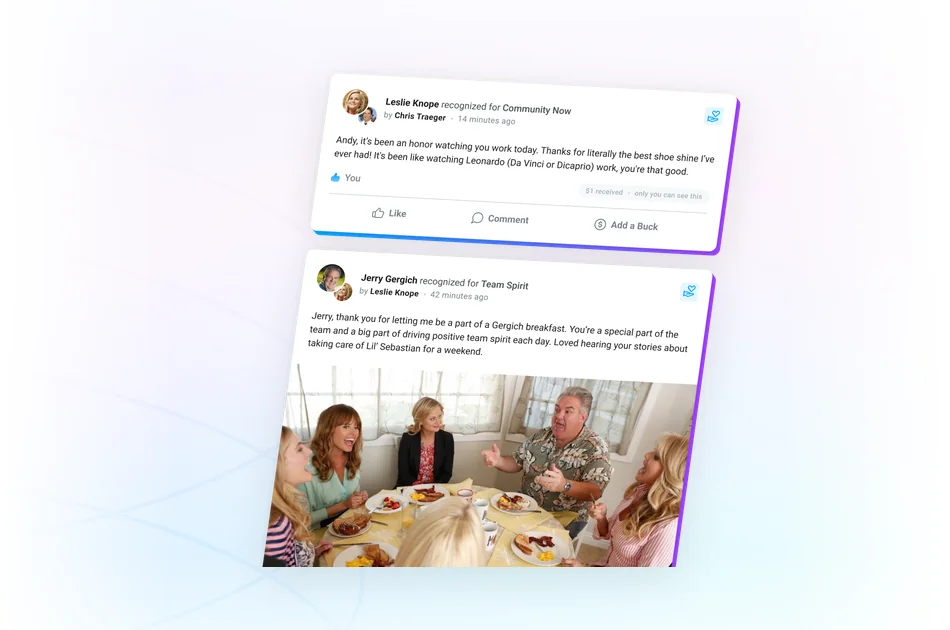
In peer-to-peer recognition, coworkers recognize each other directly, without a manager as the middleman. It works best when it's out in the open, tied to something specific, and close enough to the moment that it still means something. A generic "good job" three weeks later doesn't land the same way as a message sent the same shift, naming exactly what someone did and why it mattered.
That kind of recognition changes how a floor feels. People notice it happening publicly, and it quietly gives everyone else permission to look for the next thing worth calling out.
Most peer-to-peer programs earn their footing by tying recognition to a hospital's stated values. When someone gets thanked for embodying "patient-first care" or "showing up for the team," the value stops being a poster in the break room and starts being something people watch each other actually do, whether that's extra support during a rough shift or quietly picking up the slack on patient care.
In a hospital, the manager relationship carries more weight than almost anywhere else in the org chart. A charge nurse or unit manager decides the schedule, mediates conflict, and is often the only leader an employee interacts with in a normal week. When that person makes recognition a habit, appreciation stops being something that happens someday and becomes part of how the unit runs.
Managers have more chances to recognize people than most of them use:
None of this requires a grand gesture. It requires a manager who's paying attention and willing to say something out loud.
Milestone programs recognize the time and effort employees invest in staying and growing at a hospital, not just their best single day. That can mean five years on the same unit, a certification earned on top of an already full schedule, a promotion, or a project that quietly mattered more than anyone said at the time.
Long careers deserve more than a pin at the five-year mark. Celebrating employee milestones gives leaders a built-in reason to recognize every employee's path, not just the people having an exceptional week.
In a field with the hours and stress hospitals ask of their staff, a service anniversary is a real marker. It tells someone their years here haven't gone unnoticed, and that alone can be the difference between someone re-signing and someone quietly updating their resume.
Rewards-based programs pair recognition with something tangible. Most run on a points system: employees earn points for recognizing each other, and points convert into rewards the recipient actually wants, whether that's a gift card, company merchandise, a charitable donation, or an experience.
The reward isn't the point. It's the reinforcement. A points balance gives people a reason to keep recognizing each other regularly instead of only when something exceptional happens, and it gives the person receiving it a small, concrete signal that their contribution registered.
Rewards work best paired with a real message, not instead of one. A gift card with no explanation tells someone they did something right. A gift card attached to a specific, timely note from a coworker or manager tells them what and why, which helps the recognition (and behavior) stick.
Modern recognition software brings peer recognition, manager recognition, rewards, and milestones into one place, usually with a social feed where appreciation from across the hospital shows up in a single stream. Seeing that feed matters more than it sounds. It's the fastest way for a new hire to understand that recognition isn't one department's initiative. It's how the whole organization operates.
When you're comparing platforms, a few things are worth digging into:
Cost, training time, and IT lift all matter here. But the platform that actually gets used by a night-shift tech and a floor manager alike is worth more than the one with the longest feature list.
Recognition isn't a soft add-on to a hospital's engagement strategy. It's one of the more direct levers HR has to influence turnover.
Only 38% of employees get recognition from their direct manager on a weekly or daily basis, and 37% say they rarely or never receive meaningful recognition from a manager at all. That's a lot of people showing up for hard shifts without much reason to believe anyone above them notices. In a hospital, where the work is already emotionally heavy, that gap compounds fast.
This goes beyond morale. Ninety percent of employees say feeling appreciated and valued actually improves how they perform, which tracks with what most managers already sense: people who feel invisible tend to stop bringing their best.
Culture matters more than most hospitals give it credit for, too. Eighty-three percent of employees say they stay at a company primarily because of its culture and the people they work with, not the paycheck. For a hospital competing for nurses and techs in a tight labor market, that's a retention strategy hiding in plain sight.
Recognition doesn't erase the exhaustion of a bad shift. But it does tell someone their exhaustion wasn't invisible, and for a lot of healthcare workers, that's what gets them through tomorrow's shift too.
The right program depends on your hospital's specific reality, not a generic best-practice list. A single community hospital doesn't have the same needs as a ten-site regional system, and what works for one won't necessarily translate to the other.
Budget is the obvious starting point, but it's worth looking at both sides of it: what your hospital can spend each month supporting a program, and what it stands to save on turnover and hiring costs once the program actually works.
Culture goals matter just as much. Get clear on what needs to shift across the organization, then match that to the approach most likely to move it, whether that's building trust between shifts or getting managers more consistently involved.
Workforce distribution is where a lot of hospitals get it wrong. Do most of your employees see one another every shift, or are they scattered across units, floors, and schedules with little overlap? A program built for one tight-knit team won't work the same way for staff who rarely cross paths.
However you weigh those factors, ease of participation matters more than any feature list. Employees only get the benefit of a program if they can actually access it, use it without friction, and see the value from day one.
Hospitals that get managers genuinely involved, and treat adoption as a priority instead of an afterthought, see the biggest return: a culture people actually want to stay in.
Recognition doesn't have to be complicated to work. It has to be consistent, and it has to actually reach people on the floor, not just the ones already visible to leadership.
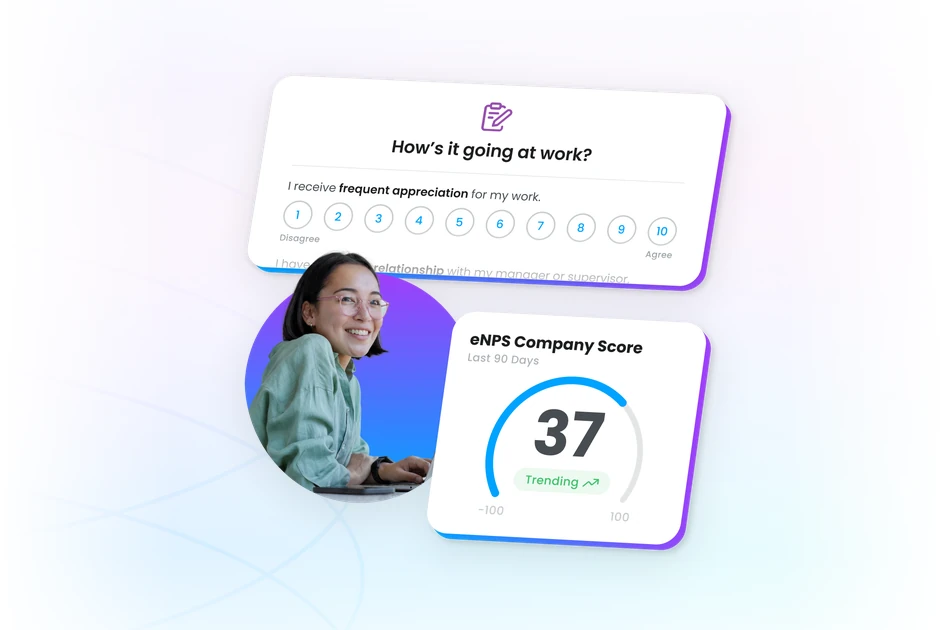
Motivosity starts with connection. Employees get a social layer where appreciation between coworkers becomes visible and normal, not a rare event tied to an annual survey. Recognition builds on top of that, giving peers and managers an easy way to make appreciation part of how a unit runs day to day. Rewards come after, giving employees real, flexible ways to redeem what they've earned, whether that's a gift card, a donation, or something they picked out for themselves.
For hospital teams already stretched thin, that combination does something a stand-alone gift-card program never could. It gives people a reason to believe someone's actually watching for the good work, not just the mistakes.
If your hospital is ready to make recognition a habit instead of an occasional event, get a demo to see how Motivosity's employee recognition software works for teams like yours.