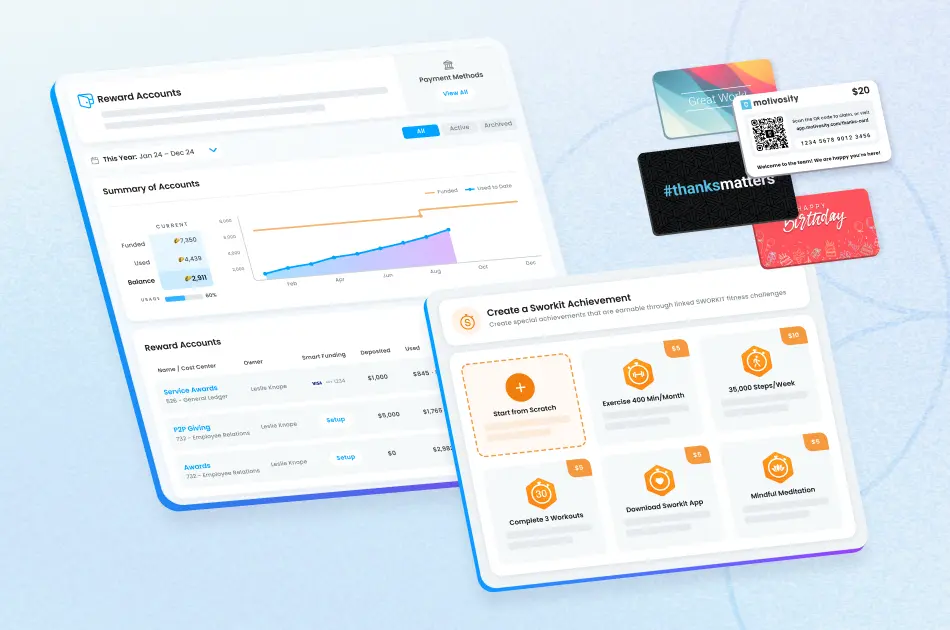
Employee recognition programs have evolved from manual gift cards and sporadic thank-yous into strategic, digital systems that drive measurable business results. Modern recognition software is no longer just about rewards—it’s a core component of your total rewards strategy, directly impacting employee engagement, retention, productivity, and workplace culture.
Research consistently shows that companies with formal employee recognition programs outperform those without them, experiencing higher engagement and up to 31% lower turnover. Digitizing recognition centralizes initiatives, automates workflows, tracks impact, and reduces administrative burden—giving HR leaders and managers a scalable way to strengthen culture while saving time and cutting costs.
Employee recognition programs are not new. Recognizing employees has been the foundation of good employers around the globe for decades—and even thousands of years! Fun fact: the first employee recognition program was actually founded by Cyrus the Great in 538 B.C. to encourage construction workers with a shoulder pat, a beverage, and a coin. But even though recognition isn’t a new concept—we’ve learned that the way we recognize employees really matters (and it’s a critical piece of your total rewards strategy).
The old ways of recognizing employees are fraught with issues…and we’re not talking about B.C. coins and cold glasses of lemonade. Most processes require HR teams and managers to take on too much manual work, including keeping stacks of gift cards in a drawer and keeping track of submitted reward redemptions.
Luckily, recognition has evolved and smart businesses see them for what they are—a key piece of your total rewards package. Just as the right salary, benefits, and employee perks encourage higher retention, better engagement, and increased productivity, employee recognition programs have the same impact.
For example, when employee recognition is a high priority for businesses, employees have a better sense of well-being. Happier employees say they feel less stress in the workplace, opening up more mental space for engagement and productivity.


→ 90% of HR leaders and employees say that employee recognition programs directly drive business results.
→ Harvard Business Review reports that companies with formal employee appreciation programs outperform companies without a recognition program by a significant margin.
→ Recognition and feedback are the top two drivers of employee engagement.
→ Recognition programs also help companies hang on to good employees longer with a 31% lower turnover rate.
And the good news? Today, there are better options to manage employee recognition. This guide will help you walk through your options, get clear on the features you want that align with your recognition philosophy, and help you pick the vendor that’s a good fit for your business.
In the past decade, most companies have come to realize that their greatest asset lies in the people who help their business run—their employees. Understanding this fact has helped many organizations implement a recognition program to keep employees happy.
So how does recognition impact employees?
Employee recognition increases employee job satisfaction, job engagement and motivation, and even their productivity. Nearly 40% of employees report that the best way to improve their engagement is for leaders to recognize their work. And when they do, employees say they are more satisfied with their jobs. At least 80% of employees say they would work harder at their jobs if they felt better appreciated and 92% say they are more likely to repeat a specific action if they are recognized for it.
It’s not hard to see that employee recognition has an even greater impact on employee retention. Turnover is an issue for many industries, but when employees are unhappy, they are more likely to leave, no matter who they work for. More than 90% of HR professionals say that employee recognition programs have a positive impact on employee retention, so clearly, it’s a win-win.
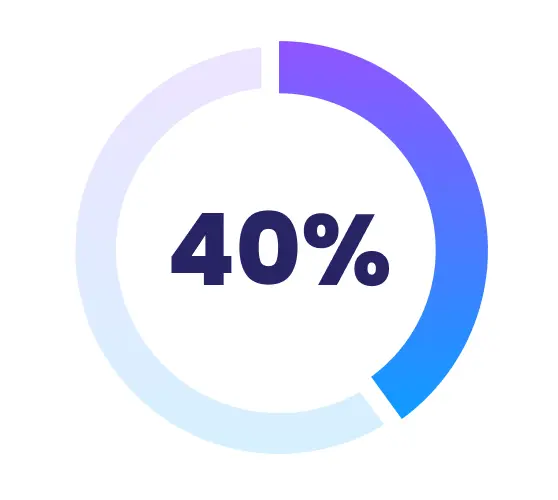
Increased employee job engagement
→ Nearly 40% of employees report that the best way to improve their engagement is for leaders to recognize their work.
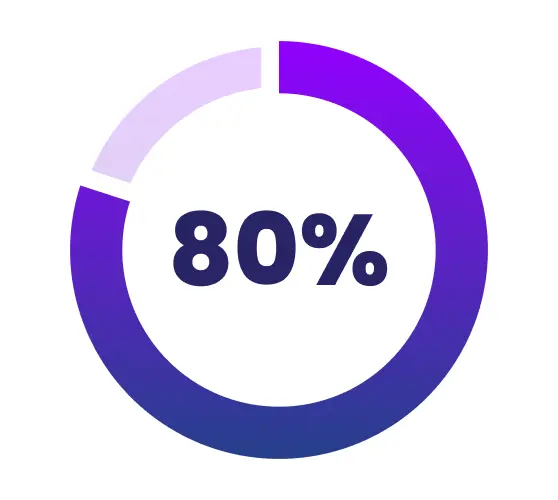
Increased employee job satisfaction
→ When employees are recognized, they say they are more satisfied with their jobs.
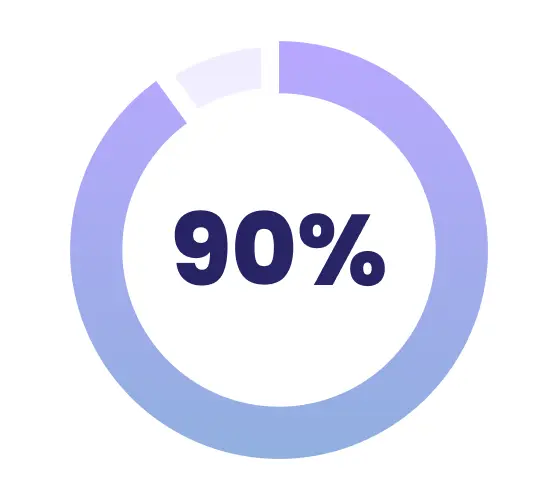
Increased employee retention
→ More than 90% of HR professionals say that employee recognition programs have a positive impact on employee retention.
It’s obvious that employee recognition is good for everyone, helping employees feel better at work and making sure employers have happy, satisfied, and more productive employees.
But what most businesses don’t realize is that all recognition programs are not the same. Recognizing employees for the sake of recognizing them helps, but the real magic happens when you help employees feel a greater connection to your business and to other employees.
The answer to a better recognition tool? One that connects peers and team members, no matter where they work or what team they’re on. (You’ll find that peer-to-peer recognition is a great place to start.)
With peer feedback, employee performance can be enhanced as much as 14%. That’s an incredible boost on already improved productivity of a traditional employee recognition program. Peer recognition is so important that employees report they are 3x as likely to be disengaged when they only get recognition from their peers a few times a year. They also admit they are 24% more likely to be struggling with their job and 39% more likely to find a new job if they don’t get peer recognition.
Better employee performance
→ With peer feedback, employee performance can be enhanced as much as 14%.
Better employee engagement
→ Employees report they are 3x as likely to be disengaged when they only get recognition from their peers a few times a year as opposed to more peer recognition throughout the year.
Better employee retention
→ Employees admit they are 24% more likely to be struggling with their job and 39% more likely to find a new job if they don’t get peer recognition.
The key takeaway: Employee recognition reduces turnover, increases engagement, and improves connection to the company and other employees. It’s an important part of people management—and getting this part right has a huge impact on your business.
Because employee recognition—in a formal sense—has only been around for a short time, many organizations are still executing recognition sporadically. This looks like paper-based, manual, recognition strategies—gift cards on desks, paper-catalogs of swag, and inconsistent thank yous from managers that see the value in recognition.
What can a digital, automated recognition tool offer?
Everyone is included.
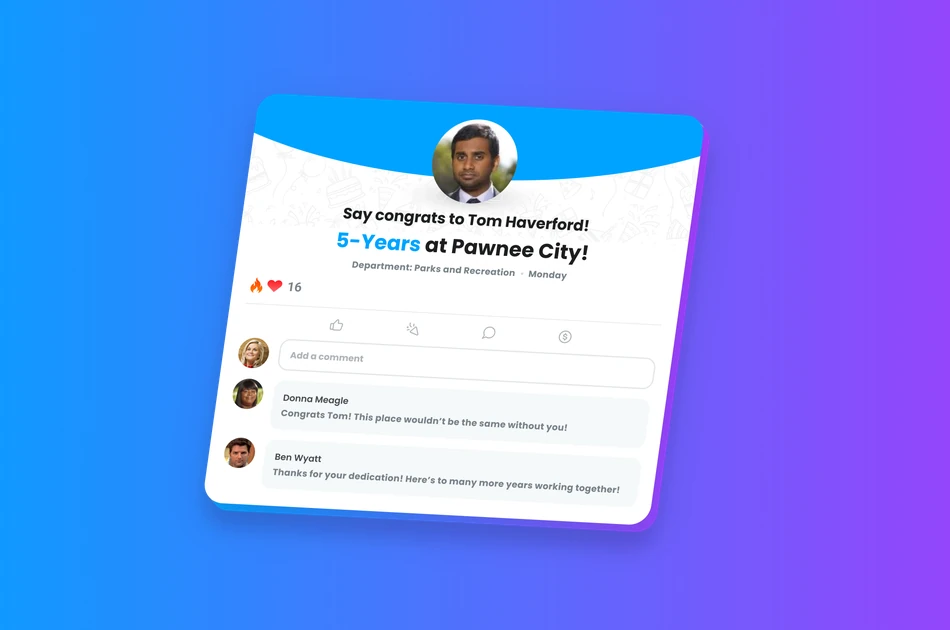
With manual, paper-based recognition programs, most people are left out or unseen. Getting recognized requires winning the manager jackpot or working in a job that has clear award-based work (e.g. a quota-based job). A digital, automated program resolves these issues—helping everyone get a chance to be recognized consistently (and with peer-to-peer recognition, the opportunities for recognition are endless).
Good efforts get recognized in real time.
When recognition is sectioned off into a manual task, it can never be truly delivered in real time. Good work passes by without proper recognition. With an automated, digital program, employees get recognized instantly—as soon as someone sees their efforts or positive results.
No more manual work.
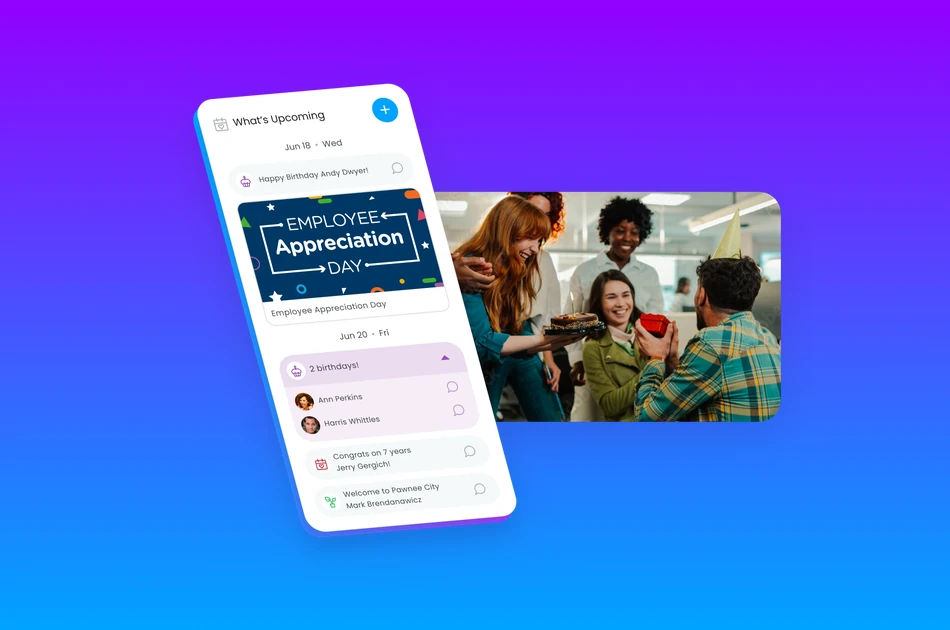
Say goodbye to time-consuming efforts of a manual recognition program—hand delivering or mailing gift cards, tracking data in spreadsheets, etc. Instead, a digital, automated program removes the burden of these tasks. The best program will remind you on employee anniversaries, send out an automated thank you, and give the power of recognition to everyone so it’s not just on managers or HR to actually recognize good work.
Encouraging employees to recognize one another is an incredible first start to driving better results with your recognition program. But, the right recognition tool will help you do even more—recognize employees for their hard work while also fostering a space to build community and connection.

Without a focus on community and connection, recognition just becomes about the rewards. While monetary recognition is important, it doesn’t help people connect to their peers, stay loyal to the business, or feel a sense of community and connection with their job.
Instead, recognition programs work best when they are centered around a connected culture. This can be hard to do in today’s environment of global workforces with multiple offices, locations, and teams that are spread out around the world. Physical proximity isn’t the answer to building community at your business anymore.
Instead, your business needs a recognition tool that focuses on these six priorities:
1. Social connection
The right recognition tool will help you unify your culture through social connection. By connecting employees to one another, their managers, and to the business, the culture improves and it’s strengthened for the long run.
2. Employee engagement
The right recognition tool focuses on increasing employee engagement—no matter where those employees sit around the world. As employees connect with other employees, team relationships are strengthened across time zones, locations, and more.
3. Instant, flexible, and global rewards
The right recognition tool offers multiple rewards that work for everyone—gift cards, charitable donations, swag, and cash. With a digital focus, everyone gets what they want.
4. Consolidated recognition in a single tool
The right recognition tool centralizes all recognition and employee engagement opportunities in a single space. Employees know where to go to connect with others, recognize good work, engage with company-sponsored events, and more.
5. Internal communication
The right recognition tool builds communication tools into the very heart of the solution—social feeds, public/private communication options, 1:1 connections, specific spaces for employee engagement and other groups, and business to employee messages.
6. Scalability
The right recognition tool is simple and flexible enough to start using immediately—helping you automate the things you care about the most, but robust enough to grow with you as your business adds employees and your team runs more programs.
In your search for the right recognition tool for your business, it’s critical to find a solution that will help you foster the right environment for recognition. To do this, you need three things:
1 - A digital space that connects everyone.
Connect your disconnected teams by finding a digital solution. Everyone can access the platform no matter where they log in for work—from work, from home; from their computer, or their phone.
2 - A place where people only talk about connection and recognition, not work.
Get recognition messages out of emails and other spaces meant to communicate about work. Separate the conversation so recognition and connection can get the attention they deserve.
3 - A space where people are publicly recognized for good work.
Don’t let the good work of peer-to-peer recognition happen in a vacuum. Give everyone a public platform and let peers recognize good work for everyone to see.
Most of our content here is very focused on peer-to-peer recognition. I'd like to see this be more holistic to the value of automating/digitizing various recognition programs as well as rewards and gifting. Let's talk more about how software can improve an HR or Team Leader's life/job by bringing initiatives/workflows into one place, tracking impact, providing a better employee experience with one place to go, saving time, and cutting costs.
With a central, digitized recognition solution, you can bring together more than just employee rewards. The right solution will help you centralize initiatives, workflows, and other tasks to save you and your team serious time.
When you digitize your recognition, you see clear benefits:
Centralize initiatives
A single solution for all employee rewards, recognition, and engagement leads naturally to a place where you can centralize all initiatives too—wellness programs, book club, company announcements and more. It’s one spot for everyone to go and get all the information and connection they need from the business and their colleagues.
Automate workflows
Instead of fighting the clock with a list of tasks that needs to be completed every time you recognize someone (for a birthday, a milestone, a job well done, etc.), a digitized recognition platform can help you automate these workflows—saving you time and ensuring you never miss a key recognition.
Save time
By digitizing recognition, you’re saying goodbye to the manual slog of work that most recognition programs deal with—managing physical gift cards, inputting info into an arduous spreadsheet, and more.
Track impact
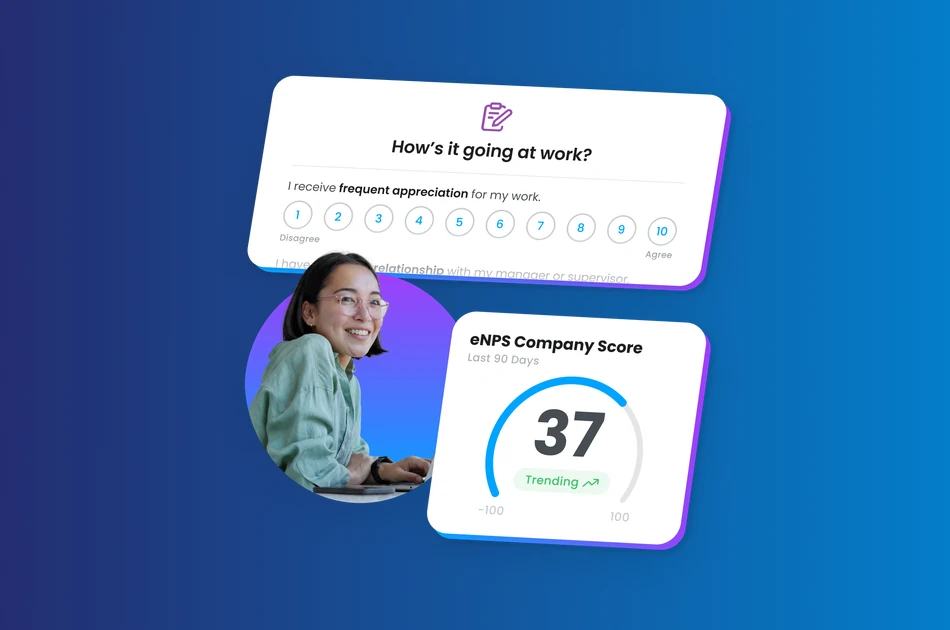
When recognition isn’t digital, it’s hard to track. You can’t see who’s been recognized, what they received, or how long it’s been since so-and-so has been given any public praise. A digital solution solves this issue—giving you real visibility into what’s happening at the business with recognition. And the right solution will give you real-time engagement data so you can keep a pulse on it whenever you want.
Cut recognition costs
A digitized recognition solution doesn’t just save time, it also saves money. Manual programs often lead to physical gift cards, creating scenarios for HR where gift cards are purchased in bulk ahead of time (and stored for when they’re needed. Digital programs give everyone the dollars they earn when they earn them—it’s real-time and no one’s budget is wasted on gift cards in office drawers.

As you compare employee recognition tools, there are several key categories of features that you should research and compare. The following charts will help you evaluate each platform, ensuring your final selection is the right fit for your business.
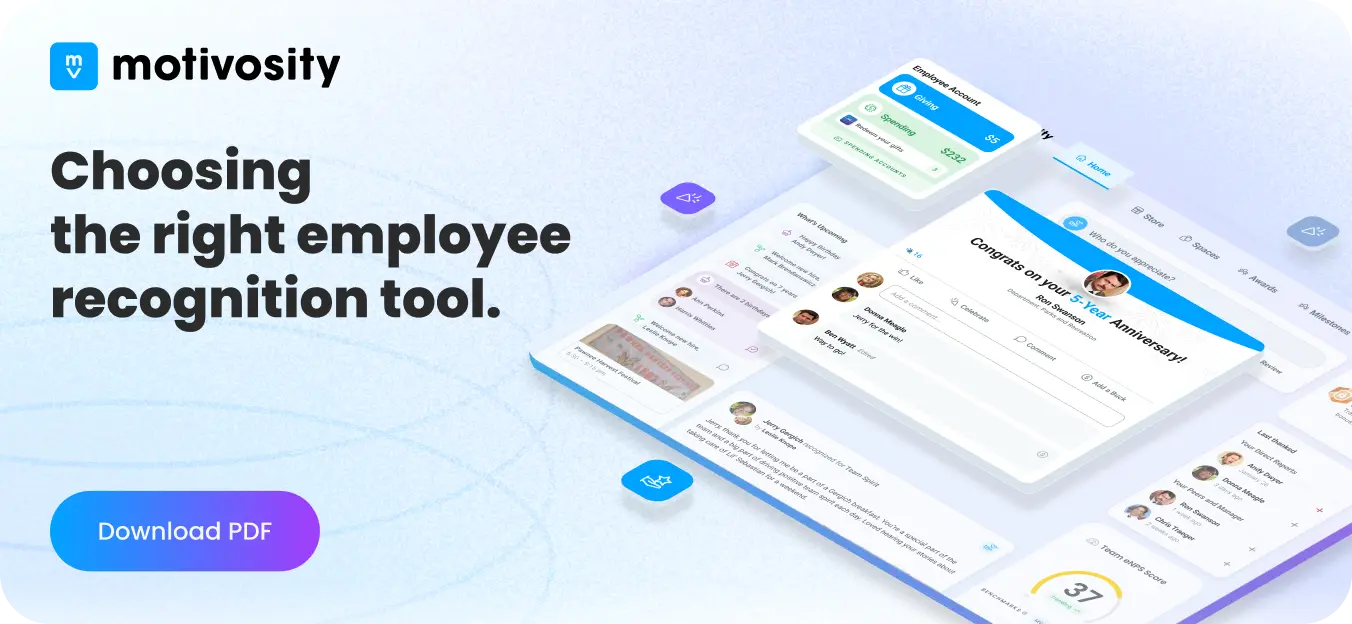
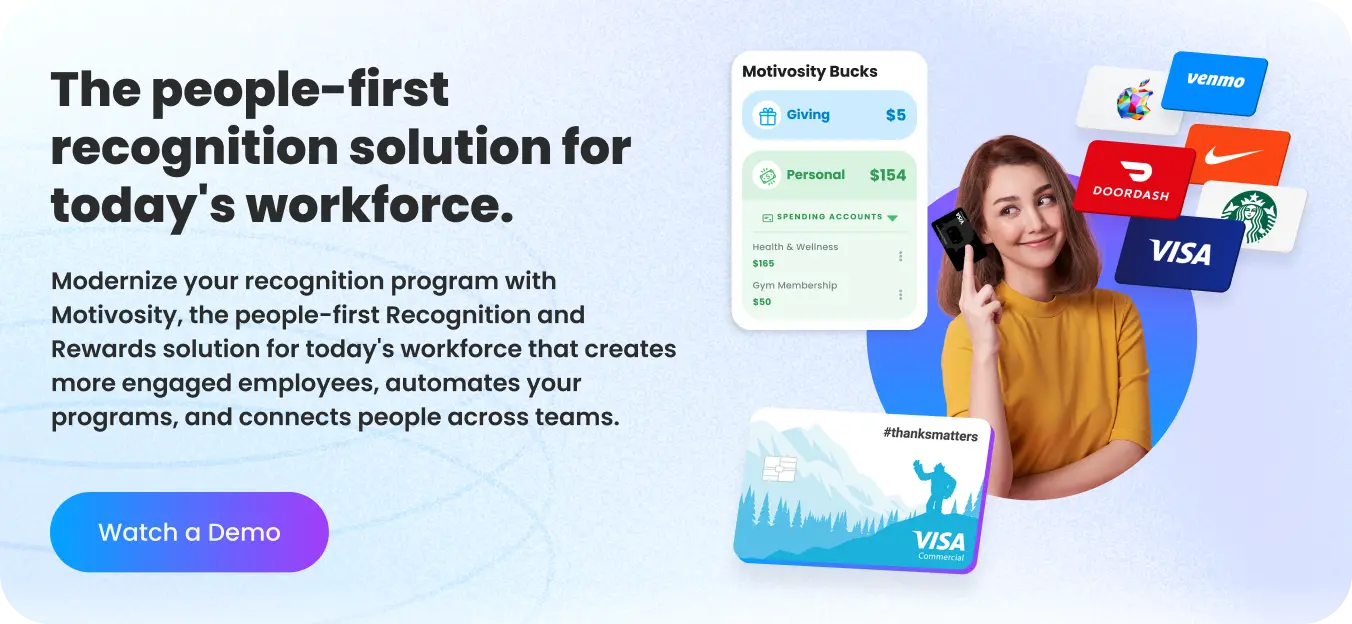
Modernize your recognition program with Motivosity, the people-first Recognition and Rewards solution for today’s workforce that creates more engaged employees, automates your programs, and connects people across teams.
Find out more about Motivosity here.
“Motivosity out a lot of the opportunity for our very busy management team to miss important moments for employees, which can be detrimental to employee morale. Automatic is an enormous win.”
—Megan Fournier, Guest Experience Manager, Great NH Restaurants
“Before we had Motivosity, we had a really hard time keeping everyone connected to the voice of the credit union and the culture inside. Now, I see more and more people recognizing others for elements of our core values.”
—Stephen Owen, CEO, First Entertainment Credit Union