Peer-to-peer recognition changes who gets to say "thank you" — and that changes everything. When appreciation isn't gated behind a manager's awareness or a formal review cycle, it becomes faster, more specific, and more meaningful. This post breaks down five of the most impactful peer recognition examples — from values-based shoutouts to everyday micro-recognitions — and explains how to build a program that actually sticks.
Key Takeaways:
Recognition shouldn’t depend on one person noticing everything. In today’s fast-moving and distributed workplaces, managers simply can’t see every collaboration, late-night assist, or quiet act of support that keeps work moving forward. When those moments go unnoticed, employees can feel disconnected—even when they’re doing great work.
Peer recognition changes the dynamic. Employees gain the ability to acknowledge one another in real time. This recognition makes appreciation part of everyday work instead of a quarterly event controlled by leadership.
A visible, shared culture of recognition strengthens teams organically. Engagement rises. Retention stabilizes. Managers gain the space to focus on coaching and development rather than trying to capture every contribution themselves.
Manager-only recognition creates a bottleneck. One person can't see every contribution across distributed teams, time zones, and workflows. Recognition occurs only when leadership notices, so most work goes unacknowledged.
Peer-to-peer recognition distributes appreciation across the entire team. Employees see the daily contributions managers miss — the teammate who troubleshot a client issue after hours, the colleague who mentored someone through a difficult project, the person who helped another department during crunch time. Appreciation becomes immediate and specific.
Recognition shifts from an event to a behavior—and when it’s visible across the organization, it reinforces what great work looks like for everyone.
Organizations with strong peer recognition see higher engagement, lower turnover, and improved collaboration:
Distributed appreciation removes the ceiling on recognition, so everyone can participate.
Values-based recognition connects everyday behavior to company principles. Instead of generic praise, employees acknowledge specific actions that demonstrate values.
A sales rep might recognize a colleague for "Customer First" by staying on a call past close to resolve an urgent issue. A product manager might call out a designer for "Move Fast" by prototyping solutions overnight to unblock the team.
Values-based recognition connects values, culture, and behavior by turning abstract principles into visible actions employees can recognize and reinforce every day. Recognition names the value and explains how the behavior reflected it, so teams learn what "living our values" looks like in practice. Employees internalize the connection between daily decisions and organizational priorities.
Recognition patterns also surface gaps in culture. If “Innovation” is a stated value, but no one is acknowledged for taking thoughtful risks, leaders can see the disconnect between aspiration and daily behavior.
Tying appreciation back to mission moves culture out of the handbook and into daily work.
Major project completions often spotlight team leads or high-visibility contributors, while the supporting effort can fade into the background. Deadlines are met and targets hit, but the behind-the-scenes work that made success possible doesn’t always get equal attention — especially when managers are focused on final deliverables.
Peer recognition brings the full story forward—especially when appreciation is visible across the company. When teammates publicly thank each other, the behind-the-scenes effort behind big wins becomes clear to everyone.
During a product launch, major deal, or complex implementation, employees see contributions that leaders may miss in the moment.
This kind of recognition makes collaboration visible. It reinforces that team successes are shared and rarely the result of one person’s work. Outcomes matter, but the support that made them possible matters just as much.
Celebrating team wins together strengthens trust across roles and functions. Employees feel seen not only for what they shipped, but for how they supported one another along the way. That goodwill carries into the next project.
Teams that consistently acknowledge collective effort build stronger relationships, greater resilience, and a culture where collaboration is recognized as essential to success.
Organizational silos tend to form gradually. Teams focus on their own priorities, acknowledgment narrows, and departments begin operating alongside one another rather than together. Over time, limited insight into each other’s work can create friction, misalignment, and missed opportunities to collaborate.
Cross-team appreciation restores visibility while helping employees understand how their work connects to the broader organization, strengthening trust, alignment, and collaboration across departments.
Acknowledgment that moves across departments highlights how different roles contribute to shared outcomes. Employees gain a clearer understanding of how their work connects to broader goals and how other teams support that progress.
With this change, departments that once felt distant start to feel interdependent, and the day-to-day work of other teams becomes easier to understand. Greater awareness builds trust, and trust makes collaboration more natural.
As appreciation flows across team boundaries, organizations begin to see a stronger partnership between functions. Projects move more smoothly, communication improves, and teams approach shared challenges with greater unity.
Recognition reinforces the idea that success is collective, not confined to a single department.
Over time, consistent cross-team acknowledgment helps replace siloed thinking with a more connected culture — one where employees see how their contributions fit into the larger picture and feel valued beyond their immediate team.
Skill-sharing and mentorship rarely show up in formal metrics, yet they shape how teams grow. Much of that development happens in quiet moments — like guidance offered before a big presentation, help navigating a new system, or feedback that builds confidence. These contributions strengthen capability across the organization but often go unseen.
Acknowledging this kind of support signals that growth matters. It reinforces that expertise isn’t only measured by individual output, but by how employees help others succeed. Teams become more open to sharing knowledge, and employees feel more comfortable asking for help.
Visibility into who consistently supports others also gives leaders useful insight. Patterns of appreciation can highlight trusted advisors, emerging leaders, and internal experts before titles change. That awareness helps with team development and succession planning.
Organizations that consistently emphasize knowledge sharing foster learning-focused cultures. Skills spread more quickly, and institutional knowledge stays embedded within the team rather than tied to one individual.
Not every meaningful contribution comes with a launch announcement or revenue milestone. Many of the moments that strengthen teams are small and immediate. These acts rarely appear in formal programs, yet they shape the daily work experience.
Peer recognition captures those moments in real time. A quick, visible acknowledgment turns a small assist into a shared moment of appreciation.
With micro-recognitions, frequency matters. Dozens of small recognitions across a week create more cultural impact than a single quarterly award. Consistent appreciation builds trust and psychological safety. Employees gain confidence that their daily effort counts — not just the high-profile wins.
Micro-recognitions also make participation universal. Every employee has opportunities to thank someone. Recognition becomes a habit woven into the rhythm of work, not a special event reserved for standout achievements.
Over time, those small moments compound into a culture defined by gratitude and connection.
Peer recognition becomes sustainable when it is simple, visible, and supported by a clear structure. Effective employee recognition programs treat peer appreciation as an ongoing practice rather than an occasional campaign.
Structure matters, but flexibility matters just as much. Employees need clear guidelines, easy tools, and visible moments of appreciation that feel authentic rather than performative. The goal isn’t to create more processes — it’s to make recognition part of how work already happens.
Here’s how to create a recognition program.
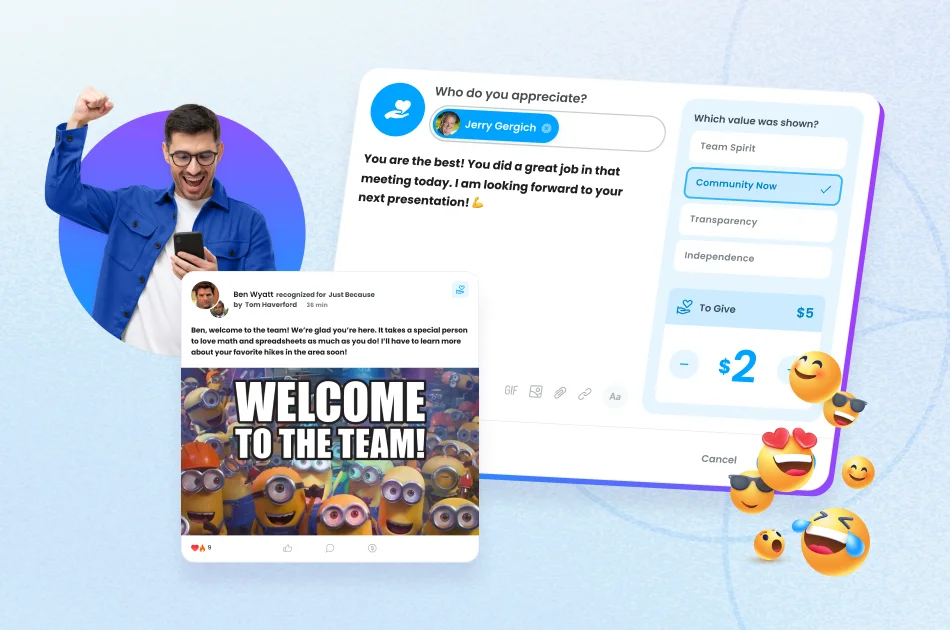
Start by empowering employees to recognize one another directly. Team members can acknowledge meaningful contributions as they happen, strengthening connection in the moment. Transparent guidelines maintain consistency without increasing administrative burden.
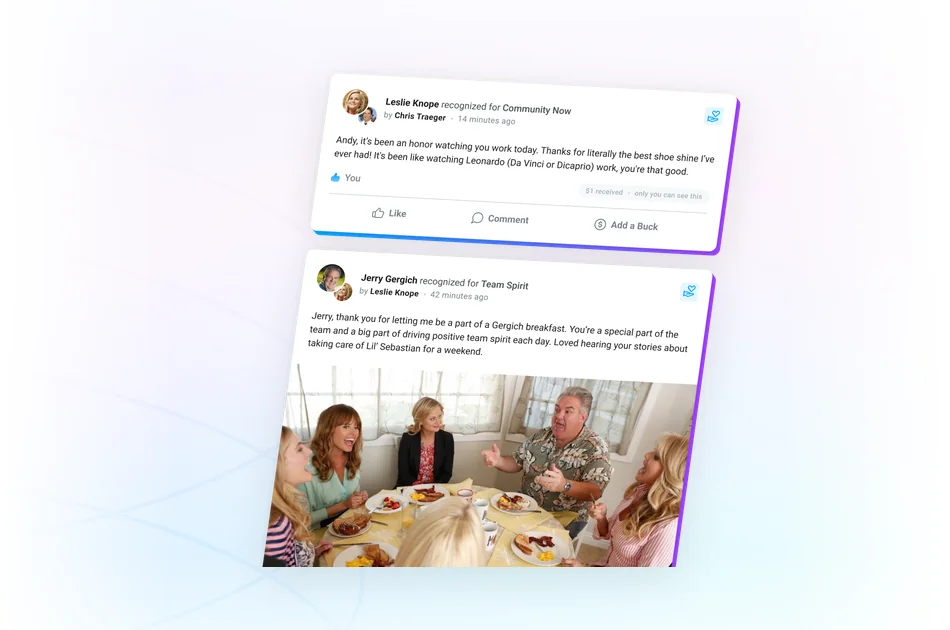
Visibility amplifies cultural impact. A social recognition feed allows the entire organization to see how colleagues contribute across roles and locations. Patterns emerge as company values show up in action. Appreciation becomes a shared experience rather than a private exchange.
Integration supports participation. We understand your needs in meeting employees where they already work. Integrations with platforms like Slack and Microsoft Teams, and your HRIS make it easy to recognize coworkers in the flow of everyday collaboration.
Motivosity brings these elements together in one people-first recognition and rewards platform. With social recognition, automated milestones, and flexible rewards, teams can celebrate contributions in real time while leaders gain insight into engagement and culture trends.
Peer-to-peer recognition distributes appreciation across the organization instead of concentrating it with leadership. With the right structure in place, acknowledgment can become consistent and shared rather than dependent on a single manager or team.
The impact shows up across the organization:
Over time, recognition becomes self-sustaining. Consistent, visible appreciation strengthens engagement and retention while reducing administrative lift. Culture grows through everyday moments of gratitude that reinforce how work gets done.
Ready to see how peer recognition works in practice? Get a demo to see how Motivosity makes appreciation frequent, visible, and scalable.