
Transparency isn't about sharing everything with everyone — it's about giving employees the context they need to understand decisions, connect their work to company goals, and trust that leadership is being straight with them. One-third of employees say communication and transparency are essential to a positive workplace, yet most organizations still struggle to make it a consistent reality. This post breaks down why transparency breaks down, what it costs when it does, and what leaders can actually do about it.
Key Takeaways:
People want to understand how decisions are made, why priorities shift, and how their work connects to the company's overall direction. One-third of employees say communication and transparency are essential to a positive workplace environment. But that doesn’t mean they want more emails or all-hands meetings.
According to the State of Workplace Culture & Connection Report 2026, younger employees place even higher value on transparency at work: 36% of workers aged 34 and under prioritize it, compared to 31% of those aged 35-44.
Building transparency at work requires providing clarity on what matters, consistency in how information is shared, and visibility into how individual work connects to company goals. Done well, it creates an inspiring workplace, transparency, and a clear vision of the future, without overwhelming employees or disrupting how teams work.
When employees understand the why behind decisions and see how their work matters, they don’t just feel informed, they feel connected, motivated, and more likely to stay.
This article explores why transparency remains a persistent challenge and offers practical strategies to improve it without destabilizing teams or overwhelming employees with information.
Transparency at work doesn't mean sharing every piece of information with everyone. Information overload (i.e., flooding employees with updates, metrics, and meeting notes) creates noise rather than clarity.
Transparency means giving employees the context they need to understand decisions, connect their work to company goals, and see how that work drives things forward.
Effective transparency happens across three layers:
Transparency succeeds through clarity and consistency. Clarity builds understanding, but consistency builds trust.
Transparency problems rarely happen intentionally. They happen when everyday friction builds as companies grow.
When context gets filtered out, employees lose the why. Without it, it’s harder for teams to stay aligned, motivated, or confident in the direction. Strategic decisions get reduced to talking points, and the reasoning never reaches employees.
Marketing uses one tool, engineering another, operations relies on email, and leadership updates happen in all-hands meetings. The information exists, but it lives in disconnected places.
Early-stage companies tend to be transparent because everyone sees everything. As teams specialize and companies add more managers, maintaining that visibility requires more effort.
Employees no longer overhear strategy discussions or pick up priorities through casual conversations. Companies have to build context intentionally, and many organizations don’t take the steps to do it.
Transparency at work directly affects engagement, retention, and performance. When communication breaks down, problems build over time:
Organizations that consistently measure engagement see a clear link between transparency and retention. Employees with a strong understanding of company direction and decision-making stay longer, perform better, and contribute more to organizational goals.
Company goals lose impact when they only show up during quarterly reviews or annual planning. Employees need consistent visibility into what the organization is working toward and how close teams are to achieving those objectives.
That visibility also needs to connect to day-to-day work. People should be able to see how their tasks support what the company is trying to do, not guess at the connection.
Regular updates keep teams aligned and prevent drift. Transparency at work depends on making goals accessible and keeping them front of mind, not filing them away after a kickoff meeting.
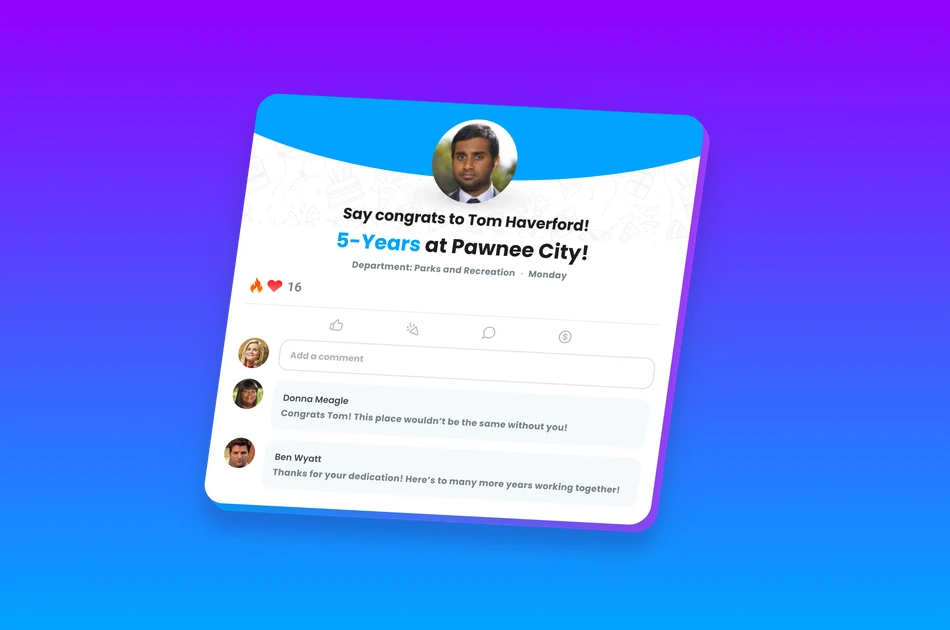
Recognition is one of the most powerful ways to create transparency — because it shows, in real time, what great work looks like. Public peer-to-peer recognition ties employees’ actions to the organization's values. Employees see which contributions get acknowledged, who's demonstrating company values, and how those values connect to work across different roles and departments.
For leaders and executives, this creates a real-time pulse on what is actually being reinforced across the organization. Values-based recognition reveals where alignment is strong and where it may be breaking down.
When recognition is visible across the company via employee recognition platforms, employees gain context into work happening beyond their team. That shared visibility builds connection, reinforces priorities, and keeps teams aligned around what matters most.
Decisions land better when people understand the reasoning behind them, not just the outcome. Without that context, even well-founded choices can feel arbitrary.
Explain the “why” behind changes and the trade-offs leadership considered. Sharing the criteria behind major decisions helps employees see the logic, not just the result. It also requires a way for people to respond. Feedback loops give employees space to ask questions and raise concerns, which reinforces trust.
Managers connect company plans to the work teams actually do, so how they communicate shapes how well employees understand what’s happening.
Train managers to pass information to their teams with context, not reduce it to vague talking points. Important priorities should reach their teams in ways that still make sense.
Encourage open dialogue in team meetings so employees feel comfortable asking questions about company direction and decisions that affect their work. Reinforce psychological safety by showing managers how to respond to tough questions without getting defensive. Clear, consistent communication at this level is what makes transparency real for employees.
Technology helps make transparency easier to maintain as companies grow. Company-wide recognition feeds show appreciation across the organization rather than keeping it behind closed doors. Everyone sees what behaviors get valued, who's contributing to shared goals, and how company values translate into daily work.
Integrated communication tools like Slack and Teams bring visibility into the flow of work rather than requiring employees to check separate platforms for updates. Dashboards that track transparency give teams real-time context on progress toward goals. The right tools make transparency continuous and embedded, rather than dependent on leadership remembering to communicate.
Transparency works best when it’s part of the everyday employee experience, not just something shared in meetings. The right employee engagement software supports that visibility:
Motivosity helps you build this kind of ongoing transparency by making recognition visible, tracking progress, and keeping communication consistent.
Transparency shows up in how people feel about their work and what they understand about the company. A few signals can help you spot where things are clear and where they are not:
Engagement surveys can highlight how much employees trust what they are hearing. Look at how people respond to questions about decision-making, confidence in leadership, and whether they understand how their work connects to company goals. Lower scores often point to gaps in communication.
Pay attention to how recognition moves across teams. When appreciation stays within a single group, it can signal limited visibility. When it flows across departments, it often reflects a better shared understanding of work happening across the organization.
Managers play a key role in how information is shared. Look at whether employees feel informed, supported, and comfortable asking questions. Strong communication with management usually means people have the context they need to do their jobs well.
Retention and growth patterns often point to how transparent an organization is. Employees who understand the company direction and see opportunities ahead are more likely to stay and pursue new roles internally rather than look elsewhere.
Transparency isn’t a one-time initiative. It’s something employees experience every day through what they see, hear, and feel at work.
Motivosity drives visibility. We bring recognition, communication, and connection into one place. Employees always understand what’s happening and how they fit into the mission and values of the organization.
Motivosity creates that foundation through company-wide recognition feeds, values-based appreciation, and integrations that embed transparency into daily workflows.
Build a culture where employees understand company direction, see how their work matters, and trust leadership to communicate clearly. Get a demo to see how Motivosity helps teams understand what’s happening and where they’re headed.