Employee incentive programs are one of the most practical levers HR teams have for improving engagement, retention, and performance — but only when they're designed thoughtfully and tied to what employees actually want. This guide covers 19 incentive program ideas, the benefits they deliver, and the best practices (and common mistakes) that determine whether a program thrives or quietly dies. The right mix of programs, communicated well and delivered consistently, can transform how employees feel about showing up to work.
Key Takeaways:
It’s not news that engaged employees stay longer, work harder, and feel more connected to the business—helping to boost the bottom line. And while improving employee engagement can feel like an uphill battle for some companies, it doesn’t have to be a big challenge. For many, it’s as simple as offering the right employee incentive programs that help motivate employees to increase performance (and improve overall engagement).
In this article, we’ll cover which employee incentive programs work, how they impact engagement and increase employee morale, and which ones you can implement at your business.
Employee incentive programs—wellness initiatives, bonuses, referral programs, etc.—are built to help encourage or motivate employees to do something or take a specific action.
For example, if your business offers performance-based pay, you are incentivizing employees to be high performers in order to earn a larger paycheck. Or, to help improve employee wellbeing, your business might offer a variety of wellness programs that motivate employees to take more steps, visit the gym, or drink more water!
Some employee incentive programs are directly tied to performance (e.g. performance bonuses) while others lean into helping employees stay healthy and balanced (e.g. wellness programs or PTO policies).
While the goals of individual employee incentive programs will vary based on the intended result, the overarching goal of employee incentive programs, in general, is to keep team members engaged in the business and incentivize employees to operate at a higher level.
Employee engagement impacts employee performance, employee retention, productivity, happiness, and so many other areas of work—the right programs will both encourage employees to engage in those programs and stay connected to the business.
Employee incentive programs offer a wide variety of benefits—to both employees and the business. For employees, incentive programs offer tangible rewards for completing specific actions.
(For example, a tuition reimbursement incentive program might offer a dollar-for-dollar match on educational spending for the employee from the business. Or, it might offer a flat rate that the employee can use during the calendar year and apply toward professional development or college tuition. However the incentive program is organized, the benefit to the employee is a reimbursement for furthering their education.)
From the business perspective, employees that are engaging in these programs—like tuition reimbursement—are more likely to stay longer in their job and feel engaged in the work they are doing. The business experiences less turnover and a more committed, loyal employee.
Consider these benefits of employee incentive programs:
Incentive programs can help increase employee loyalty to the business. This happens in two ways. First, employees that have access to more programs or perks at their job feel more appreciated and connected to their employer. These programs can help employees feel more valued and seen as a whole person, not just a cog in the wheel of the business.When incentive options are outlined in an employee’s total rewards package, it can be easier to point out the value of these programs. This also helps employees see the company’s total investment in them, which increases loyalty between the employee and the business.
Employee incentive programs have been proven to increase employee retention by 14% and reduce the likelihood of turnover by 26%—a significant boost for businesses that have seen serious workforce turmoil in the last few years. The reason? They offer extra perks, motivation, and, oftentimes, pay, giving employees fewer reasons to look elsewhere for their next job.
Incentive programs also tremendously increase employee satisfaction, especially when those programs align with the needs of your employees. Some employees are more motivated by a pay increase while others need additional perks, like a gym pass or extra time off. If your business offers a variety of programs, you’re more likely to offer the right mix to help every employee find what they need.Pro tip: include a question about which programs work best for employees in your next employee sat survey and consider adding a pulse survey to find out if new programs are worth keeping around or if they should be removed from your offerings.
All of these benefits lead to an overarching increase in engagement. And it’s no surprise— incentive programs help employees feel like they belong, help employees feel valued, and motivate employees to be more productive.
Ready to create effective employee incentive programs for your business?
Motivosity is a great solution to easily manage and implement incentive programs for your organization, with automated awards, effective employee communication tools, and a vast selection of both intangible and tangible rewards like swag, gift cards, travel experiences, and more. You can also measure the success of your programs with in-depth reporting and eNPS surveys that help you understand the health of your company culture and workforce.
Consider these employee incentive program ideas to help your business boost employee engagement and encourage employees to work harder (and be happier!) at work:
A performance-based pay employee incentive program is a compensation strategy that motivates employees to increase productivity for an increase in pay. Additional pay is typically offered in the form of a commission check or a bonus and the payout can be tied to individual, team-based, or even company-wide results. This type of employee incentive program encourages employees to work toward company goals, helping both the business and the employee earn more.
A referral bonus employee incentive program offers monetary rewards for employees that successfully suggest a new hire for an open role at the business. Typically, employees recommend a potential candidate through a formal process and then, if the candidate is hired, the employee is paid a referral bonus.
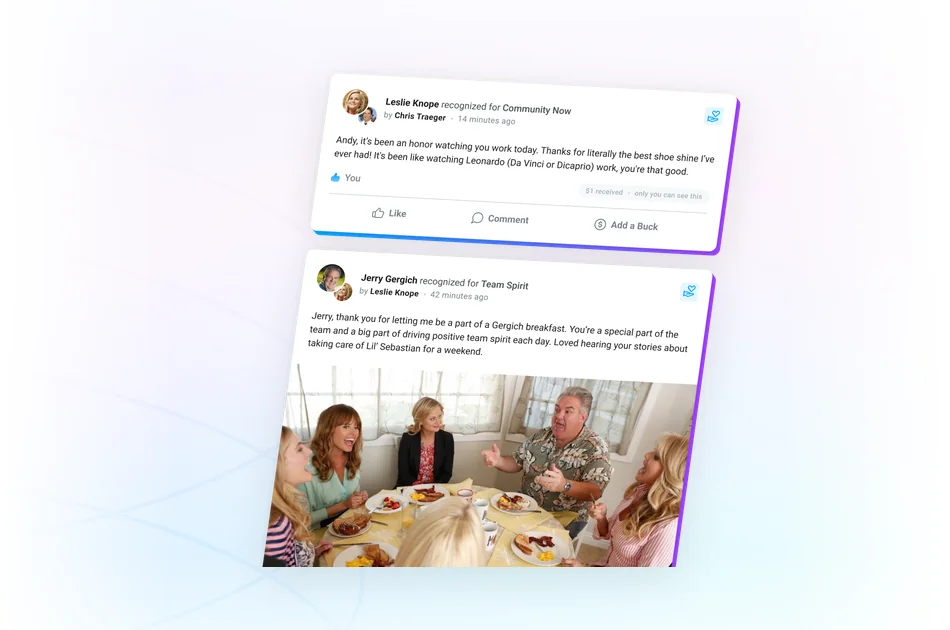
Employee recognition programs are a great employee incentive program to implement—they might offer the most benefits out of all potential programs available. With the right employee recognition software, it’s easy to offer a recognition program, whether that be top-down recognition, peer-to-peer recognition, or both. And with the right solution, your workforce can access an employee rewards platform, giving them plenty of options to choose from when they are awarded recognition dollars or points (most employees prefer monetary rewards!).
A profit sharing option is another employee incentive program that can help increase engagement and build loyalty with your employees. In this scenario, the company offers a portion of their profits directly with employees. The profits can be paid out in a variety of ways—cash, stock, etc.
In many cases, employers gift the amount each employee earns into an employee savings account. In other cases, employees are paid an additional cash bonus for hitting specific profit targets.
Stock ownership plans are built to reward employees with an opportunity to own part of the business in the form of an employee stock ownership plan (ESOP) or an employee stock purchase plan (ESPP). With an ESOP, employees are gifted shares from the company, typically in a retirement plan. This option offers tax benefits for both employees and the business. And with an ESPP, employees must purchase their own shares (likely at a discount).
Health and wellness programs are an excellent option for employee incentive plans. They can be offered in a variety of ways—gym membership reimbursement, sponsored lunches, onsite fitness classes, and more. Many of these programs work hand-in-hand with health insurance plans, helping employees stay active and healthy.
Employee Assistance Programs (EAPs) are employer-sponsored offerings that can help with financial challenges, mental health issues, elder care concerns, etc. Oftentimes, these services are offered in the form of short-term counseling, assessments, or even referrals to the right practice that can help employees with any pressing issues. As an incentive program, EAPs offer an additional benefit that employees should view as part of their total rewards package.
Career development plans, also referred to as employee development plans, can be categorized as incentive plans when goals or metrics are directly tied or linked to rewards. For example, a career development plan might outline specific education, training, or years of experience in a specific role that must be met before they are considered for a promotion. Others might offer tiered incentives that are based on specific milestones or skill development.
Additional PTO is an easy way to offer an employee incentive program that works for employees. Your company might offer extra paid days off for employees that hit specific sales or profit goals, or use them as a motivator to increase general productivity among the workforce.
Personalized gifts are another great option. These gifts could range from company-branded swag to an engraved plaque to a catalog of options that allows employees to choose the gift they want.
Personalized gifts are perfect for individual moments that should be recognized—work anniversaries, Secretary’s Day, HR Professional Day, special holiday within the company, etc.
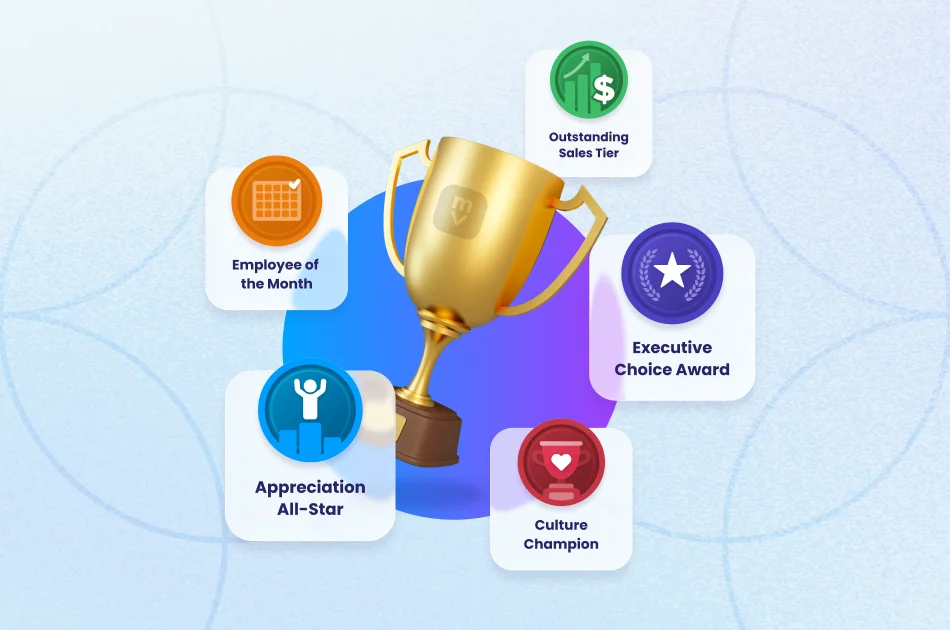
Special awards offer an opportunity for businesses to highlight (and incentivize) work that they appreciate. This could look like peer- or leader-nominated employees for Employee of the Month, employees that emulate company value, etc. Whether these awards are given individually, to a team, in a 1:1, or at a company meeting, they can be a great avenue for incentivizing employees to increase productivity, remain loyal to the business, and align with company values.
Flexible and remote-friendly work options are a critical employee incentive program that many employees are looking for today. And these programs can be built to accommodate the needs of the business and the employees—helping everyone feel like it’s a win-win.
In some cases, this might look like employees choosing the hours that work best for them—logging on in the early morning and then leaving an hour or two before five. For others, it could mean adjusting work hours to a specific time zone or allowing employees to work remotely several days of the week or whenever it works better for their personal schedule.
And the benefits? Forbes reports that employees who have the option to work remotely are much more satisfied with their jobs compared to their colleagues who work in-person at an office.
Travel incentives can be used to motivate employees to take time off to recharge and relax—helping them come back to work refreshed and ready to be productive. Some companies offer a specific dollar amount to employees and require them to use it on a vacation, encouraging them to travel.
Others might use travel incentives for teams that hit specific goals (e.g. a sales team might be offered a trip with a plus one for hitting quota in a specific quarter).
Mentorship programs can be a great incentive for employees that are interested in additional professional development. Companies can sponsor these programs, helping employees pair up with the right mentors and offering talk tracks, time to meet, etc.
Company-sponsored events can be used to incentivize teams and individuals to meet specific goals and to generally boost morale. These could include team lunches or dinners, a company-sponsored picnic or event where families are also invited, sporting event tickets, and more.
One good example of a company-sponsored event would be a President’s Club vacation—it’s sponsored by the company and offered as an incentive for sales reps that reach a high quota.
Personalized learning plans motivate employees to reach detailed milestones by outlining specific tasks or trainings that must be completed. Rewards are typically attached to each milestone and could include a promotion, a bonus, public recognition, etc.
Increased autonomy is an excellent employee incentive option that may not look like a formal program. In these scenarios, more senior or tenured workers may be given more control over their schedules and tasks, allowing them to say yes to the things they want to work on and when. With more autonomy at work, employees report higher satisfaction and higher loyalty to the business.
Work-life balance initiatives might overlap with flexible and remote-friendly work environments—but their main goal is to offer a workplace that encourages employees to find the right balance between home and work. These initiatives, like a flexible work environment, might include adjusted hours to allow for childcare pick-up and drop-off, policies about checking email after five every day or on the weekends, travel restrictions for work, etc.
Community involvement programs can be used as employee incentive programs in a few ways. Some companies might offer a day off from work to allow employees to go perform community service—a great way to take a break from the day-to-day tasks and to enjoy time with their colleagues. Others might offer financial contributions to an employee’s charity of choice or help run a food donation drive, etc.
As you work to define the programs you want to implement at your business, consider the following best practices:
First, personalize the programs to fit your culture. One way to do this is to consider your company’s mission and values. Which programs align? For many, a recognition program is a great way to reinforce company values, especially if employees are rewarded for emulating company values in their daily work (e.g. if one of your values is customer excellence, an employee might be recognized for going above and beyond with a customer experience).
Whatever programs you choose to implement, consider how they fit into your company’s brand and values—these programs will help determine the culture you are cultivating at your business.
Employee incentive programs that are available, but not marketed to employees, won’t be used. Don’t forget to clearly communicate your programs to your people. For existing programs, include information in onboarding materials, weekly or monthly company messages, and reminders at annual benefit information meetings.
Make it easy for employees to find information about these programs throughout the year—in a portal, your HRIS, or your intranet. And if you’re rolling out a new program, include a kickoff party/meeting to introduce the new program to your employees.
Delayed incentives are not beneficial to you or your employees. Instead, promote incentives in a timely manner. Rewards for recognition should be delivered quickly, wellness benefits should be available in real-time, and quarterly bonuses should be paid out within a few weeks of a quarter ending. Incentives will keep your employees motivated and engaged in the business (and these programs), so prioritizing their timely delivery should be a top priority.
If your list of programs is growing too quickly, or the complexity of rewards is getting too complicated, it’s time to remember that simplicity is key for these programs to reap real benefits. Keep your programs simple. And if you want to roll out a longer list of programs, try organizing your kickoffs to one program a quarter so you don’t overwhelm your team or your employees.
Programs with complicated steps don’t get engagement—and they end up frustrating employees and whichever team is responsible for delivering the actual incentive (payroll, HR, etc.). The best advice here? Set very clear criteria for each program. Make sure employees (and whichever team is spearheading the program) are clear on the requirements for each incentive.
For example, if hitting quota is the baseline for earning an accelerator for a sales rep, be clear on dates, the quota amount, when reps will be paid, etc.
As you implement employee incentive programs, don’t forget to collect employee feedback. Survey your workforce on what they want from these programs (especially if you’re in the process of creating or introducing new programs), which programs are currently working well, and what they want to see more of in the future. A pulse survey is a great option if you want to get feedback on a specific program.
Finally, no incentive program will be successful without the support of your leadership team. Train your managers to implement incentives effectively, especially if they are part of the process (e.g. rewards, performance bonuses, etc.). Include this information in onboarding materials, quarterly trainings, and wherever you house other leadership materials to help leaders remember their role in these programs.
It’s easy to get going with employee incentive programs and forget to follow best practices. Whether your programs have been in place for some time or you’re rolling out a new list of programs, consider these top employee incentive program implementation mistakes (and get advice on how to avoid them):
Employees are the customers for these programs and their feedback is paramount to success. The two mistakes to avoid here include not surveying employees for feedback on future and existing incentive programs and then not implementing the feedback you receive.
Programs that don’t align with business goals will soon be seen as a waste of time for employees and HR and eventually in conflict with company culture. Don’t forget to review your company values and mission statement before you consider which programs to implement (this process will likely make it easier to select the programs that will be most successful anyway—don’t skip it!).
Incentive programs that only focus on a specific team or group will leave others feeling left out, unmotivated, and as potential flight risks. As you review your list of programs, make sure you have an option for every employee and that these programs create a fair way to earn the incentives you’re offering.
While including everyone is critical to success for these programs, you will also need to consider how to tailor incentives to individual needs. A great example of this is the rewards you might offer for a recognition program. If you only offer company swag or gift cards to a specific restaurant, you’re not going to appease everyone’s individual wants and needs. Instead, consider offering a wider variety (or a more flexible reward option).
New programs will only garner engagement from employees that know about them. Don’t overlook the power of a kick-off party or meeting, a printed flyer, an email follow up, and other forms of communication, messaging the details about the new program to the entire workforce.
One big mistake businesses make with these programs is allowing rewards and incentives to be paid out inconsistently. This mistake will lead to a serious drop in engagement and likely increase employee frustration (and possibly turnover). Other mistakes with consistency that businesses find themselves making include forgetting to remind employees about these programs, removing resources from the programs without notice to employees, etc.
Another easy mistake businesses make with employee incentive programs is setting up these programs without a clear way to measure or evaluate success. Without a clear objective, KPIs, and a way to monitor success or to gather feedback, these programs can’t undergo a thorough review.
The foundation of an employee incentive program is to provide motivation and encouragement for employees to do something—often increase productivity or perform at a higher level. If your team fails to keep these programs updated or to re-evaluate the needs of employees (and the business), you’ll likely see lower engagement and participation in your programs.
Don’t forget to include a review of your programs in your annual plan and re-evaluate which programs should continue vs. those that should be removed from your offerings.
To truly build employee incentive programs that work (those that boost employee morale and increase engagement), your business must remember to connect programs to your company’s mission and values, offer a variety of employee incentives and rewards, communicate the programs (and their requirements) clearly and effectively, and measure success through an annual evaluation and employee feedback.