Financial rewards work best paired with real recognition, not offered as a substitute for it. Bonuses, flexible rewards, and career development each solve a different piece of the retention problem, so no single one can carry the whole strategy.
The financial services companies with the strongest cultures build reward programs around consistency and choice, not a once-a-year payout.
Financial rewards are the monetary and monetary-equivalent incentives a company gives employees for their performance or contribution: performance bonuses, commission, profit-sharing, raises, gift cards, or stipends. Anything with a dollar value attached falls under this umbrella.
Financial rewards are not the same thing as recognition. Recognition is the act of noticing someone's work and saying so. A financial reward is what you give as a result. You can hand someone a bonus with zero explanation and it still counts as a reward. It just won't feel like much.
In performance-driven industries like financial services, financial rewards carry more weight than in most workplaces. Quotas, compliance metrics, and client retention numbers already shape how people get measured day to day, so reward structures naturally follow the same logic. Financial rewards are often the fastest, most visible way a company acknowledges someone hit a number.
But numbers aren't the whole job. Client relationships, regulatory diligence, and years of doing things right without a compliance flag don't always show up on a spreadsheet. A reward strategy built only around the metrics misses most of what keeps a financial services team running well.
Money matters. Our 2026 State of Workplace Culture and Connection report found that 65% of employees say cash-based rewards are very important or essential to their job satisfaction. Nobody's arguing otherwise.
But the same research found something that should reshape how financial services leaders think about retention. 83% of employees say they stay at a company primarily because of its culture and the people they work with, not compensation. Only 11% pointed to perks and rewards as a top contributor to a positive work experience. People named their team, their daily work, and feeling valued by colleagues as the top contributors to their employee experience.
That gap matters most in an industry that leans hard on incentive pay. If bonuses were enough on their own, financial services would have some of the lowest turnover rates in the American workforce. It doesn't. Client-facing roles in banking and insurance are famously hard to retain, and burnout runs high across compliance, operations, and advisory teams alike.
A bonus tells someone what they're worth in dollars. It doesn't tell them they belong on the team, or that there's a future for them beyond this year's numbers. Career development, belonging, and regular recognition fill in what compensation can't reach on its own.
Financial rewards, recognition, and career development work best as a connected system, not separate initiatives running on different calendars. When they're linked, employees see a company that pays fairly, notices good work in real time, and invests in where they're headed next. Employee Engagement Software for Financial Services exists because most platforms handle one piece of that system and leave the rest to spreadsheets and good intentions.
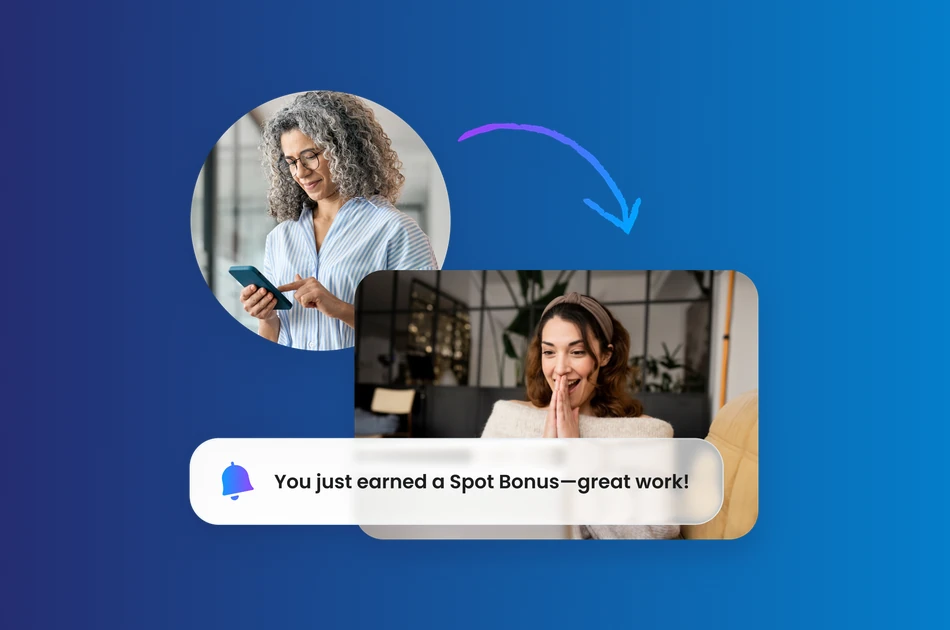
Tie bonuses to measurable outcomes that reflect what actually matters for the business, not just raw sales volume. In financial services, that might mean bonuses connected to compliance-clean audits, client retention rates, loan quality, or account growth. Tying bonuses to organizational goals, not just individual output, helps advisors and bankers feel like their work rolls up into something bigger than their own commission check, and it protects against the wrong behavior getting rewarded in the first place.
Public recognition changes how much a reward actually means. A bonus that shows up quietly in a paycheck lands differently than one announced in front of the team, tied to a specific reason. Employee recognition programs give financial services companies a consistent way to make sure good work gets seen, not just paid for, instead of saved for review season or an annual awards banquet.
Not every employee wants the same reward. Some want a gift card. Some want an experience. Some would rather see the value go to a cause they care about. Employee-choice rewards, gift cards, experiences, charitable giving, and personalized incentives respect that people define value differently. A 25-year-old loan officer and a 55-year-old branch manager rarely want the same thing.
Certifications like CFP, CFA, or Series licenses cost money and time. Covering the cost, or building in a learning stipend, tells an employee the company is investing in where they're headed, not just what they produced this quarter. Conference attendance and mentorship work the same way. In an industry where credentials directly affect someone's career ceiling, they carry weight a gift card never will.
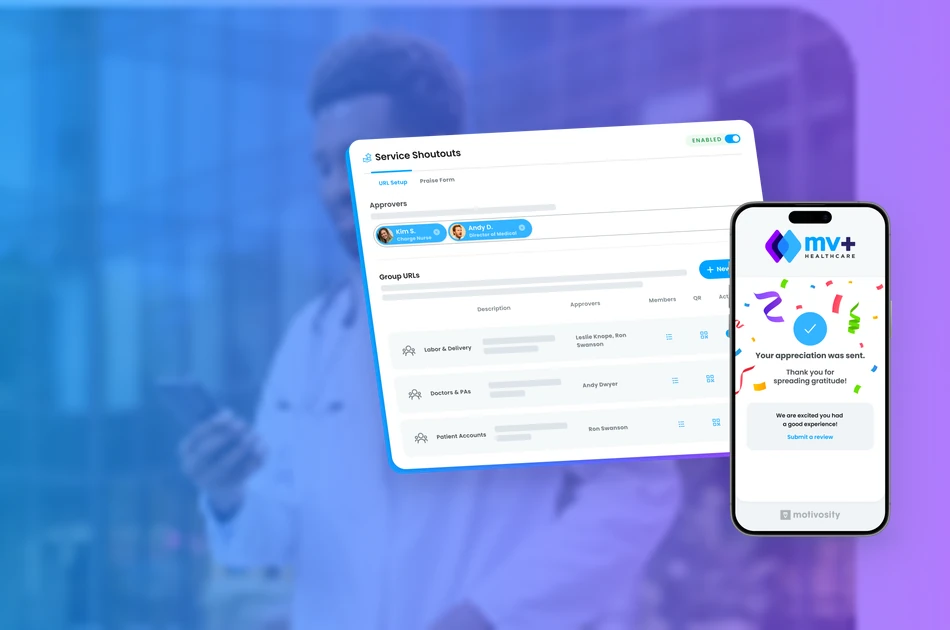
Managers can't see everything. The advisor who stayed late to help a colleague prep for a client call, or the operations team member who caught an error before it became a problem, often gets noticed by a peer first. Peer to peer recognition gives employees a direct way to appreciate each other, surfacing the good work happening between advisors, operations, compliance, and service teams that managers miss entirely.
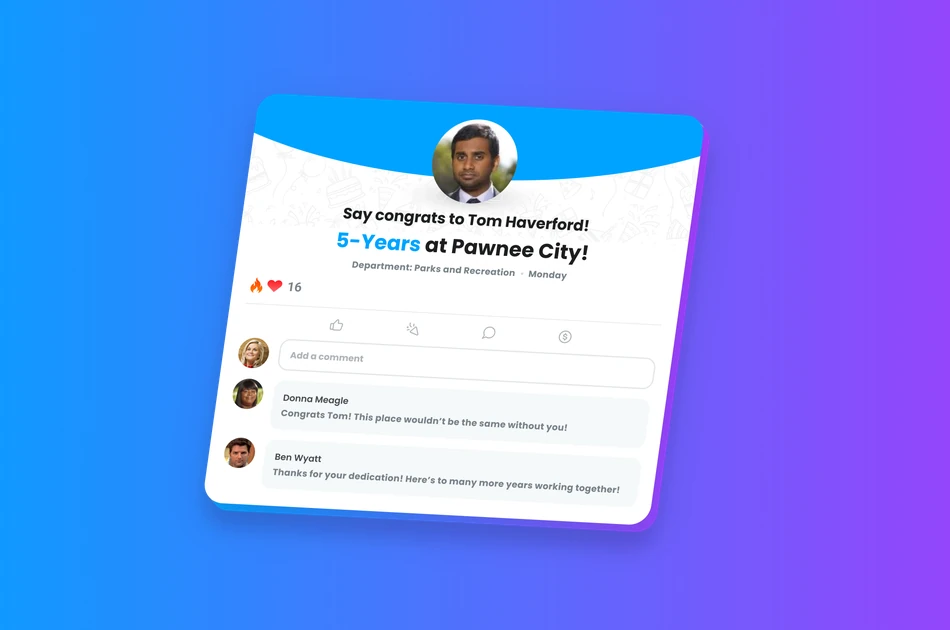
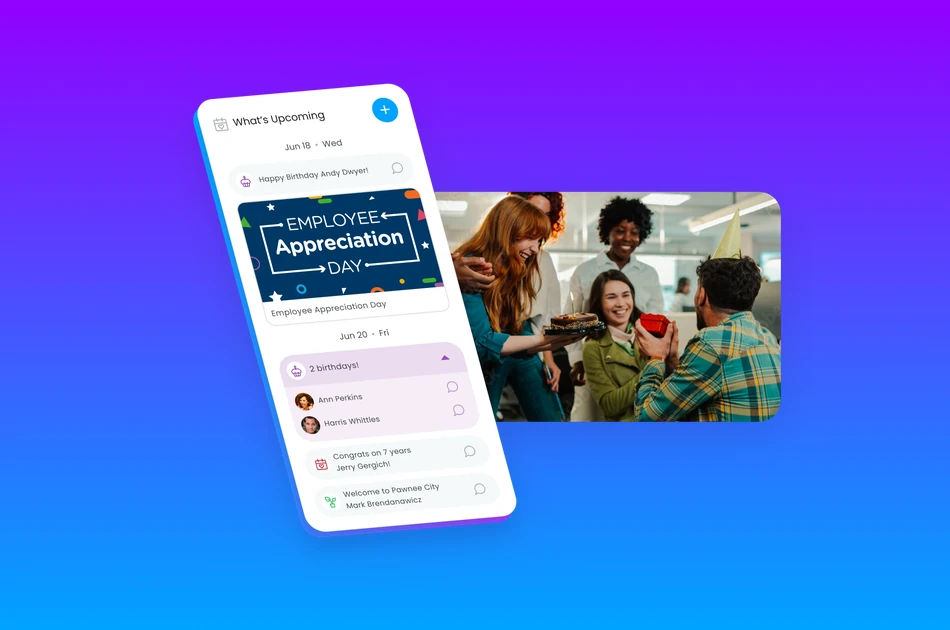
Work anniversaries, project completions, and earned certifications deserve their own moment. Employee milestones that get automated recognition, instead of a forgotten calendar reminder, tell long-tenured employees, common in financial services, that their history with the company counts for something. A ten-year anniversary that goes unmentioned sends a message too (just the wrong one).
Financial services jobs come with real pressure: market volatility, compliance deadlines, and client emotions during difficult financial moments. Flexible schedules, extra PTO, and wellbeing benefits acknowledge that pressure directly. Our research found 91% of employees say PTO and flexibility are very important or essential to job satisfaction, ahead of nearly every other benefit category leadership teams debate.
A bonus given without context is a transaction. The same bonus, given with a specific reason and said out loud in front of a team, becomes something an employee remembers years later.
Timing changes what a reward means. A reward given months after the work happened, at the annual review, feels disconnected from the moment it was earned. One given close to the achievement, with specifics about what the person actually did, ties the money to the meaning behind it.
Personalization matters just as much. A mass email congratulating the team for a good quarter doesn't land the way it does when a manager names exactly what one person did differently. Visibility multiplies the effect: when recognition happens somewhere a team can see it, the reward stops being private and becomes part of the culture.
90% of employees say feeling appreciated and valued improves their performance. That's a direct line between recognition and the outcomes financial services leaders already track closely: client retention, compliance quality, and advisor performance. Rewards and recognition aren't competing strategies. The reward says what the work was worth. The recognition says why it mattered.
Most financial services companies aren't ignoring rewards. They're just making the same handful of mistakes.
Focusing only on bonuses is the most common one, since it's the easiest lever to pull and quietly becomes the whole strategy by default. Rewarding only one team's outcomes is a close second, sending an unintentional message to other teams that their work doesn't count the same way.
Ignoring peer recognition is another gap. When appreciation only flows top-down, companies miss the recognition that happens naturally between coworkers every day. Generic incentives, the same gift card catalog applied to everyone regardless of role, tend to feel obligatory rather than meaningful. Inconsistent manager participation undermines the whole system too: if one manager recognizes their team weekly and another does it once a year, employees on the quieter team notice.
Maybe the biggest mistake is treating rewards as an annual event, asking employees to wait twelve months to feel appreciated. None of this requires a full rebuild, just more consistency and a wider lens on who gets rewarded.
A reward strategy that works long-term balances two things: compensation and recognition. Neither replaces the other, and the strongest financial service companies we've seen treat them as one system instead of separate line items in different budgets.
Fairness and transparency matter more here than most industries, given how closely compensation is already tied to performance metrics employees can see for themselves. If bonus criteria are unclear or applied inconsistently across teams, trust erodes fast. Employee choice deserves the same attention: letting people choose a gift card versus a donation versus an experience respects that value looks different from one person to the next.
Plan for growth early. A program that works for 200 employees at one branch doesn't automatically work for 3,000 employees across a multi-location bank, so build with expansion in mind from the start. Regular evaluation, checking participation and asking employees what's actually landing, keeps a strategy from going stale. The goal was never the reward program itself. It's the employee experience the program creates.
Most financial services companies already have some version of a rewards program. The gap is usually in how well it scales, how consistent it feels across branches, and whether recognition is actually built into the system or bolted on separately.
Motivosity combines recognition, rewards, milestones, and peer-to-peer appreciation in one platform, so a bonus, a work anniversary, and a quick thank-you from a coworker all live in the same place instead of three disconnected tools. For companies managing multiple branches or a mix of client-facing and back-office roles, that consistency is what makes a program actually stick.
The goal isn't to hand out more rewards. It's to build an employee experience where people feel seen consistently, not just once a year at bonus time. Engagement and retention follow from that. The rewards are part of the story, never the whole thing.
What are financial rewards?
Monetary or monetary-equivalent incentives, like bonuses, commission, raises, gift cards, or stipends, given for performance or contribution.
Are financial rewards enough to motivate employees?
No. Compensation matters, but 83% of employees say they stay at a company primarily because of its culture and the people they work with, not pay.
What rewards work best in financial services?
Performance bonuses tied to measurable outcomes, career development like certification coverage, flexible reward options, and consistent recognition from managers and peers.
What's the difference between rewards and recognition?
A reward is what you give, like a bonus or a gift card. Recognition is the act of noticing someone's work and saying so. The two work best together.
How can financial services companies improve retention?
Treat culture and employee experience as seriously as compensation: consistent recognition habits, employee choice in rewards, and real investment in career growth, not just annual bonus cycles.