Turnover in financial services costs more than a replacement salary. It costs client trust, institutional knowledge, and compliance continuity that took years to build.
The strategies that actually work aren't complicated: real career growth, consistent recognition, and managers who know how to lead people, not just spreadsheets.
When a financial services employee leaves, you're not just posting a job requisition. You're losing what never made it into a manual: the way a particular underwriter reads risk, the trust a private banker built with a client over a decade, the shortcuts a compliance analyst learned for a system held together with duct tape and tribal knowledge.
Recruiting and onboarding a replacement in finance is slow by design: background checks, licensing, compliance training, ramp-up time before someone's producing at full capacity. Industry estimates commonly put the true cost of replacing a mid-level financial services employee at half to twice their annual salary, and for a senior advisor, that number climbs fast.
Then there's the client experience. When a trusted advisor or account manager leaves, clients notice. Some follow them out the door. Others stay, but with a little less trust, and in an industry where accuracy and continuity matter as much as friendliness, that erosion doesn't show up on a balance sheet right away.
Retention can't sit behind quarterly targets and system upgrades. It has to be a strategic function that protects revenue, compliance, and client relationships all at once. Employee Engagement Software for Financial Services exists because generic engagement tools don't account for what makes this industry different: the regulatory pressure, the client stakes, and a multi-generational, multi-branch workforce trying to stay connected.
Financial services employees, especially the ones you most want to keep, tend to be ambitious. Underwriters want to become senior underwriters. Tellers want branch manager roles. Analysts want a shot at a CFA. When there's no visible path, the ambitious ones go find one elsewhere. Build mentorship pairings between senior and junior staff, fund certifications and licensing (CFP, CFA, CPA) instead of just tolerating them, and create real internal mobility, not a job board nobody checks, so a compliance analyst can move into risk management without starting over.
Recognition in financial services tends to be inconsistent. A big client win gets a mention at the all-hands. A quiet quarter of flawless compliance work gets nothing. 37% of employees say they rarely or never receive meaningful recognition from their direct manager, and finance's deadline-driven, compliance-heavy culture is no exception. The fix isn't a bigger bonus pool. It's frequency: a branch manager thanking a teller by name for catching a fraud attempt, a peer recognizing the underwriter who stayed late to close a file before a rate lock expired. Recognition works when it's specific, timely, and doesn't only come from the top of the org chart.
Most people don't quit a company. They quit a manager who never coached them, never gave real feedback, or only spoke up when something went wrong. In financial services, managers are often promoted for technical skill rather than people skill (a great underwriter becomes an underwriting manager), and that skill gap shows up constantly. Invest in real manager training: how to coach instead of correct, how to give feedback that isn't a once-a-year review, how to communicate change during a merger without leaving the team anxious and guessing. A manager who checks in weekly does more for retention than any perk program.
Not every financial services role can go remote. A teller has to be at the branch. But plenty of roles, underwriting, compliance, wealth management support, portfolio analysis, can flex more than most firms admit. 91% of employees say paid time off and flexibility are very important or essential to job satisfaction, and that doesn't change because someone works in finance instead of tech. Hybrid schedules, flexible hours around core coverage windows, and outcome-focused management go a long way. Even branch-heavy organizations can offer shift swaps for frontline staff. Same trust, applied differently.
A generic gift card doesn't mean much to someone who just closed a complex commercial loan or caught a six-figure reporting error before it became a regulatory problem. Rewards land harder when people choose what they actually want, cash, travel, merchandise, whatever fits their life outside the office. Employee rewards built around choice, rather than a one-size-fits-all catalog, make appreciation feel personal instead of procedural, especially when delivery is instant instead of two pay cycles later.
Financial services onboarding runs heavier than most industries: compliance training, system access, licensing verification, security protocols. Necessary, but if nobody makes the new hire feel like part of the team in the first 90 days, you've already planted the seed for their exit. Pair new hires with a peer mentor, not just a compliance checklist, and build in early wins, a first client interaction, a first completed file, so there's a sense of progress before month three. First-year turnover is often an onboarding problem wearing a retention costume.
Ambiguity about advancement is one of the fastest ways to lose good people in finance, where titles and seniority matter to career identity. If nobody can tell an employee what it takes to move from associate to senior associate, they'll find an organization that can. Publish real criteria, build succession plans that are more than a name in a binder for compliance purposes, and talk about advancement in regular one-on-ones, not just annual reviews.
Plenty of financial services firms run an annual engagement survey and do nothing visible with the results. Employees notice, and they stop filling it out honestly (or they stop filling it out at all). Employee surveys work when they're frequent, short, and followed by visible action, paired with stay interviews for your best people before they're already interviewing elsewhere. Ask what would make them leave, then actually change something and say so. That loop is what separates a listening culture from a survey that collects dust.
Financial services organizations are often spread across dozens of branches and remote teams, which makes belonging harder to build than it sounds. A loan processor in one branch may never interact with a compliance analyst three states away, even though they're solving the same problems every week. Cross-branch projects, a shared recognition feed that lets the whole company see wins happening anywhere, and informal spaces for connection outside of work topics all help close that gap. Belonging isn't mandatory fun. It's feeling like part of something bigger than your own branch or your own team.
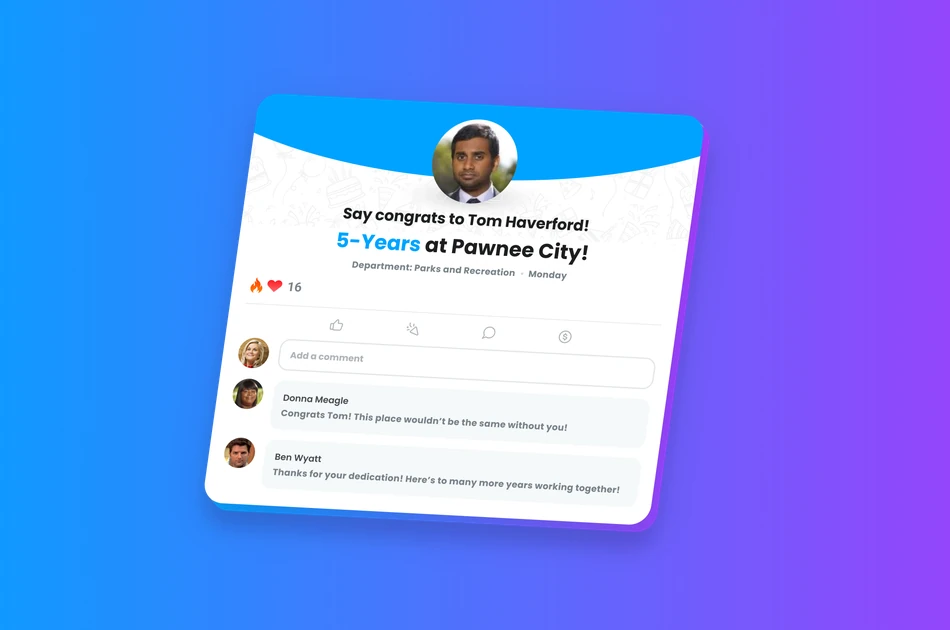
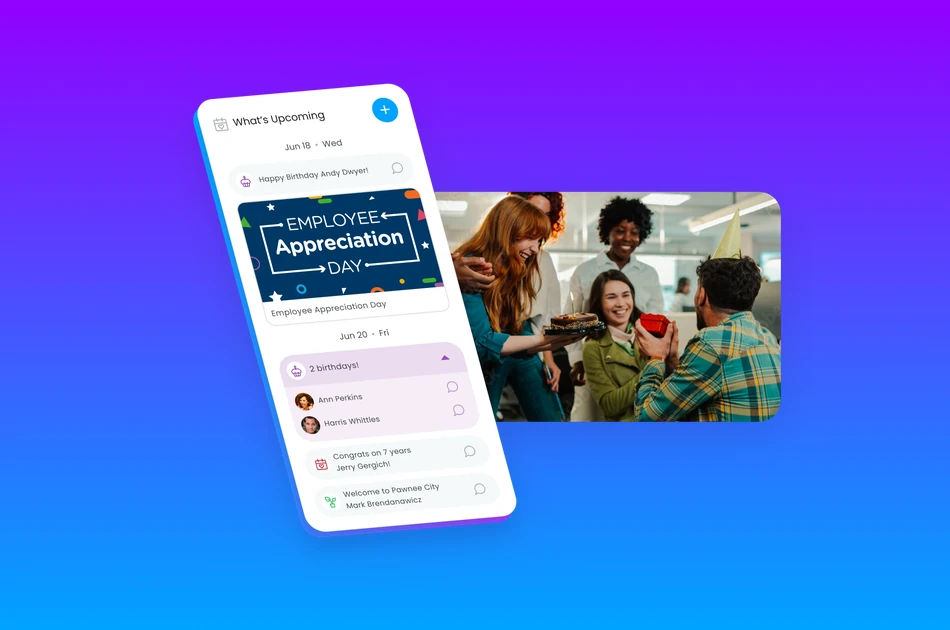
A five-year work anniversary, a passed CFA exam, a client relationship crossing the ten-year mark, these are the moments that build loyalty when they're actually celebrated instead of quietly logged in an HR system nobody checks. Employee milestones that are automated and visible mean nobody's anniversary slips through the cracks because their manager was buried in quarter-end reporting. Celebrate the certifications, the project wins, the client saves too. When people feel like their tenure is seen, they think twice before walking away from all of it.
Recognition works on retention because it hits something compensation alone can't touch: the feeling of being seen. A raise tells someone they're paid fairly. Recognition tells them their specific contribution mattered to a specific person, and financial services employees, often buried in compliance work nobody outside the department understands, need that second signal more than most.
90% of employees say feeling appreciated and valued improves their performance. That's not a soft metric. That's people doing better work because someone noticed the work they were already doing.
Manager and peer recognition do different jobs. A manager's thanks validates the work against the goals of the role. A peer's thanks validates it against the reality of doing the job, from someone who knows exactly how hard that reconciliation was. Employees at culture leader organizations are nearly 16 times more likely to get regular recognition from their manager, and over 9 times more likely to get it from peers.
Timeliness matters as much as the words. Recognition for a Q3 win delivered during Q1 review season doesn't land. Employee recognition programs built for immediate, specific appreciation give financial services teams a reason to stay that a compensation review alone never will.
Assuming compensation alone solves turnover. Pay matters, but 83% of employees say they stay primarily because of culture and the people they work with, not their paycheck.
Waiting until the exit interview. By the time someone's sitting across from HR with a signed offer letter from another company, the decision is made. Quarterly stay interviews with your strongest people catch the problem while there's still time to fix it.
Promoting managers without leadership training. Turning your best underwriter into an underwriting manager doesn't automatically make them a good manager, and without real training, you've traded a strong individual contributor for a weak leader.
Inconsistent recognition. A big win gets a mention in the newsletter. A quiet quarter of solid, compliant work gets nothing, teaching people that only the flashy stuff counts.
Limited internal mobility. If the only way to grow is to leave, people will leave.
Ignoring feedback. Surveys without follow-through train employees to stop being honest, right when you need that early warning system most.
None of this works as a once-a-year initiative. Retention in financial services comes down to whether people feel connected to their team, recognized for real work, and rewarded in ways that matter to them, consistently, not just during engagement survey season.
Motivosity builds that consistency into the everyday rhythm of work instead of leaving it to memory. Peer recognition means appreciation doesn't only flow top-down from managers buried in quarter-end reporting. Manager recognition tools make it easy for a busy branch manager to say thank you in the moment, not three weeks later during a review. Milestone automation means a five-year anniversary or a passed licensing exam never slips through the cracks, and flexible reward options mean the thank-you fits the person receiving it.
Financial services teams that build recognition into daily work, rather than an annual event, are the ones who keep their best people through mergers, rate changes, and everything else this industry throws at them.
Why does retention matter in financial services?
Losing someone means losing more than a headcount. You lose institutional knowledge, client trust, and continuity in a regulated environment where relationships take years to rebuild.
What causes turnover in finance?
Usually some mix of unclear advancement paths, inconsistent recognition, and managers promoted for technical skill but never trained to lead. Compensation plays a role, but it's rarely the whole story.
How can financial services companies improve retention?
Real career paths, frequent recognition from managers and peers, better-trained managers, flexible scheduling where the role allows it, and acting on what employee feedback tells you.
Does recognition improve retention?
Yes. 90% of employees say feeling appreciated improves their performance, and the strongest cultures make recognition happen far more consistently than the rest.
What role do managers play in retention?
A bigger one than compensation. Managers who recognize consistently, communicate clearly, and coach instead of just correct are one of the strongest predictors of whether someone stays or starts job hunting.