According to the 2026 State of Workplace Culture Report fielded by HRRI in cooperation with Motivosity, 83% of employees stay at their current position because of the company culture. Employees stay when they feel connected to the people around them, valued for their contributions, and confident in the direction of the organization.
The workplace trends 2026 study found that meaningful recognition, transparent leadership, clear communication, and benefits employees actually use all help create the kind of culture that makes people want to stay.
Key Takeaways
People don't stay because of culture as an abstract concept. They stay because culture shapes how work feels every day. It influences whether employees feel appreciated, connected to their coworkers, informed about company decisions, and supported by their leaders.
That helps explain why 83% of employees say they stay at a workplace because of its culture and the people they work with. When employees experience a strong sense of belonging and trust, they’re more engaged, committed to their teams, and likely to see a future with the company.
For employers, that makes culture one of the most powerful retention levers available. Organizations that invest in employee recognition, connection, and experience create environments where people choose to stay, contribute, and perform at their best.
The impact extends beyond retention. Companies considered culture leaders are nearly 2x more likely to report revenue growth, according to our study, which found that 30% of culture leaders report revenue growth, compared with only 17% of others.
Culture fosters connections even more strongly at the immediate team level, with 86% percent of employees reporting they feel connected to their team according to our employee retention statistics. This makes sense, as most employees work most often with their immediate team, providing time for achievements, recognition, and overcoming obstacles that contribute to bonding.
But forming those connections across teams and departments can be more difficult. Workplace culture statistics show that only 58% of employees say their organization does the work to foster relationships outside teams.
Cross-team connections provide companies with an opportunity to significantly improve culture, as 47% of employees say enjoying their team is the top contributor to a positive work experience. And these findings about employee relationships reveal some deeper takeaways that inform organizational culture-building.
Teams that rate highly on internal connections tend to show weaker connections across the organization. Often, the most connected teams exist in a silo with limited cross-departmental collaboration.
These silos highlight the need for organization-wide initiatives that promote cooperation across teams and work against the insular tendencies of very strong teams to share connections and promote collaboration.
Relationships, especially those outside of immediate teams, are employee satisfaction and retention drivers because employees stay at companies where they feel a sense of belonging.
Connections within and across teams increase comfort and a sense of belonging, which in turn increases engagement and loyalty.
When an employee knows they have a connection with work peers, they feel more supported when taking on difficult projects and taking calculated risks that improve their impact.
According to employee recognition statistics, 37% of employees rarely or never receive meaningful recognition from their manager, and 35% rarely receive recognition from their peers. The lack of recognition for a job well done can hurt retention, driving away high performers and lowering outcomes.
Culture leader organizations more often get recognition right on purpose, with employees who are nearly 16x more likely to receive frequent recognition. That difference shows up in retention rates.
Making recognition part of daily work has dual benefits: it helps to build the habit of consistent recognition while also driving engagement.
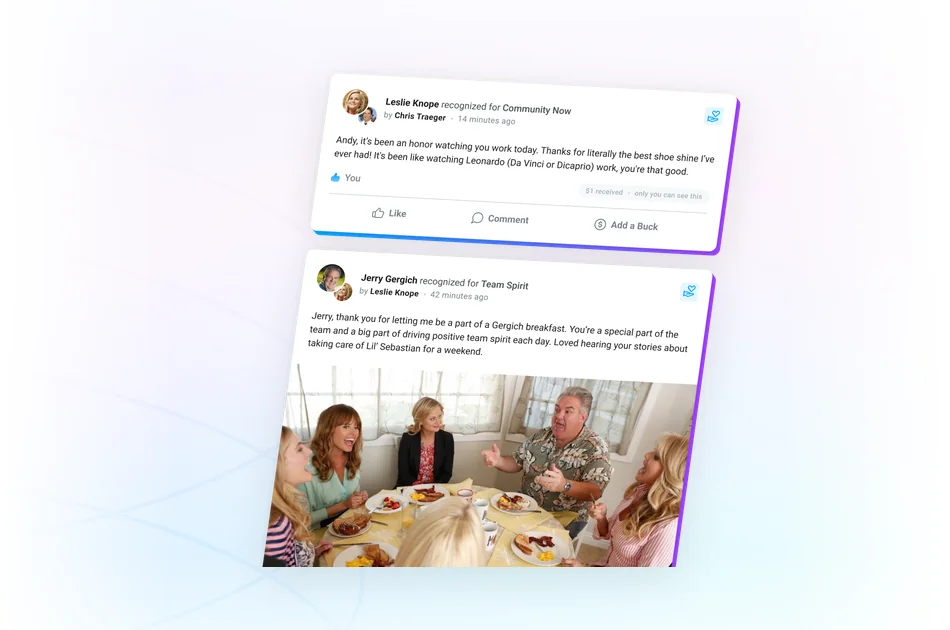
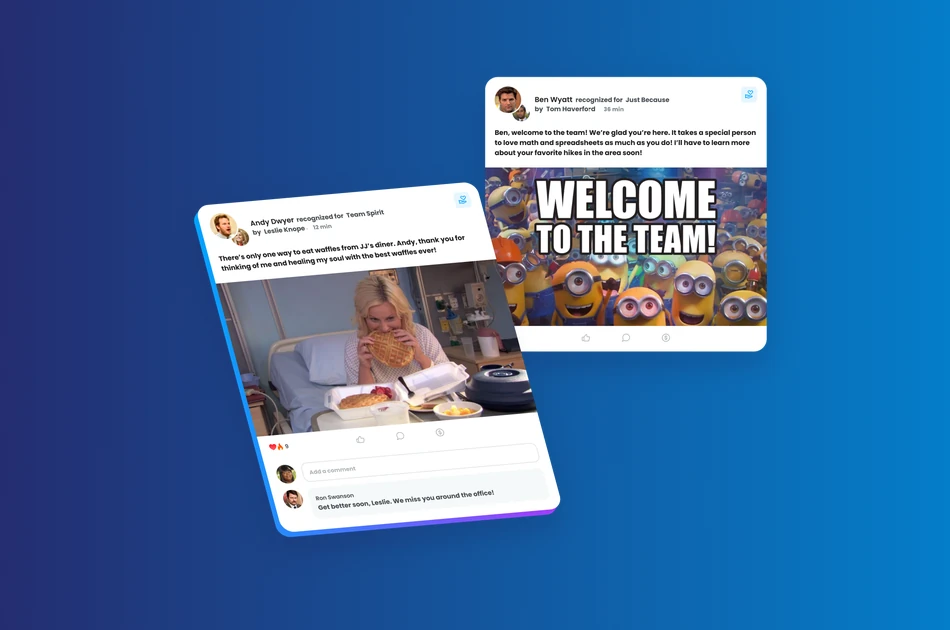
Peer-to-peer recognition that celebrates small wins and value-driven work is a strong tool for teams to drive engagement, especially when done daily. A recognition routine counteracts the disengagement and disconnection that infrequent recognition contributes to.
Recognition is a driver of employee satisfaction and retention because employees who feel valued by their peers and managers are more likely to stay in their positions.
Recognition makes employees feel seen and appreciated for their work, reinforcing that their contributions matter and that they belong on the team.
While peer connections and recognition contribute to employee satisfaction and retention, leadership may be doing more to hurt their retention rates than they’d like to admit:
Employee trust is built through consistency, transparency, and visibility. When combined with connection and recognition, these elements create and maintain a strong culture.
But most modern organizations experience a disconnect between the messaging leadership intends to send and employees’ perceptions upon receiving it.
Every leader has felt this: the motivational meeting that falls flat, the project kickoff that’s met with skepticism and cynicism, or the memo sent with only the sound of crickets in return.
Whereas employees often question messaging, they respond well to leader visibility and action. Those actions don’t have to create organizational sea-change, either.
Small acts of recognition and communication that support cultural values within and across teams can support recognition culture, improve employee trust, and boost retention. In short, when leaders walk the walk alongside their employees, they gain trust.
When employees lack trust in their leadership, they feel less confident in the security of the company and their positions, which increases turnover risk. High trust, on the other hand, enables stability and employee engagement.
Employees who know the business direction, the goals they’re working for, and the values the company stands for come from the highest leadership. These employees are more likely to commit to and work for those shared outcomes.
Leaders build trust with their employees through clear and transparent communication, and our employee turnover statistics found that trust was the No. 1 challenge facing company culture.
Unless companies find ways to communicate with their employees, they’ll find that more and more younger employees lose trust, as younger employees prioritize communication 36% more than older groups.
Communication gaps trickle down through the ranks, creating a lack of clarity, which then leads to frustration. Lack of clarity causes work delays, scope creep, doubling back to redo work that doesn’t hit the mark, and more situations that frustrate workers.
In addition, poor transparency from leadership on how work contributes to larger goals (or even what those goals are in the first place) reduces employee trust. Employees disengage from their work when they don’t understand how it contributes or feel like they’ll never get it right.
Companies and leaders with healthy communication practices have better alignment on goals throughout the organization, and that same clear communication promotes belonging. Employees want to feel informed and heard, which requires communication from leaders down to individual contributors and from employees at all levels up to leadership.
Internal communication software is one way to effectively systematize clarity throughout the organization. These tools simplify communication strategies by centralizing them and allowing internal teams to prioritize messaging and recognize individuals while giving employees access to the documentation and messaging all in one place.
The 2026 Workplace Culture Report found that 91% of employees say paid time off and flexibility are essential to their satisfaction and retention. Perks also influence loyalty, with 37% of employees citing them as their primary reason for staying.
Together, these benefits help create a better employee experience and support long-term retention.
Nearly every job description asks employees to be flexible in a “fast-paced environment,” and employees now expect businesses to provide flexibility in schedules. Flexibility doesn’t look the same in all workplaces, but it might include:
These perks are strongly linked to employee satisfaction and therefore reduce turnover.
A flexible schedule doesn’t cure all ills, however. Employees want to grow in their positions through continued training and education. They want tangible appreciation in the form of swag, gift cards, or even cash.
These rewards back up verbal and written recognition programs with things employees can use. They provide a tangible reminder of the company’s appreciation and value to the employee, which promotes retention.
Companies with high retention rates differ clearly from those that struggle to retain talent. The employee engagement data at these companies show employees who are:
These employee satisfaction trends show that recognition, trust, and connection matter to employees. They expect that companies will see their hard work and give as much as they get.
The organizations that lead in culture make employee recognition a central practice, with frequent, visible recognition for employees within and across teams.
Further, leaders show their engagement with the day-to-day work of the company, not by interfering but by acknowledging and supporting employees. These leaders build trust with employees through communication and transparency.
Strong culture supports effective operations, where better employee engagement leads to better retention, which leads to better individual and company performance. When done right, company culture becomes a competitive advantage, not just a pleasant perk.
Employee satisfaction and retention aren’t stagnant. Building practices that increase engagement, transparency, and communication can positively impact employee satisfaction and retention.
Encourage peer and manager recognition by providing systems and examples that enable frequent and visible recognition.
A way to strengthen communication and transparency and to build trust is to make communication a two-way street.
Clarity and alignment with company goals only strengthen an employee’s sense of belonging.
Cross-team connections that form within projects and through social interactions contribute to employees’ sense of belonging. Forge these connections through:
These connections reduce silos and build relationships outside of immediate teams that build bonds.
Great managers are made through direct and explicit training. Some of your managers may know instinctively how to communicate effectively with employees and recognize good work, and some may need training.
To keep a baseline level of knowledge, train all people leaders on communication and recognition. Your managers then become drivers of positive culture by enacting the organization’s vision on the front lines with employees.
Employee satisfaction and retention don’t get better on their own. You need training and tools that support the most important drivers of retention: employee recognition, satisfaction, trust, and sense of belonging.
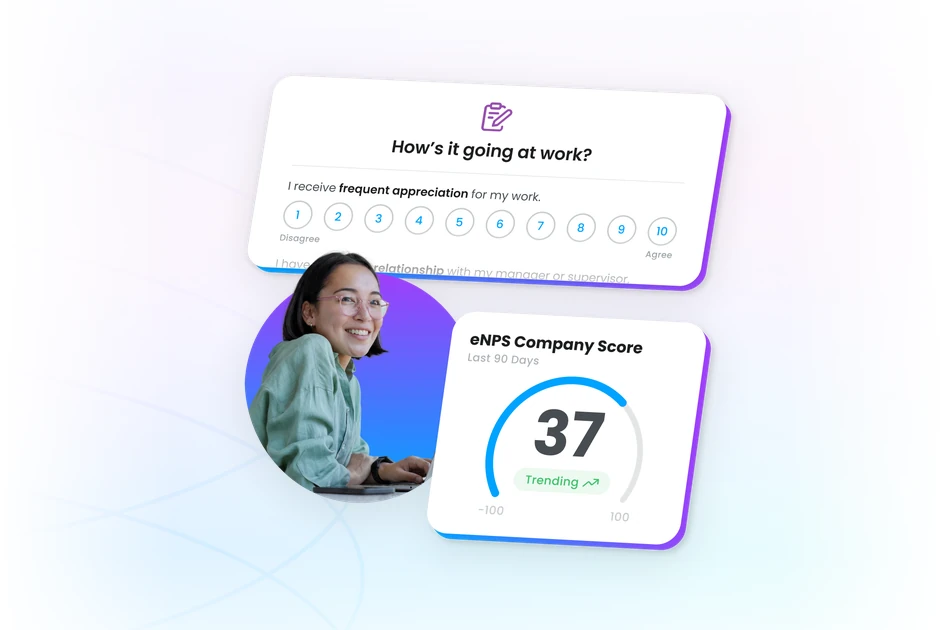
A platform like Motivosity helps leaders connect engagement metrics to insights and actionable solutions. Motivosity recognition and rewards platform builds connection and trust with:
Because these tools live in a single platform, you get real-time insights on how effectively your employee satisfaction initiatives improve engagement and retention.
Tap into your employees’ best work and drive measurable performance with Motivosity. Request a demo today.