
Most recognition programs run on one relationship: manager to employee. But only 6% of managers recognize their team weekly, so a single-tier program bets everything on a small slice of managers who happen to prioritize it. The strongest workplace cultures build three distinct tiers instead: peer-to-peer, employee-to-manager, and employee-to-company. Each does a job the other two can't.
Peer recognition drives daily belonging and generates 9x more activity than manager-only programs. Manager recognition builds trust and psychological safety, but it's also where the 94% gap hits hardest. Company-wide recognition ties individual work to organizational meaning. Companies running all three see 30% revenue growth versus 17% at culture laggards.
Most recognition programs are built around one relationship: the manager-employee one.
It makes sense as a starting point. Managers set goals. Managers assess performance. Managers have the clearest view of whether someone's work actually hit. But if manager recognition is the only thing running, you're building a culture that depends on whether any given manager happens to prioritize it. According to the 2026 State of Workplace Culture & Connection (HR.com x Motivosity, 2026), only 6% of managers recognize their employees on a weekly basis. The other 94% don't. A single-tier program bets everything on the 6%.
There are three distinct tiers of recognition at work. Each one does something the other two can't.
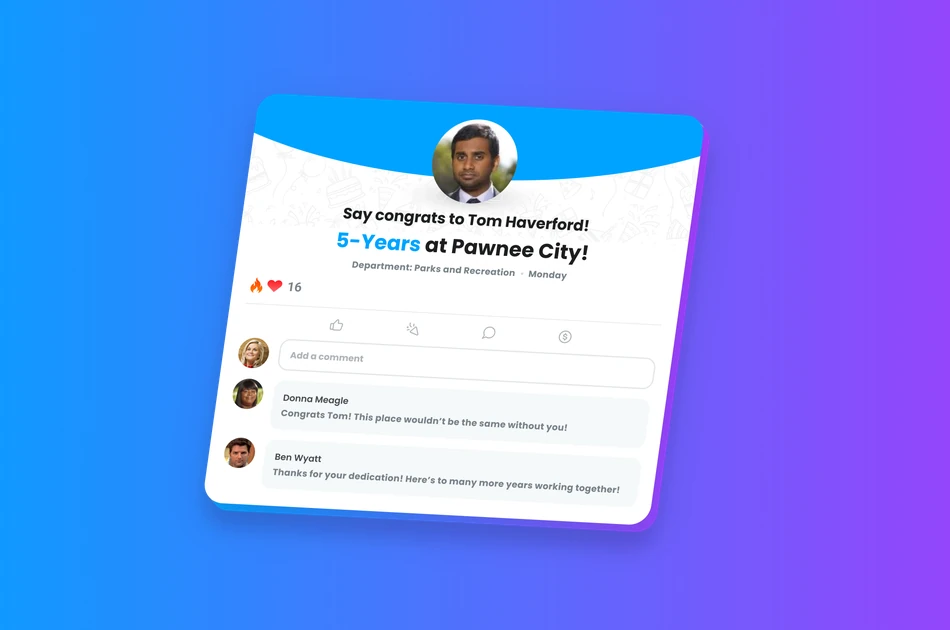
When a colleague notices that you handled a hard situation with grace, or stayed late to help someone debug a problem, and then says something about it out loud, that lands differently than anything a manager can offer. It comes from someone who was in the room, doing the same work, and chose to name it.
Peer-to-peer connections are the informal social currency of teams. They're high-frequency, lateral, and genuinely felt because they're voluntary. Nobody is being paid to notice. The recognition happens because someone cared enough to say something.
This is also where the volume is. Peer recognition generates 9x more recognition activity than manager-only programs (2026 State of Workplace Culture & Connection, HR.com x Motivosity, 2026). That multiplier matters because frequency is what makes recognition stick. A culture of appreciation isn't just built in annual reviews. It's built on the accumulation of small, real moments across the whole year.
The manager-employee relationship is the most studied variable in employee engagement, and for good reason. It shapes how safe people feel raising concerns, how honest feedback conversations go, and how long people stay.
Recognition in this tier runs in both directions. Managers recognize the work their team is doing. But employees who feel seen and appreciated by their organization are also more likely to engage genuinely with their managers, build real trust, and participate actively in the relationship rather than just tolerating it.
This is also the tier where the structural gap is most visible. When 94% of managers aren't recognizing weekly, the experience of being appreciated at work becomes wildly inconsistent, dependent entirely on individual manager behavior rather than organizational design. A recognition program that leaves this tier to chance is hoping people get lucky with their manager.
Company-wide recognition does something the other two tiers can't. It ties individual work to organizational meaning.
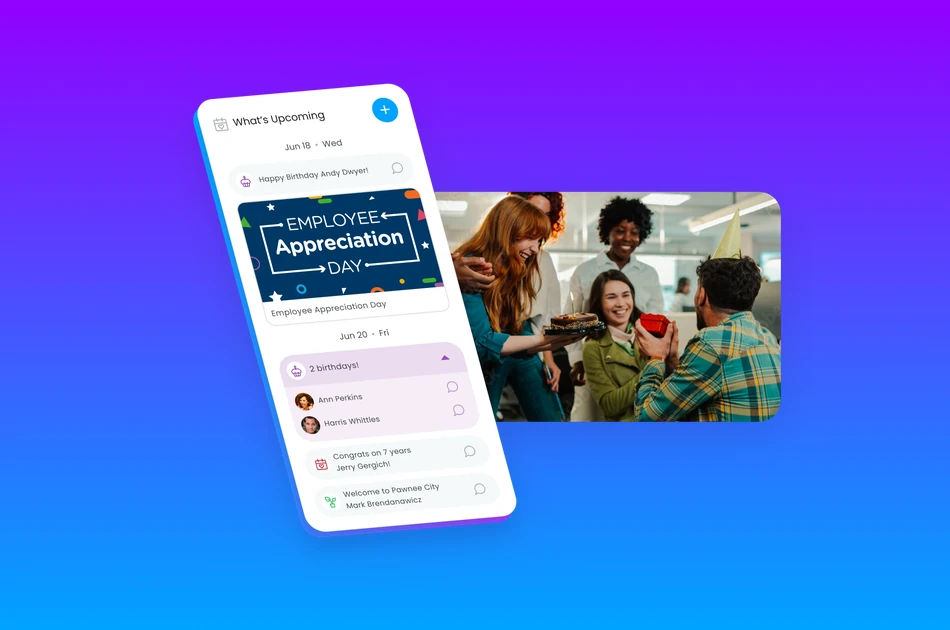
When someone is recognized in front of the whole company, or receives an award that reflects the company's stated values, or sees their contribution called out in a company-wide communication, it creates a different kind of belonging. Not "my team appreciates me" but "this organization sees me as part of something larger."
This tier is lower-frequency by design. It's reserved for moments that carry organizational weight. But when it's missing entirely, the culture can feel close-knit at the team level while being anonymous at the company level. People don't feel connected to the organization, only to their corner of it.
Companies that build recognition across all three tiers don't just have happier employees. They have measurably better business outcomes.
Culture leaders are nearly twice as likely to report significant revenue growth compared to organizations with weaker culture programs, 30% versus 17%, according to the 2026 State of Workplace Culture & Connection (HR.com x Motivosity, 2026). That gap doesn't come from one thing going right. It comes from a system where people feel consistently appreciated at multiple levels.
Here's how each tier compares on the dimensions that matter most to HR leaders:
| Tier | Who gives it | Frequency | Primary job |
|---|---|---|---|
| Peer-to-peer connections | Colleagues, cross-functional teammates | Daily to weekly | Build belonging, reinforce team culture, increase social connection |
| Employee-to-manager connections | Employees and managers (bidirectional) | Weekly to monthly | Build trust, create psychological safety, reinforce relationship quality |
| Employee-to-company connections | Leadership, HR, values-based programs | Monthly to annually | Connect individual work to organizational meaning, celebrate milestone moments |
The frequency pattern matters as much as the content. Peer-to-peer recognition is high-frequency and low-friction. It's the daily texture of a team's culture. Company recognition is lower frequency but carries organizational weight. Manager recognition sits in between, and it's exactly where the 94% gap shows up most painfully.
Organizations that run manager-only recognition create a system where the experience of being appreciated is entirely dependent on manager skill and consistency. Good manager, good experience. Distracted manager, months without acknowledgment.
Organizations that run peer-only recognition get energy and volume. But the energy is lateral. Peer recognition doesn't carry organizational weight. When someone does something that matters to the business, they want leadership to know, not just their team.
Organizations that run company-only recognition, typically milestone awards and anniversary programs, create predictability. But if the company anniversary is the only moment of recognition in a person's year, it's a reminder of how long they waited to feel seen.
Adding peer-to-peer connections is usually the highest-leverage first move. It's easier to activate at scale than company-wide programs, and it generates the kind of participation data that makes the case for expanding further.
If you're adding employee-to-company connections to an existing peer program, tie recognition directly to company values. Recognition that links back to specific values does double work: it appreciates the person and makes values visible as something the organization actually lives, not just posts on the wall.
Motivosity was built to run all three tiers in one place. Peer-to-peer connections through the social feed, manager recognition and spot bonuses for employee-to-manager connections, and company-wide milestone and awards programs for employee-to-company connections. All visible. All in one system.
A recognition program that covers all three relationships isn't more complicated. It's one system that works the way humans actually experience appreciation at work. The real question isn't whether you can afford to build all three tiers. It's whether you can afford to keep leaving two of them empty.