Most companies that survey employees still don't close the loop on what people tell them, and that gap is what quietly kills trust in the whole feedback program.
This piece walks through the four real channels for gathering employee feedback (pulse surveys, eNPS, manager check-ins, and recognition data), how to analyze the results without drowning in them, and how to act on what you find in a way employees can actually see.
Key takeaways:
33% of organizations aren't measuring employee engagement at all, according to the State of Workplace Culture & Connection report (HR.com x Motivosity, 2026). If you fall in that category, it's time to start measuring your team's engagement.
If you're in the other two-thirds, running pulse surveys, tracking eNPS, treating engagement like something you actually watch, you're ahead of the curve. That's not a small thing. Lots of organizations haven't gotten there yet.
But "ahead of the curve" and "doing it well" aren't the same thing. There's a real gap between running a survey and actually closing the loop on what people tell you, and that gap is where trust starts to erode.
Sending a survey is an act of good intentions. Getting the results back and staring at a spreadsheet, unsure what to do next, is where the good intentions run out.
The problem was never collection. It's the gap between "we heard you" and "here's what we actually did about it." Employees notice that gap. They fill out a survey, wait, and watch for something to change. When nothing visibly does, they stop trusting the process. The next survey gets a lower response rate. The one after that, lower still.
This isn't a guess. 59% of managers and executives don't know their organization's most recent eNPS score, according to the same report. That's not a leadership team acting on feedback. That's a leadership team that collected it once, filed it somewhere, and moved on.
None of this is because HR teams don't care. It's because gathering feedback and doing something useful with it are two completely different skill sets, and most programs, even the ones already measuring, are only built for the first one.
So if you've already got a survey running, here's how you get more out of it.
Effective feedback programs layer multiple channels. Each one captures something different.
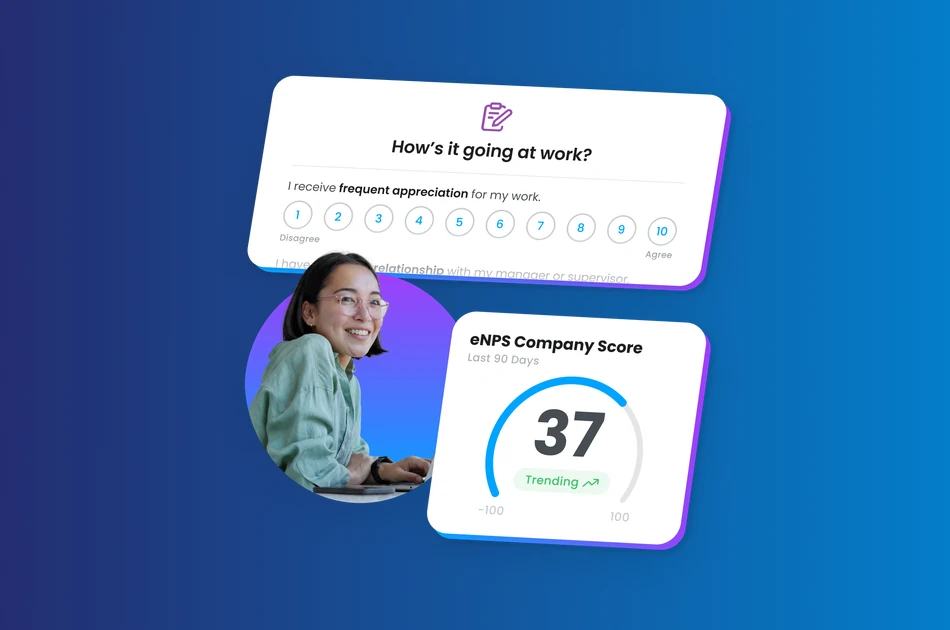
Pulse surveys are short, frequent, and designed to catch movement before it becomes a trend. Three to five questions, sent every few weeks, give you a rolling picture of how the team is feeling without burning people out with a 40-question annual survey.
eNPS measures one thing: would your employees recommend this company as a place to work? It's a blunt instrument, but that's part of its value. A single question produces a score that's easy to track over time and hard to rationalize away.
Manager check-ins are the most underused feedback channel most organizations already have. A structured question in a 1-on-1, something like "What's one thing I could do differently?" or "What's getting in your way right now?", turns a meeting that already exists into a real, recurring feedback loop.
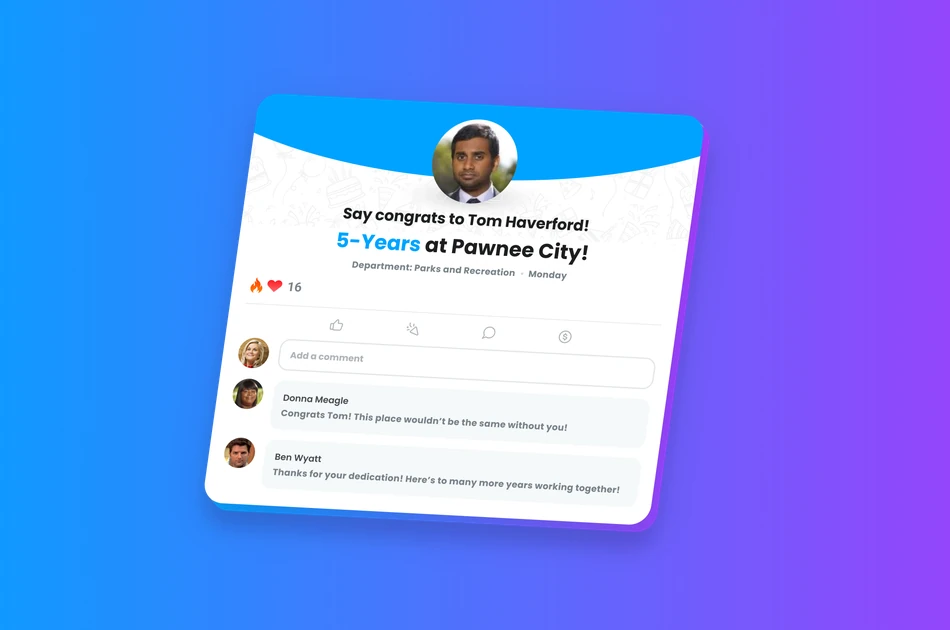
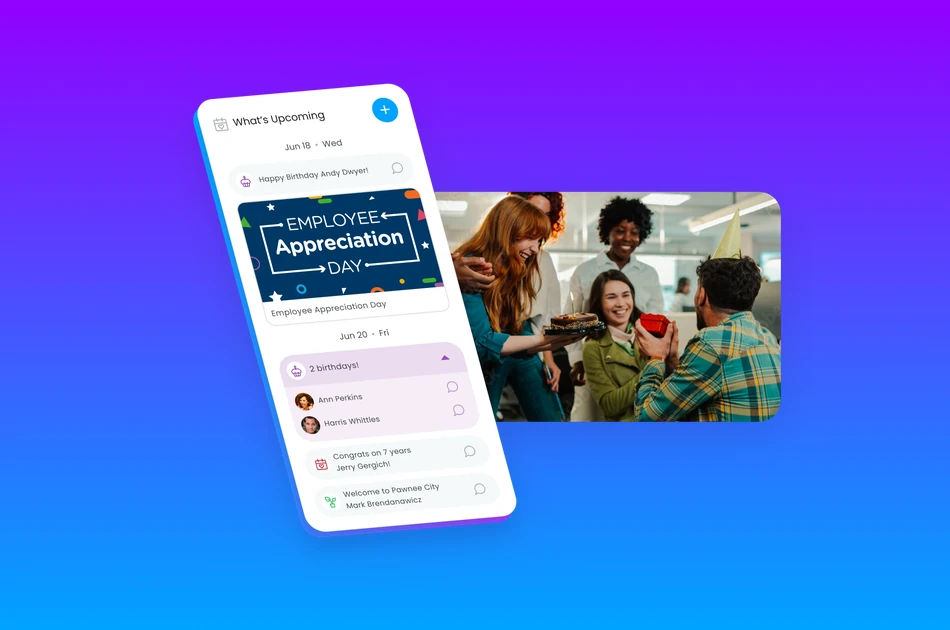
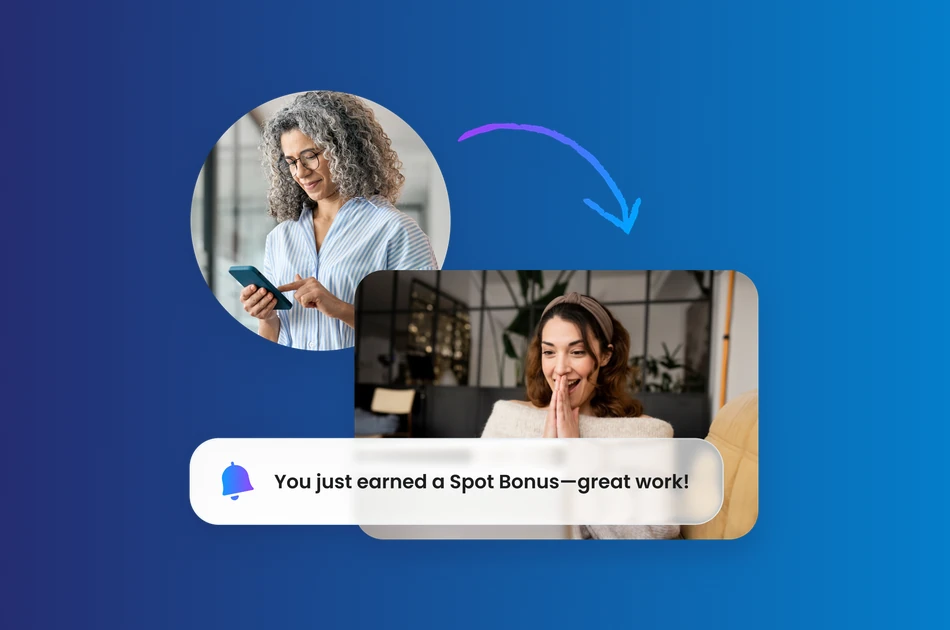
Recognition data is the one most organizations don't think of as feedback at all. But it is. When you look at who's being recognized, for what, and how often, you're looking at a real-time signal of what your culture actually values, which teams are connected, and who might be invisible to the rest of the organization. No one's filling out a form, but the data surfaces from the way people interact.
The goal isn't to read every comment. It's to know where to look.
A company-wide eNPS of 45 tells you almost nothing on its own. A score of 45 with one team at 70 and another at 15 tells you exactly where to focus.
Turnover is a lagging indicator. Recognition frequency, survey participation rates, and eNPS movement are leading indicators. They show you what's coming while there's still time to do something about it, well before it shows up in a resignation letter.
When a team scores well on engagement surveys but their manager hasn't sent a single recognition in three months, that contradiction is worth investigating. Contradictions in the data are usually where the real story is. Don't average them out. Go find out what's actually happening on that team.
Closing the loop is the move most feedback programs skip.
Closing it publicly means telling employees what you heard, what you're doing about it, and what you can't change right now, and being honest about why. The honesty about what isn't changing matters as much as the update on what is. It's the step that builds the most trust. Employees don't expect every problem fixed by next quarter. They expect to be taken seriously, and they can tell when you're being genuine.
One of the clearest ways to show that: connect what people said in a survey to something they can actually see change in the recognition program itself. If feedback surfaces that cross-team collaboration feels weak, and your team responds by building a recognition category that celebrates work across departments, people notice. That's not a coincidence to them. That's proof the survey did something.
It's part of why Motivosity built pulse surveys right into the same platform people already use for recognition. When feedback data and recognition data live in the same place, People leaders aren't stitching together two separate tools to see the full picture, and employees aren't asked to go somewhere new just to be heard. For a lot of teams, that's the difference between a survey that gets 40% participation and one that gets 80%, because the friction of "one more login" is gone.
Pulse surveys work best at two to four-week intervals for ongoing feedback. Annual engagement surveys can supplement, but they shouldn't replace the pulse. The longer the gap between check-ins, the longer you go without knowing what's actually shifting.
eNPS stands for Employee Net Promoter Score. You ask one question: "On a scale of 0 to 10, how likely are you to recommend this company as a place to work?" Scores of 9 to 10 are Promoters, 7 to 8 are Passives, and 0 to 6 are Detractors. eNPS equals the percentage of Promoters minus the percentage of Detractors. Anything above 0 is positive. Most high-trust organizations score between 40 and 70.
Pulse surveys are short, 3 to 5 questions, frequent, every few weeks, and designed to catch movement quickly. Engagement surveys are longer, more comprehensive, and run annually or bi-annually. The pulse tells you what's changing right now. The annual survey gives you the full picture.
Don't wait for the next survey cycle to respond. Segment by team and tenure to find where the drop is concentrated. Talk to managers in those areas directly. Then close the loop by telling employees what you're doing, even if the answer is "we're still working on it." Said clearly, that answer still builds more trust than silence does.
The difference isn't the platform. It's whether people can see the connection between what they said and what changed.
To see how Motivosity's pulse survey and recognition data work together in one place, request a demo.