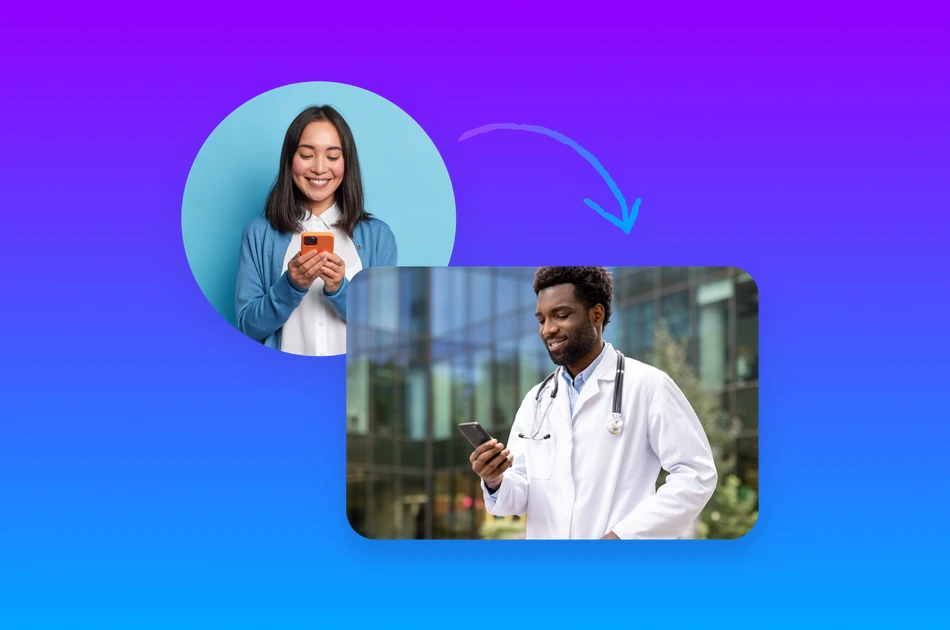
Most employee recognition software gets built for people who sit at a desk and check email. Healthcare doesn't work that way. Nurses, techs, and clinical staff are on the floor, between patients, or mid-shift, and a platform that assumes otherwise gets built for a workforce your organization doesn't actually have. This post covers what recognition built for frontline and deskless healthcare workers actually looks like, and what happens when you get it right.
Picture a typical recognition program built for a corporate office. An email announcement, a nomination form, maybe a Slack channel. Now put that same program in front of a night-shift ICU nurse who doesn't have a company email address memorized, doesn't sit at a desk, and has about four minutes between patients to check a phone.
That program was never going to reach her, and it's not because she doesn't care about recognition. It's because the tool assumed a work style she doesn't have.
This is the gap that shows up constantly in healthcare HR conversations. Leadership rolls out an engagement initiative, adoption numbers come back weak, and the read is "our people don't care about recognition." The actual problem is usually simpler. The tool was built for people who never sit at a desk, and most healthcare organizations don't have that workforce. Service Shoutouts exists specifically for that gap.
Healthcare already runs on thin margins, in staffing and in patience. Burnout isn't a talking point in this industry. It's the reason a fully trained nurse leaves for a travel contract, or a tech burns out and takes a job outside healthcare entirely.
Recognition doesn't fix a staffing shortage on its own, but it does address the specific piece it can address, which is whether people feel seen for the work they're already doing. Employees who feel connected to their culture report being roughly 2x more engaged than employees who don't, and connection is exactly what's missing when recognition never reaches the floor.
Suppose your organization runs a 65% turnover rate in a specific unit, well above your organization-wide average. Before assuming it's a pay problem, check whether it's also a visibility problem. Are managers on that unit actually able to recognize people in real time, in the middle of a shift, in a way that's visible to the rest of the team? If the answer is no, you have a tool gap, not just a compensation gap.
Recognition that reaches a deskless healthcare workforce comes down to a few non-negotiables.
Mobile first, not mobile-friendly. Mobile access isn't a nice add-on for this audience. It's the only way most of them will ever touch the platform.
Instant, not routed through an approval chain. A charge nurse should be able to recognize a tech for handling a hard save in the moment, not three days later after a form works its way through a manager.
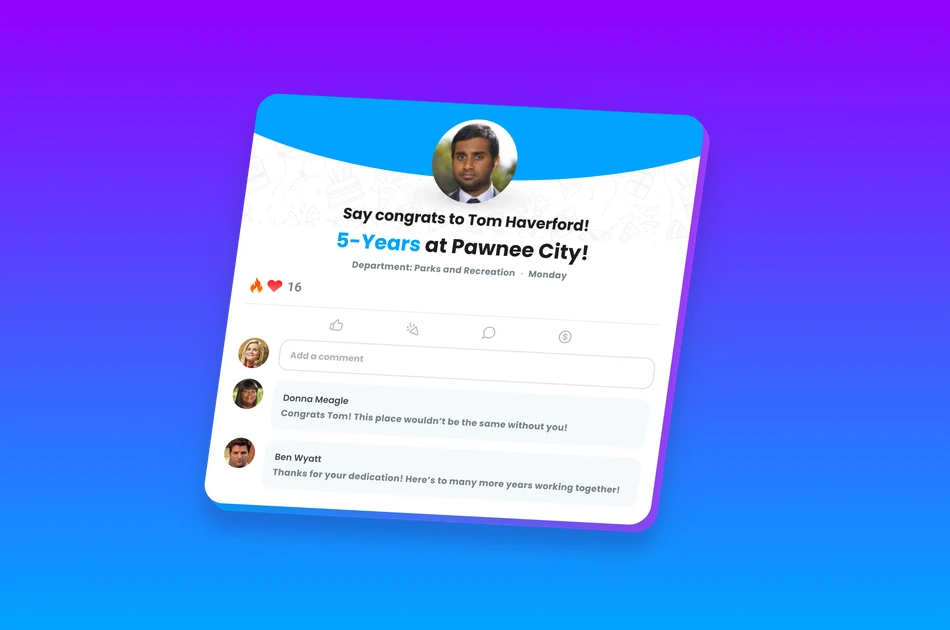
Automated for the moments managers are guaranteed to miss. Work anniversaries, certifications, onboarding milestones, these can't depend on a manager remembering them during a 12-hour shift.
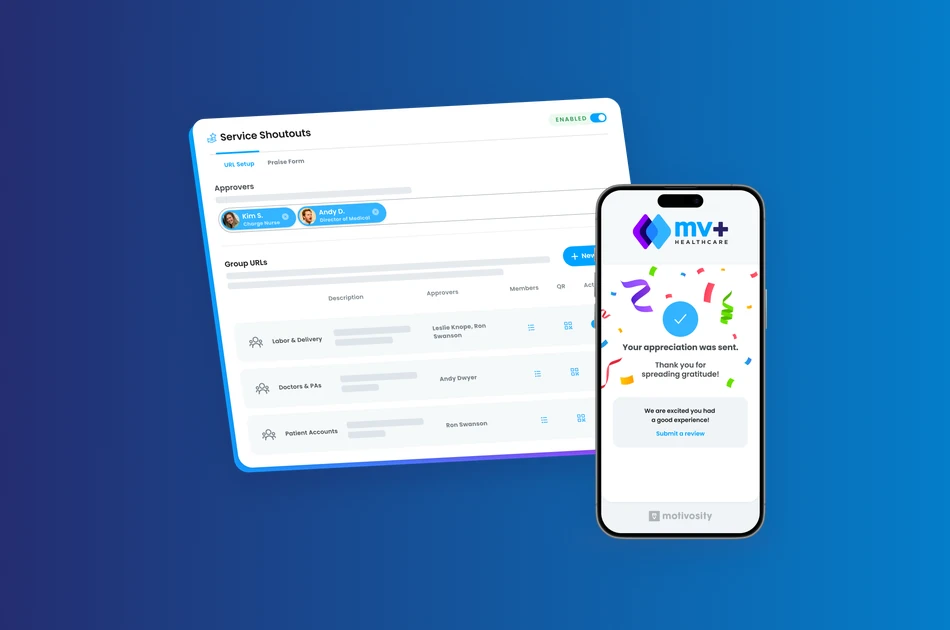
Visible beyond the immediate unit. Service Shoutouts, where recognition from a patient, a colleague in another department, or a manager becomes visible company-wide, does more for a dispersed healthcare workforce than a private thank-you ever could.
"Motivosity is our most used platform in the hospital, because that's where my people are."
Hancock Health, a hospital system with roughly 1,400 associates, put it plainly: Motivosity became their most-used internal platform, specifically because it reached staff where they actually were, not where a typical corporate tool assumed they'd be.
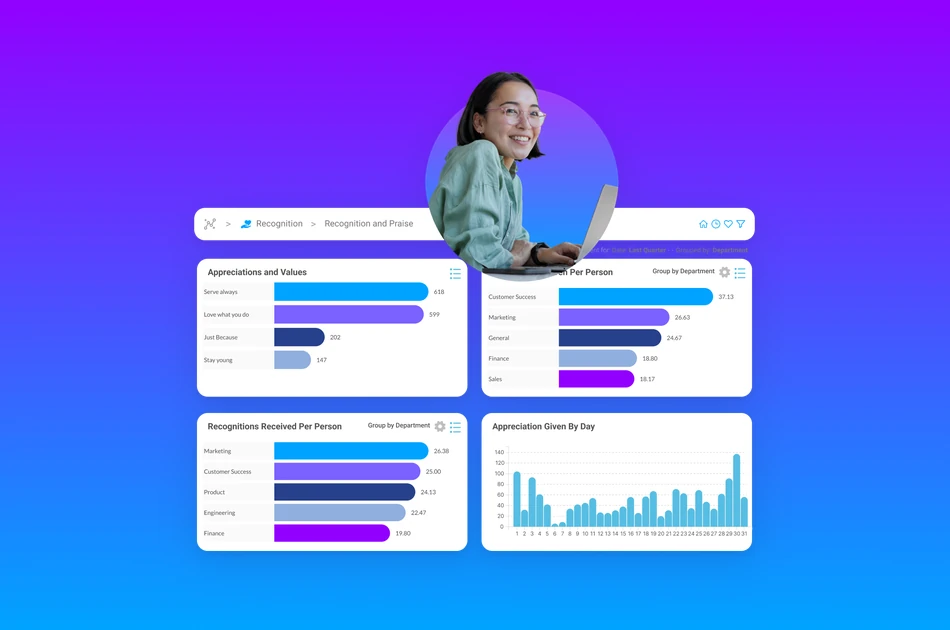
Health Catalyst, a healthcare data and analytics company with more than 460 employees, reached 98% of employees receiving regular recognition, with over 15,000 appreciations sent in a single 12-month period. That's not an engagement initiative that fizzled after launch month. That's a habit that stuck.
Blueberry Pediatrics, a fully remote healthcare startup, had a recognition problem that looked different but came from the same root cause: fewer than 4% of employees were being recognized in a given month, and physicians in particular were disconnected from any central culture hub. After consolidating recognition, communication, and community into one platform, recognition increased 30 times over, from 4 to 5 people recognized per month to 4 to 5 people recognized per day, with 40% of frontline physicians actively engaging.
Jet Dental, a dispersed healthcare workforce spread across locations, generated nearly 2,000 public appreciations in six months after making the same shift, connecting a workforce that had previously relied on swag and one-off gestures instead of consistent, visible recognition.
This question comes up in nearly every healthcare evaluation, and it deserves a direct answer instead of a dodge. A recognition and rewards platform is not clinical infrastructure, and it shouldn't be treated like one. Motivosity doesn't store protected health information or payment card data. What it stores is recognition activity, values tags, and reward redemption, the same category of data any HR system already handles.
For security and compliance teams doing vendor review, look for SOC 2 Type II reporting, GDPR and CCPA compliance, and HIPAA-aligned data handling standards as a baseline. Getting ahead of this question in the RFP or discovery call saves weeks later in the procurement cycle, and it signals to IT and legal that the vendor has already thought about where the line sits between culture software and clinical systems.
Step 1. Map where your workforce actually is. Before selecting or relaunching a recognition program, get honest about what percentage of your staff works a shift schedule without regular desk or email access. That number should drive every other decision.
Step 2. Prioritize mobile and speed over feature breadth. A platform with fifty features nobody on the floor can access is worth less than a simple one that works from a personal phone in under thirty seconds.
Step 3. Automate the moments that depend on memory. Milestones, certifications, and onboarding shouldn't rely on a charge nurse remembering during a chaotic shift. Automate them so they happen regardless.
Step 4. Make recognition visible outside the immediate unit. A win on the night shift should be visible to leadership and other departments, not trapped in a group text that disappears.
Step 5. Track participation by shift, not just company-wide. Company-wide adoption numbers can hide a night shift that's completely disconnected from the program. Break the data down before declaring success.
The future of employee engagement is people first. Be the company that gets it right.