Recognition doesn't happen automatically for remote teams anymore. Without hallway comments and lunchroom overhears, appreciation has to become something managers build on purpose.
This guide walks through what remote employees actually want from recognition, 15 ideas that work across budgets and time zones, and the manager habits that make appreciation consistent instead of occasional.
Key Takeaways:
Someone on your remote team did great work this week. Maybe they caught a problem before it became a client-facing mess, or maybe they just showed up consistently in a way that quietly holds a project together. Whatever they did, there's a chance nobody saw that behavior, so no one said anything.
That's the reality for a lot of distributed teams. Not because managers don't care, but because there used to be more organic moments in the day for recognition to happen. A hallway comment, a round of applause in a conference room, someone overhearing good news at lunch. None of that happens on its own anymore. It has to be built on purpose.
Here's what you need to know:
In an office, recognition happens in the margins. Someone walks past your desk and says "nice work on that." None of that requires a plan. It just happens because people are near each other.
Remote work removes that. An employee can do excellent work for months and never hear about it unless someone decides to say something. That's the difference between feeling like part of the team and quietly wondering if anyone notices what you do.
That gap has a real cost. Motivosity's own research found that 52% of employees report feeling lonely at work, and that number climbs for people who rarely see a coworker in person. That kind of loneliness feeds directly into how engaged someone stays, and how long they're willing to stick around.
This is why remote employee recognition can't be treated as a nice extra. For distributed teams, it's one of the few tools left to replace the connection that used to happen automatically. Done well, it tells a remote employee: I know what you did, and it mattered. Done consistently, it becomes part of your culture instead of a gesture that shows up around performance review season.
Remote employees rarely want "more stuff." If you were to ask them what they really want, it's usually just to feel like someone paid attention.
Remote employees notice the difference between recognition that was clearly copied and pasted and recognition that names something real: the problem they solved, the client they saved, the way they showed up for a teammate.
Visibility matters too, but not the same way for everyone. Some people want their win mentioned in the all-hands. Others would rather get a direct message and call it a day. Flexibility and authenticity beat volume. If you're building out a broader employee recognition ideas library, remote work is exactly where you can't default to one style for everyone. Ask people how they like to be recognized, and let their preferences shape how you recognize them.
Before diving in, it helps to understand the 5 essential types of recognition to enhance employee engagement, since remote recognition works best when it mixes public praise, private appreciation, peer input, and rewards instead of leaning on just one. These ideas work across budgets and team sizes, and most cost nothing but attention. Pair a few into a broader set of employee engagement strategies and you've got a real system, not a one-off gesture.
Recognition falls flat the moment it feels scripted, whether that's a message that reads like a template or a celebration that happens because the calendar said so. People notice, and it can do more harm than staying quiet.
Say the real thing, in your own words, about the real work. If a public shoutout would embarrass someone rather than delight them, take it to a direct message instead. Match your tone and visibility to how the person actually likes to be recognized, not to what looks best on a company Instagram post.
Consistency beats grand gestures. A manager who mentions good work most weeks, in a sentence or two, builds more trust over a year than one who throws a big quarterly celebration and goes quiet in between.
A few patterns quietly undercut recognition on distributed teams:
Consistency is the hardest part of any recognition effort, especially on remote teams, where there's no daily proximity to remind a manager that someone did something worth mentioning.
The fix isn't a bigger program. It's a smaller habit, repeated. Build recognition into something that already happens every week, a team meeting, a 1:1, a Monday check-in, instead of treating it as a separate task competing for time.
Manager accountability matters too. Left to individual habits, some teams get recognized constantly and others almost never do. Building it into broader employee engagement programs gives every manager the same expectation, rather than leaving it to whoever remembers. Peer participation closes the remaining gaps, since no manager sees everything that happens on a distributed team. A strong employee engagement approach makes room for recognition to come from anywhere, not just the top.
Get this right and your employees will stick around longer and be even happier at work.
Keeping a distributed team connected takes more than good intentions. It takes a way to make recognition visible and easy enough that busy managers and stretched-thin peers actually do it.
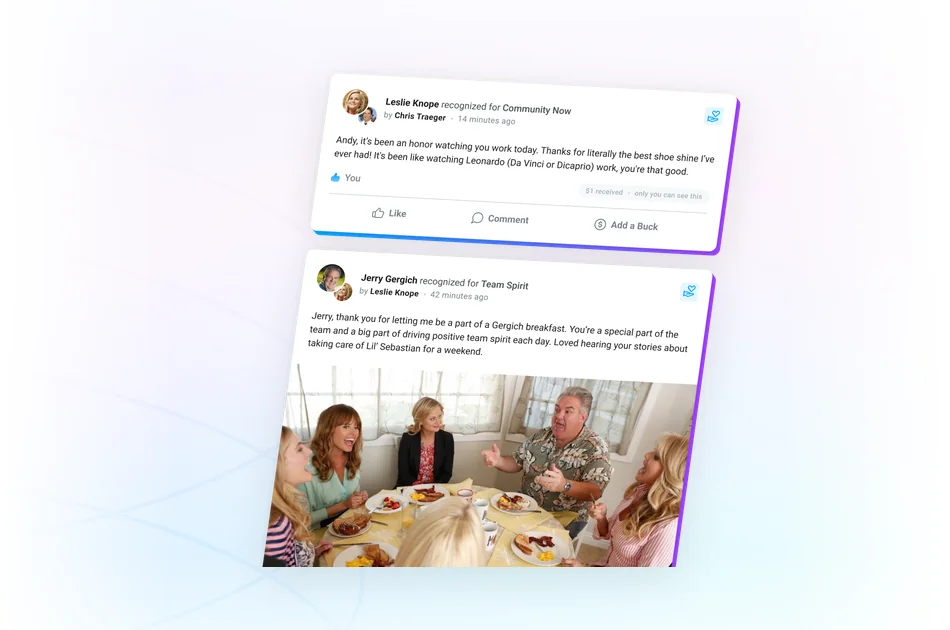
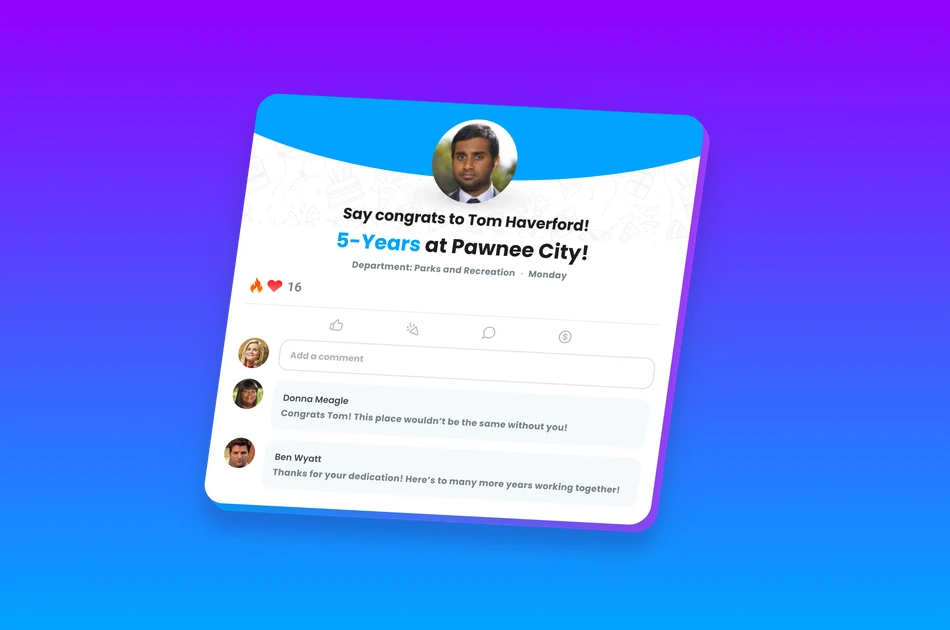
Motivosity gives remote teams a shared place for peer recognition, milestone celebrations, and rewards, so appreciation doesn't depend on someone remembering to send a Slack message before it feels too late. Recognition shows up in a social feed the whole company can see, milestones get flagged automatically instead of relying on a manager's memory, and rewards can be personalized through the employee rewards platform so a gift card doesn't have to be a guess. It's built to scale with your team, whether you have fifty remote employees or five thousand spread across time zones.
None of this replaces genuine appreciation. It just makes sure genuine appreciation actually reaches the people who earned it, instead of getting lost in a busy week.
Start with specific, personal messages that name the actual work someone did, then layer in public shoutouts, peer channels, and small rewards. Ask each person how they prefer to be recognized and follow that preference.
Remote employees miss the casual, in-person moments that naturally build belonging in an office. Without intentional recognition, good work goes unnoticed, which chips away at engagement and makes people more likely to disengage or leave.
Recorded video shoutouts, async recognition threads for teams across time zones, virtual milestone celebrations, digital gift cards, care packages sent to someone's door, and peer-nominated awards all work well.
Build recognition into meetings and check-ins that already happen, give people real choice in how rewards show up, and keep managers consistent instead of leaving recognition to chance. Consistency, not scale, is what makes remote employees feel connected.