Sustainable engagement comes from connection, not mandatory team building. These employee engagement programs replace mandatory activities with authentic relationship-building:
Each addresses core engagement drivers — like belonging, autonomy, purpose, and growth — through systems that integrate with daily work. Organizations using these approaches see higher retention and more engaged employees who participate because programs add value, not because attendance is tracked.
Many employees are burned out on engagement programs that feel like extra work instead of meaningful connection. Many of these initiatives promise connection, but only deliver obligation. Attendance happens because it's required, not because anyone really wants to be there.
Engagement programs that actually work don't force participation. They create conditions where connection happens naturally. They honor employee autonomy instead of demanding more of their time. They build community through genuine appreciation, shared interests, and psychological safety.
This guide covers 10 engagement programs that create measurable improvements in retention, performance, and culture without requiring employees to sacrifice bandwidth they don't have.
Perks have their place, but they don't build engagement on their own. Gym memberships, ping pong tables, and free snacks address surface-level satisfaction without creating genuine connection.
Employees might appreciate the perks, but they don't build relationships, psychological safety, or a sense of belonging. They're transactional benefits that fade into baseline expectations.
Connection-heavy strategies work differently. They prioritize relationships over amenities and community over convenience.
Employees in 2026 care more about meaningful engagement than they do about traditional company perks. They report a desire to feel valued by their peers, trusted by leadership, and connected to meaningful work. Belonging and purpose drive sustained engagement — perks don't.
Effective engagement strategies address foundational needs across multiple dimensions. The five Cs framework — Care, Connect, Coach, Contribute, and Congratulate — captures how leaders can create conditions for engagement through relationship-building and recognition.
The 4 Ps of employee engagement — Purpose, Passion, Pride, and Pay — ensure people feel both emotionally connected to their work and fairly compensated. Core pillars like recognition, feedback, growth, and work-life balance form the infrastructure that makes engagement sustainable rather than event-driven.
Engagement isn't something you do to employees through programs and initiatives. It's the byproduct of a connected culture where people feel seen, supported, and aligned with shared goals.
The programs that follow create that culture systematically.

What It Is: Decentralized recognition that removes manager bottlenecks. Every employee receives a monthly budget to reward colleagues for behaviors that align with company values.
Why It Works: Peer validation creates a self-sustaining gratitude loop. Recognition happens in real time from the people who actually see the work, not just from leadership during review cycles. Appreciation becomes frequent, specific, and visible across teams.
Impact: Builds cross-team visibility and reinforces company values through authentic acknowledgment rather than top-down mandates.
How to Implement: Motivosity Peer-to-Peer Giving automates budget allocation and tracks recognition patterns across the organization.

Employees balancing work and life through wellness, family time, remote work, and physical activity
What It Is: LSAs are personalized stipends employees can use for wellness, hobbies, childcare, mental health support, or other needs — replacing one-size-fits-all gym memberships.
Why It Works: Flexibility honors the “whole human” and acknowledges that wellness looks different for everyone.
Impact: Increases program utilization and demonstrates trust in employee choices. Employees feel seen as individuals with diverse needs.
How to Implement: Lifestyle Spending Accounts with Motivosity handle automated administration and flexible redemption options.
What It Is: Automated recognition for birthdays, work anniversaries, and personal milestones like new homes, babies, or adoptions — honoring employees beyond their job titles.
Why It Works: Automation removes HR admin burden while ensuring no one gets forgotten. Employees feel valued as whole people, not just workers who produce output.
Impact: Creates moments of joy and connection that humanize the workplace. Milestone celebrations remind teams that the people they work with have full lives worth acknowledging.
How to Implement: Motivosity's Milestone Celebrations feature automates tracking and recognition across the organization.
What It Is: Digital “neighborhoods” for hobbies and interests — like plant parents, runners, book clubs, or gaming communities. These spaces bridge the hybrid work gap.
Why It Works: These spaces create non-work connections and help employees find community beyond their immediate teams. Shared interests build relationships that might never form through project collaboration alone.
Impact: Reduces isolation in remote and hybrid environments. Organic relationship-building happens around shared passions rather than forced team activities.
How to Implement: Use platforms that provide structured community creation with moderation tools and engagement tracking, like Motivosity's Employee Spaces.
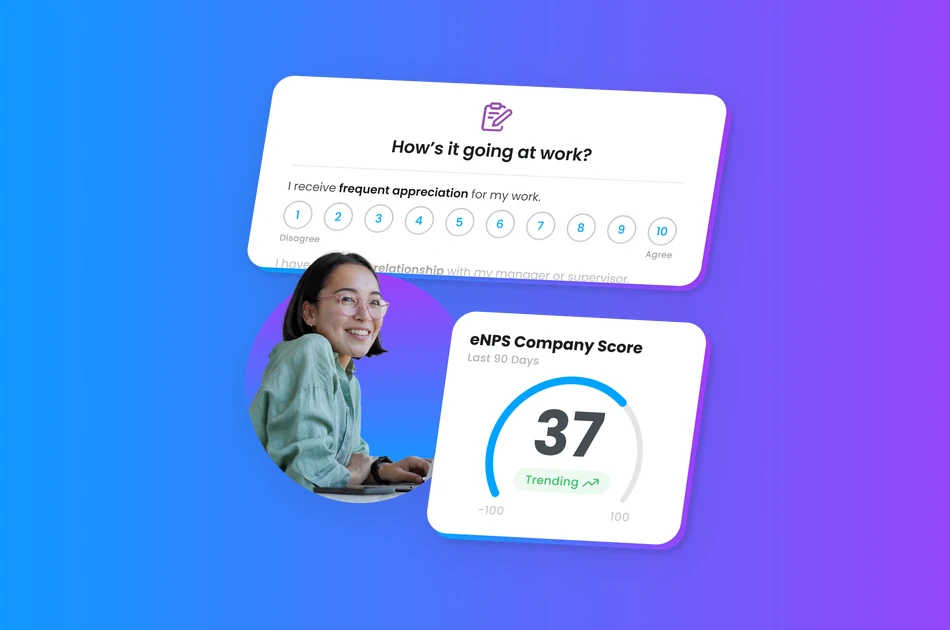
What It Is: Real-time sentiment tracking as an employee engagement program that can replace annual engagement surveys. Frequent, light check-ins catch burnout, disconnection, or frustration early.
Why It Works: Leadership gains visibility into team health without creating survey fatigue. Short, focused questions feel less burdensome than lengthy annual surveys, while providing more actionable data.
Impact: Enables proactive intervention before small issues become retention problems. Teams feel heard when feedback leads to visible action.
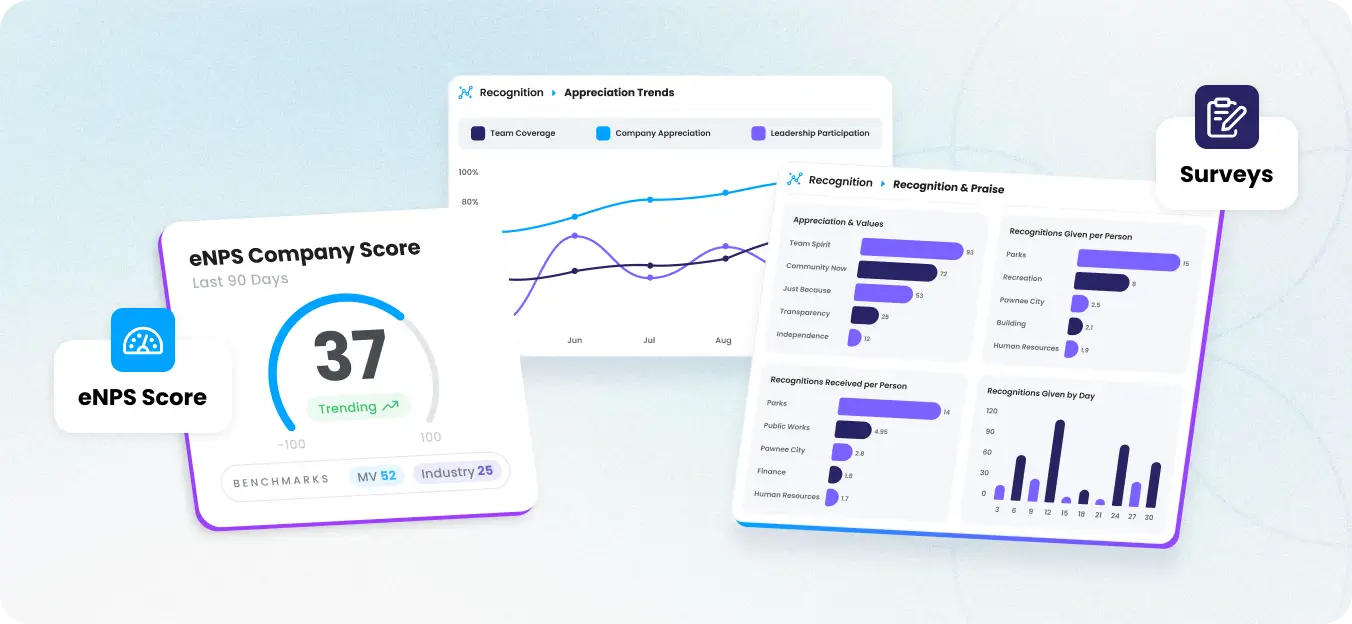
How to Implement: Engagement statistics from Pulse (eNPS) Surveys provide ongoing measurement with analytics dashboards and trend tracking.
What It Is: Stipends give employees control to choose their own certifications, courses, conferences, or learning resources aligned with their career goals.
Why It Works: Autonomy in learning builds loyalty and signals investment in long-term career development. Employees pursue growth that matters to them, rather than completing generic required training.
Impact: Increases internal mobility and retention by creating clear pathways for advancement. Employees stay longer when they see the company investing in their future.
How to Implement: Pair with Lifestyle Spending Accounts for flexible administration, or manage as a separate professional development budget.
What It Is: Manager-driven monetary recognition for living company values, in real time. These bonuses reward specific behaviors, not just results.
Why It Works: Tying bonuses to behaviors makes abstract values concrete and actionable. Employees see exactly what company values look like through peers who get recognized for demonstrating them.
Impact: Creates behavior-based motivation that reinforces cultural expectations. Values shift from aspirational to operational.
How to Implement: Motivosity's Spot Bonuses enable instant, values-aligned rewards with budget controls and recognition visibility.
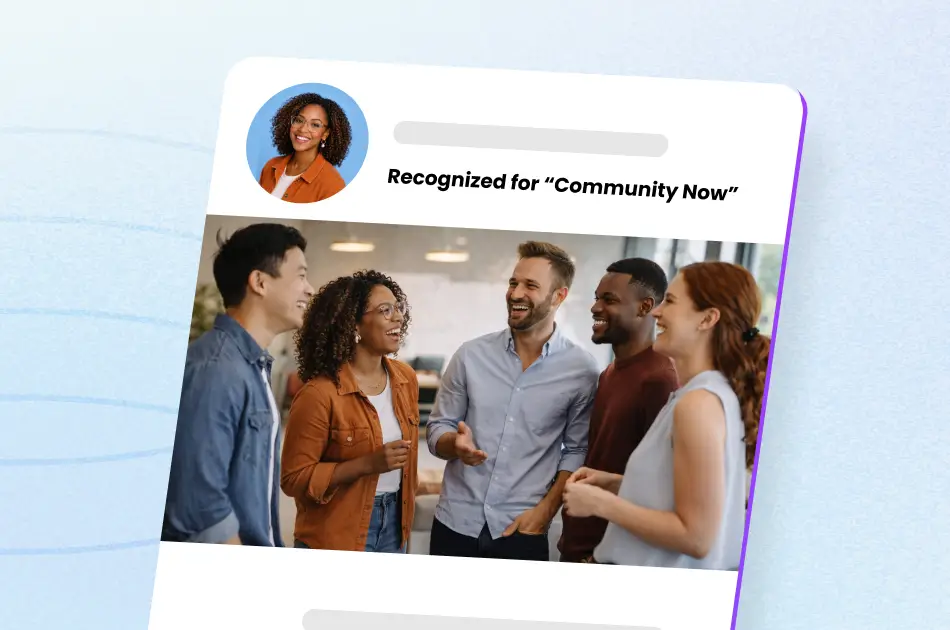
What It Is: Public appreciation feeds where employees share shoutouts that are visible across departments, building social connection through gratitude.
Why It Works: Visibility amplifies impact. Peers see who's being celebrated and for what behaviors, creating positive social proof. Recognition becomes contagious as teams replicate what they see valued.
Impact: Normalizes gratitude as part of daily work culture. Cross-departmental visibility strengthens organizational connection beyond immediate teams.
How to Implement: Social feeds form the foundation of employee recognition programs, and integrate with platforms like Slack and Teams.
What It Is: Channels that bring outside praise inside by allowing customers to recognize employees directly for exceptional service or support.
Why It Works: Customer gratitude fuels employee morale and validates the impact of their work. Employees see how their effort creates real value for the people they serve.
Impact: Connects employees to the "why" of work, and demonstrates tangible value to external stakeholders. This type of employee engagement program is especially powerful for customer-facing teams who rarely receive direct appreciation.
How to Implement: Create submission forms, email addresses, or integrated feedback channels that route customer praise directly to recognition feeds and employee profiles.
What It Is: Structured programs connecting entry-level talent with executive insights through shadowing opportunities or formal mentorship relationships.
Why It Works: Bridges the hierarchy gap and demystifies leadership decision-making. Junior employees gain context for strategy and direction while leaders stay connected to frontline perspectives.
Impact: Increases transparency, develops future leaders, and makes junior employees feel seen and invested in. Builds cross-level relationships that break down organizational silos.
How to Implement: To be effective, these programs require thoughtful structure to ensure they create real connection rather than surface-level visibility. Set clear expectations, regular check-ins, and measurable outcomes rather than doing one-off events.
Not all employee engagement programs deliver results. Here's how to choose the ones that will:
When putting together your employee engagement program, keep these common mistakes in mind:
The shift from one-off events to sustainable programs changes how engagement works. Automated systems remove administrative burden while creating consistent touchpoints for recognition, growth, and connection.
Connection drives engagement, whereas forced participation can undermine it. Effective employee engagement programs create conditions where people choose to participate because they add value to their work experience.
Treat engagement as a leadership pillar and operational priority (not an HR checkbox) with these 10 ideas. The organizations that retain top talent and build thriving cultures make engagement central to how they run the business.
Explore how Motivosity helps organizations build connection at scale. Get a demo to see how Motivosity makes recognition, connection, and culture scalable across your organization.