Only 23% of employees feel actively engaged at work — and one of the most proven levers for changing that is also one of the most underutilized: recognition. But not all recognition is created equal. The type, format, timing, and visibility of how you appreciate people all affect how much it lands. This guide breaks down seven actionable recognition strategies and the five key categories that determine whether your program actually moves the needle.
Key Takeaways:
Finding ways to improve employee engagement is essential for businesses in all industries. Gallup research shows that only 23% of employees feel actively engaged in the workplace, highlighting that many employers could be doing more. Employee recognition is an effective way to boost morale, productivity, and greater engagement among individuals and teams. But which types of recognition work best?
There are seven powerful, proven ways to recognize individuals and create more engaged, cohesive teams. With 69% of employees stating that they will work harder if their efforts are recognized, it’s time for businesses to consider prioritizing employee recognition programs. This guide to the different types of recognition can help you get started.
Why is employee recognition important? For most companies, the primary driver for implementing these programs is to increase employee retention. Currently, over 63% of American firms find retaining personnel more challenging than sourcing new hires. Yet it’s significantly more expensive to attract and train a new employee than it is to retain your existing ones. Therefore, organizational success depends on successful employee engagement, including your remote employees, and recognition is an ideal tool to achieve that.
Employees thrive in a welcoming, rewarding environment. Regular recognition encourages employees to do more and reinforces positive behaviors, with 92% of surveyed employees stating they’ll repeat a specific action if given recognition for it. The same survey shows that recognition is the most important factor impacting engagement — a major influencer on retention and productivity — ahead of autonomy, inspirational leadership, and even financial incentives.
Understanding the importance of recognizing your employees is just the start. From here, you can delve further into the preferred types of employee recognition. Of course, employee preferences for recognition methods are highly individual. Some will enjoy recognition experiences, such as days out or team get-togethers. Others may work harder to gain vouchers for local services that make their life easier or allow them to have a treat or a luxury moment.
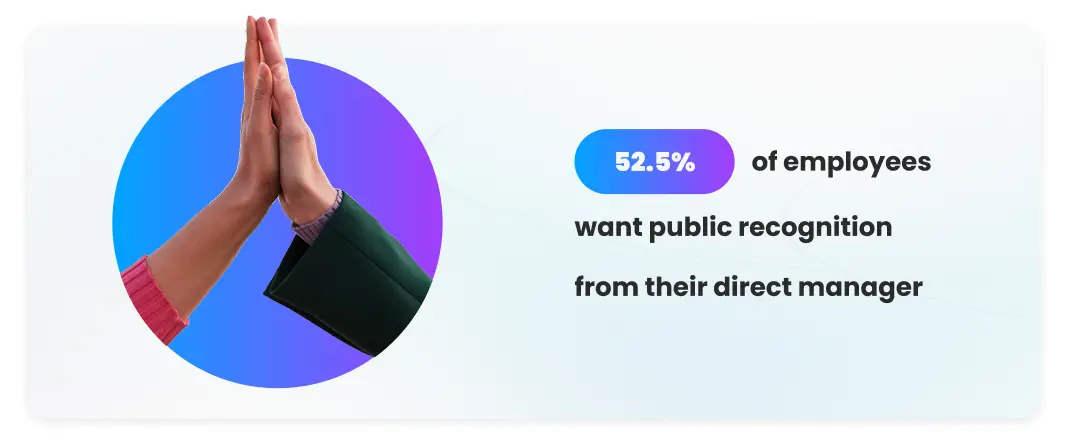
It’s worth looking at existing research to discover what works well for other companies. For example, surveys show that 52.5% of employees want public recognition from their direct manager. For many people, one-to-one recognition is less powerful than gaining the respect of their peers via public praise. You can combine data like this with surveys of your team members to try and implement various methods within your programs.
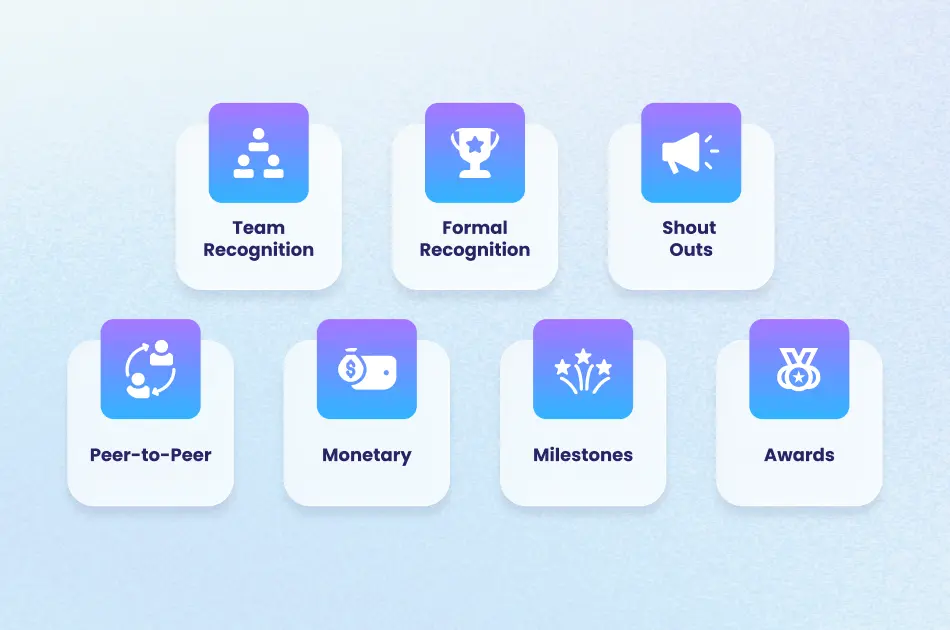
Most types of recognition can be sorted into five different categories:
Let’s take a closer look at these categories.
Public recognition is, as the stats above suggest, welcomed by many employees. It’s a way of telling the wider workforce or even the whole organization that an employee or entire team has done something amazing. To publicly recognize achievement or effort creates a record of that attainment and can contribute to a positive workplace culture.
However, it’s important to remember that not everyone is comfortable with public praise. Others will prefer private recognition to avoid embarrassment or feeling like they’re indulging in one-upmanship. Whether you choose public or private recognition will depend on both your overall workplace culture and the individual or team in question.
Both formats of praise are essential aspects of your recognition toolbox. Verbal appreciation is ideal for everyday interactions and on-the-spot recognition. Brief verbal praise for work done on a project or helping another staff member can have a powerful impact in the moment.
On the other hand, written recognition, such as a personalized note or certificate, is something an employee can keep forever. Consider this type of recognition for more formal rewards and don’t use it to replace regular, positive verbal interactions.
Financial compensation isn’t the top motivator for engagement — only 7% of employees find it the most important incentive for doing a great job. That doesn’t mean you shouldn’t offer monetary rewards and recognition. Performance bonuses can fuel productivity and create friendly competition. Other monetary rewards, such as vouchers and discounts, can be personalized to make employees feel like the company genuinely cares about them as individuals.
Non-monetary recognition is, of course, more cost-effective for businesses but this doesn’t mean it can’t be personalized and meaningful. Praise, certificates, and peer-to-peer recognition are all free or inexpensive ways of making employees feel valued. Combining the two can be most effective, depending on the needs and wants of your teams.
Great managers will find a balance between individual and team recognition. Star team players need praise to ensure they know what they’ve done well and carry on performing at that high standard. However, teams that are recognized for being a cohesive unit will work better and grow together. Manager-to-employee recognition should include both individuals and teams, so that other team members don’t become resentful of employees who regularly win praise and rewards.
A structured recognition program gives employees and managers the benefit of knowing what rewards to expect and recording how many times recognition has been given. Informal recognition can run alongside more formal recognition and rewards programs, with team contests, verbal praise, and on-the-spot shout-outs all becoming a part of company culture. Many companies can benefit from combining structured and unstructured recognition, by catering to individual preferences and ensuring that habits of daily praise don’t fall by the wayside.
Implementing an effective recognition strategy means exploring different employee recognition ideas that complement each other. While many employees love a public shout-out, quieter options are more suitable for others. Some love monetary rewards, whereas others will want peer recognition and praise.
Remind employees how valued they are by implementing some of these seven actionable recognition strategies.
We can’t stress the importance of positive feedback enough. Employees only know they’re doing well when you tell them so, either in person or via KPI-based digital systems. The benefit of providing consistent recognition via verbal praise in team meetings is that it can become part of your team’s culture. Your employees will come to expect managers to give these shout-outs, and may even get involved. You can have nominations in your team for who deserves this type of informal recognition, and even mix things up by getting a team member to host a meeting, where appropriate.
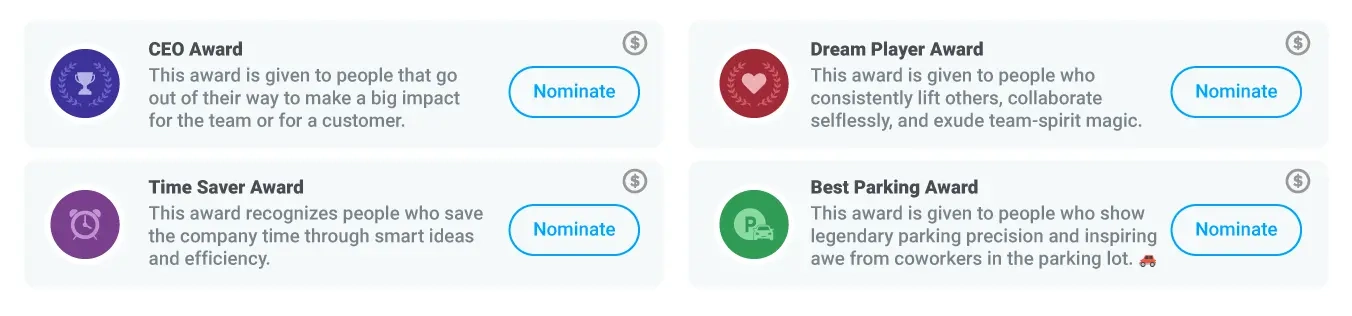
Companies that offer formal recognition via awards ceremonies give everyone something to look forward to. When employees know there’s a chance for public rewards and recognition, they’re more likely to strive towards these visible and attainable goals.
Formal evaluations on a one-to-one basis can also be powerful, particularly when managers take the time to build positive relationships with employees. When a team member values the opinion of their direct manager, they’re more likely to be motivated by praise during a quarterly evaluation.
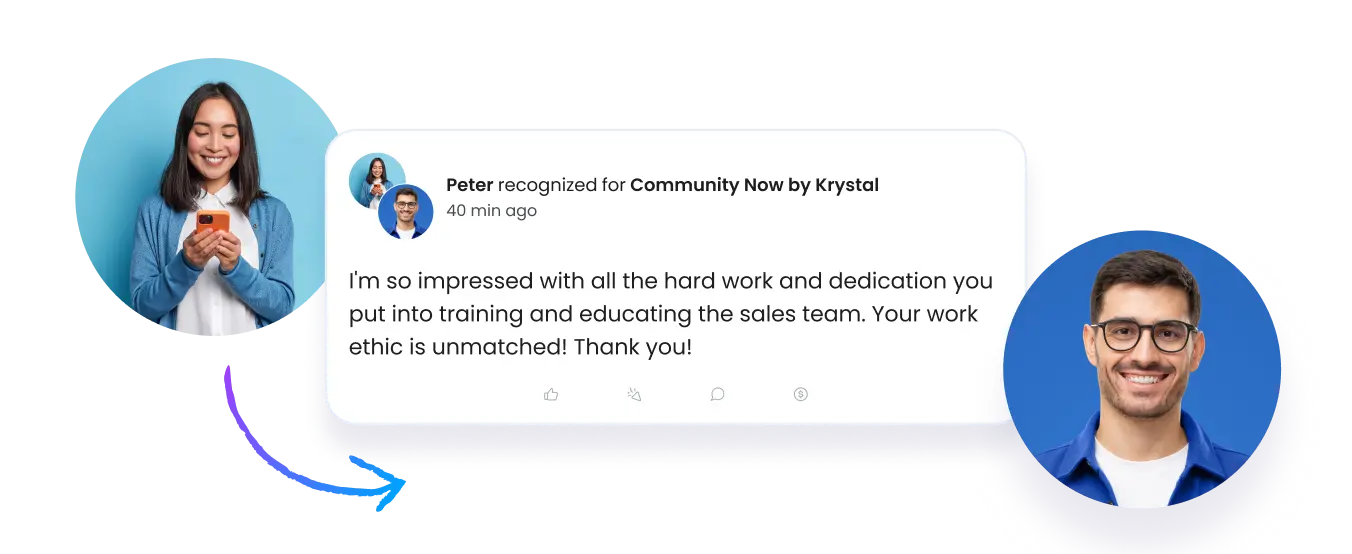
Don’t discount the power of peer-to-peer recognition, either. By providing accessible avenues for colleagues to acknowledge and celebrate each other's contributions, you empower employees to become active participants in reinforcing positive behaviors and achievements.
Consider implementing a simple yet impactful "High Five" peer-to-peer recognition program like Motivosity where employees can easily give a virtual appreciation accompanied by a brief message of appreciation for a colleague's specific effort or positive attitude. This could be facilitated through existing business social media platforms, internal Slack channels, dedicated Microsoft Teams groups, or the company intranet, and can help develop a culture of positive reinforcement.
On-the-spot monetary rewards are always appreciated, even by those team members who state that financial compensation isn’t their primary motivator. Performance bonuses are effective because they usually have clear targets set, making them achievable for employees willing to participate in these programs.
Other monetary recognition incentives may involve vouchers or discounts for popular services, such as those from your firm’s partners or associates. Profit sharing is another way to make employees feel valued and show them the positive impact of their contributions.
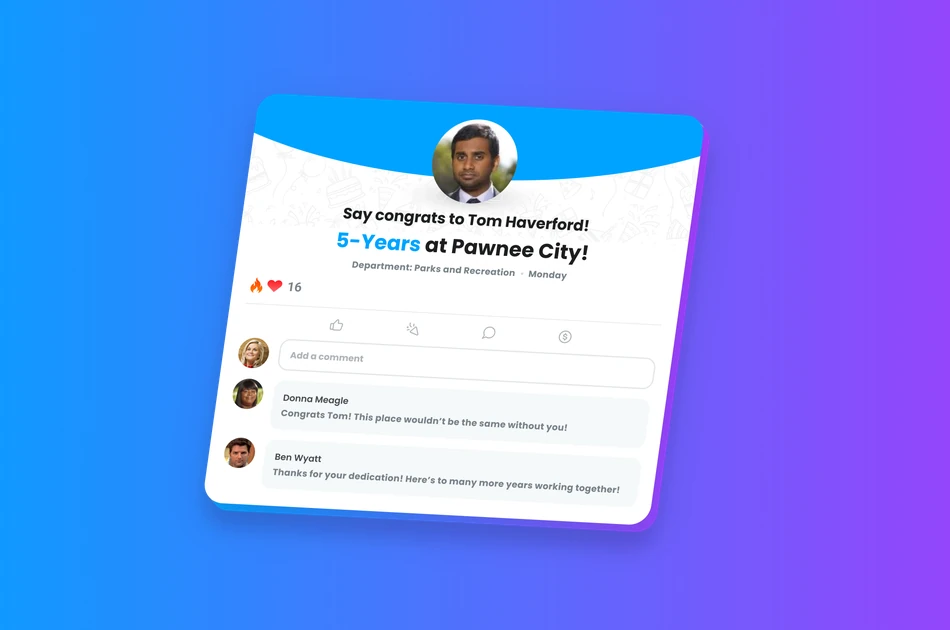
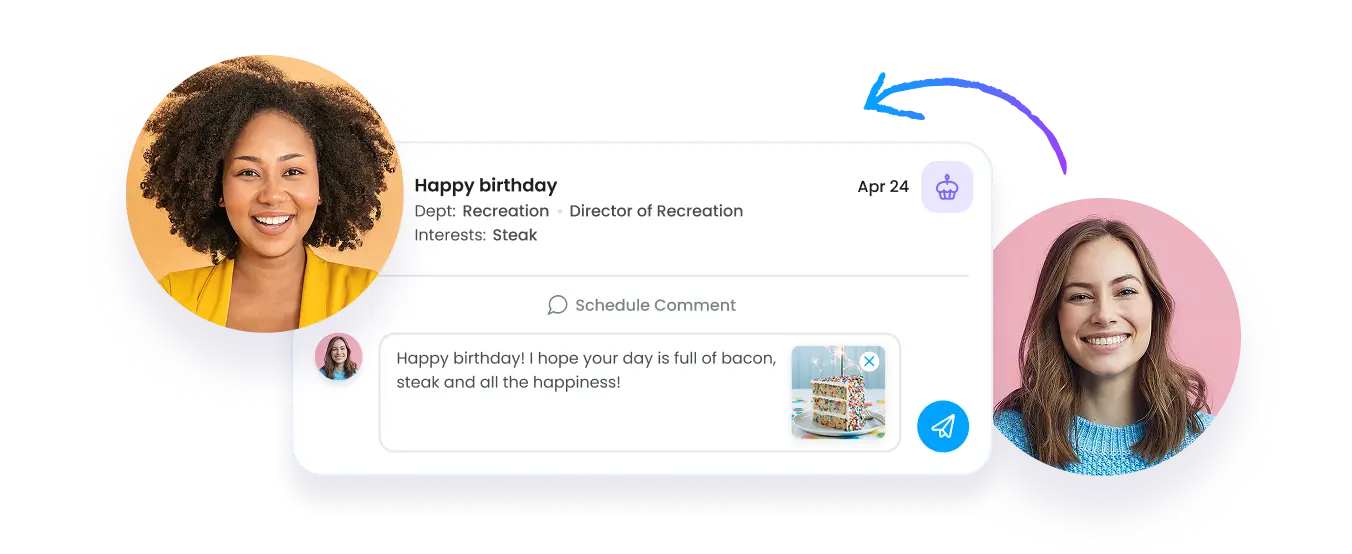
Work anniversaries can be very meaningful to employees. Milestone recognition rewards for one, five, or ten years (or beyond) at a company are so common because they’re effective. Noting milestone celebrations is a great way to acknowledge the importance of the employee’s tenure and make them feel appreciated.
Recognition and appreciation are also connected to empowering employees to improve their prospects. Around 68% of employees are interested in on-the-job training that could lead to professional development opportunities, so investing in these initiatives can significantly increase engagement.
Consider developing a certification scheme that rewards employees for their learning progression via a structured recognition program. The harder someone works toward their career goals, the more they benefit the company, after all.
Recognition experiences like team away-days, retreats, and meals out together can contribute to a more positive work environment. Always consider the accessibility of events and experiences to ensure no one is left out. Team recognition should include everyone.
These programs are essential for improving employee engagement. But what are the best ways to implement them?
Here are some best practices to help make recognition programs fair and sustainable.
Regular recognition can be given whenever you deem it appropriate. The successful completion of projects is one key moment to offer praise, or when someone has finished a run of generally thankless tasks. Managers could diarize when project completion dates are occurring and check on the progress of employees to look for opportunities to give recognition.
How you give feedback is as important as when. Each direct report should have a regular one-on-one meeting as well as performance reviews, which provide ample opportunities for praise. However, ensure you’re utilizing a structured recognition program and encouraging team members to use any peer-to-peer recognition schemes you have in place.
Everyone! Managers, peers, and even people on the HR team should be recognizing employees’ positive behaviors like living the company values or excellent performance.
Organizational success depends on improving productivity, retention, and engagement. If you’re unsure if your company is effectively engaging personnel, it could be time to evaluate and enhance your employee recognition and rewards programs. A better employee experience leads to increased loyalty and your firm becoming known as a great place to work.
Talk to the Motivosity team today and discover more about effective employee recognition software and solutions.