Most employee recognition programs fail because they focus on rewards instead of relationships. Data shows that employees stay for culture and connection—not perks—yet many recognition platforms are built as transactional systems rather than tools for building trust and belonging. High-performing organizations treat recognition as a daily, social, and visible practice that strengthens human connection, increases engagement, and drives measurable business outcomes like revenue growth and retention. Platforms like Motivosity differentiate by designing recognition as culture infrastructure, not just a reward system.
Key Takeaways:
Here's something the recognition software industry doesn't love to admit: most platforms are built backward.
They lead with the reward. Pick a prize. Earn some points. Redeem a gift card. The assumption is that if you dangle enough carrots, people will feel valued. But after years in this space, and after spending serious time with the data from our own 2026 State of Workplace Culture & Connection report, I'm convinced that approach is solving for the wrong thing entirely.
The carrot is not the culture.
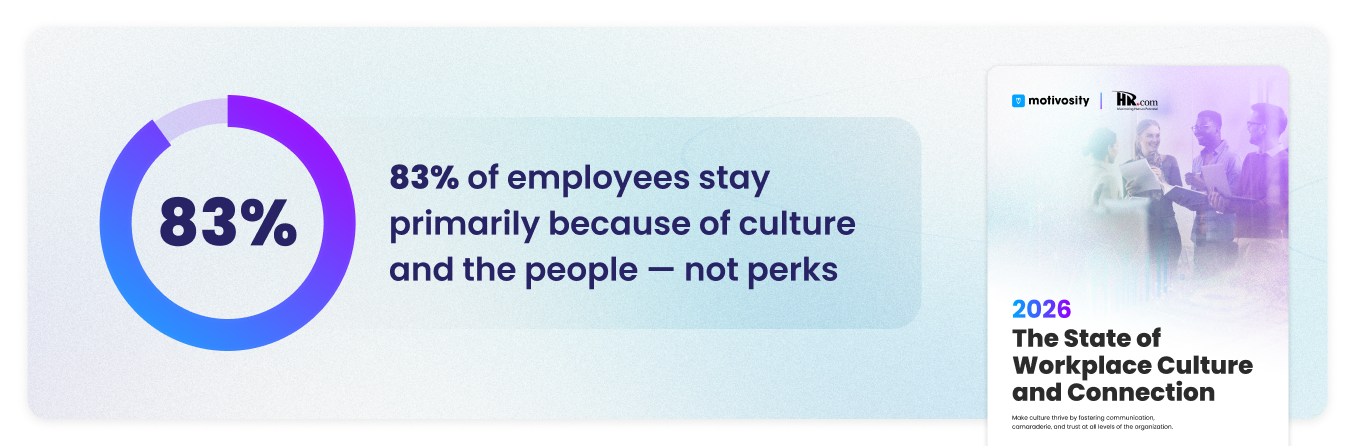
Let's start with the number that should be the foundation of every HR strategy: 83% of employees say they stay at a company primarily because of its culture and the people they work with.
Eighty-three percent. Culture and people. Not salary. Not a rewards catalog.
Now here's what makes that number even more instructive: when employees were asked about the top factors contributing to a positive work experience, only 11% cited "getting good perks and rewards." In contrast, enjoying their team (47%), enjoying their daily work (42%), and feeling valued by colleagues (39%) all ranked significantly higher.
That gap should tell every buyer evaluating recognition software something important. If your tool is designed primarily to move rewards, you're investing in the minority use case. Connection — the stuff that actually keeps people — is where the leverage is.
Most organizations think they have a recognition program. They might have a platform, an award cadence, maybe a wall of fame. But here's what the data shows: 37% of employees rarely or never receive meaningful recognition from their direct manager. Thirty-five percent say the same about their peers.
That's not a tool problem. That's a culture problem masquerading as a tool problem.
When recognition is treated as a periodic task — something managers remember to do once in a while — it disconnects from the relationships that give it meaning. And the downstream effect is devastating for trust. Nearly half of all respondents (47%) report having moderate to low trust in their organization's leadership.
Only 16% trust leadership to a very high extent.
Think about what that means for change management, strategic alignment, retention. You can't build any of those things on a foundation where half your workforce doesn't trust the people leading them.

In the report, we split organizations into two cohorts: "culture leaders" (high eNPS, strong workplace culture) and "culture laggards" (low eNPS, weak culture). The gap between these two groups is staggering — and it points directly to the mechanism that makes recognition work.
Culture leaders are:
Read that last one again. Nearly twice as likely to report significant revenue growth.
Culture isn't a soft outcome. It's a business outcome. And the practices that differentiate culture leaders aren't complicated — they are consistent, frequent, and embedded in the everyday fabric of how people work together.
That last point is the key. The frequency isn't just a nice-to-have. In culture leader organizations, 94% of employees receive meaningful recognition from their manager daily or weekly. In laggard organizations, that number is 6%. Not a minor gap, a 16x gap. Recognition that lives in the moment, tied to real work, connected to real relationships, operates completely differently than a quarterly award nomination.
Here's where I think Motivosity's philosophy diverges most sharply from the category default, and why I believe it matters.
Most recognition platforms are architected to move rewards. The "recognition" is often the trigger that unlocks a transaction. You post something, they get points, they redeem. The human connection is incidental, a side effect of the workflow, not the design objective.
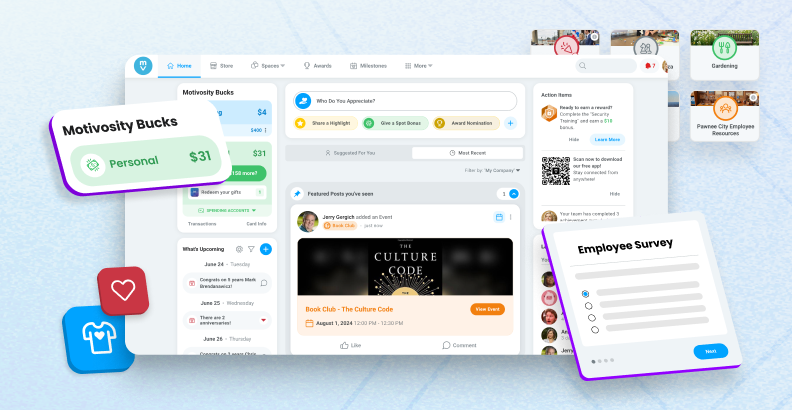
Motivosity is architected the other way. The design objective is connection: between peers, between managers and teams, between leaders and the broader organization. The social layer isn't a wrapper around the reward system — it is the system. Recognition is how you build the relationship, and the reward amplifies it.
This distinction matters enormously when you look at the data on what actually builds a strong culture. Connection within teams is strong in most organizations — 86% of people feel connected to their immediate team. But only 58% say their organization creates sufficient opportunities to connect across teams. That cross-functional gap is where silos form, where belonging breaks down, and where culture becomes inconsistent.
Building the infrastructure for connection — not just rewarding performance — is what closes that gap.
There's a segment of the workforce I think about a lot: the people who don't just want to be recognized — they want to create something together. They find meaning in the work, in the team, in the sense that they're building toward something bigger than their individual role.
These are the people who 90% of employees in this study identified with when they said feeling appreciated and valued improves their performance. They are not primarily motivated by gift cards. They are motivated by purpose, by belonging, by the sense that their contribution is visible and matters.
That's the population recognition software should be designed for, not the transactional minority who treat their job like a points-earning game.
When you give those builders a platform that makes recognition social, visible, tied to values, embedded in daily work, you're not just improving engagement scores. You're reinforcing the exact dynamic that keeps them at your company.
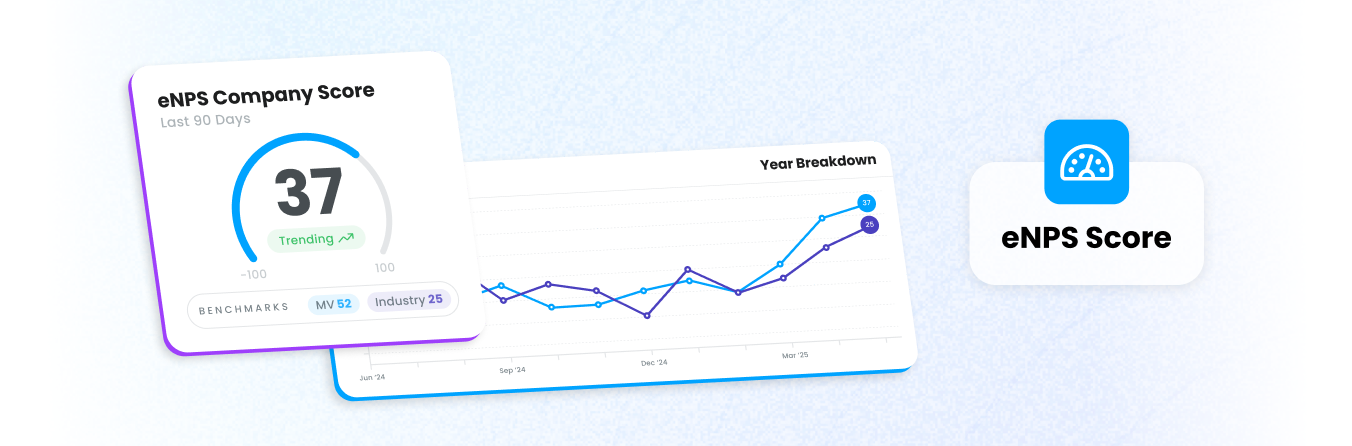
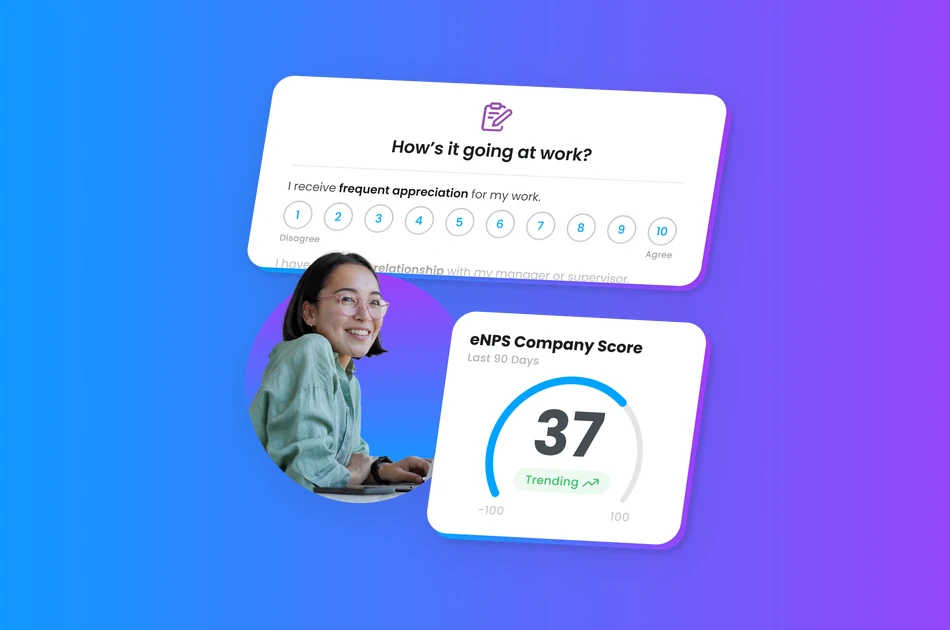
One more finding worth calling out: 59% of managers and executives don't know their organization's eNPS score. More than half (54%) don't know their own voluntary turnover rate.
You can't improve what you can't see. And you can't design a recognition strategy when you don't have a clear baseline for how connected, trusted, and engaged your workforce actually is.
Culture leaders don't have this problem. They're informed. They track recognition frequency, engagement scores, and turnover together — because they understand that culture is a system, not a program.
If you're evaluating recognition platforms, here are the questions I'd push on:
The difference between recognition as a transaction and recognition as a culture-builder isn't the reward catalog. It's the infrastructure for human connection that surrounds it.
That's what the data says. That's what culture leaders prove. And that's the bet we're making at Motivosity.
Data and statistics referenced throughout this article are sourced from Motivosity's 2026 State of Workplace Culture & Connection report, conducted in partnership with HR.com. The full report is available at motivosity.com/guides/the-state-of-workplace-culture-connection-2026