Effective employee rewards prioritize genuine connection over generic perks. The highest-impact options include public recognition, peer-driven appreciation, flexible scheduling, personalized lifestyle stipends, and professional development opportunities.
This article covers 30 employee reward ideas designed to:
Key takeaway: When rewards are embedded into everyday workflows, organizations consistently see measurable improvements in employee engagement, retention, and cultural alignment.
One-size-fits-all perks can't fix a connection gap. People recognize transactional employee rewards when they see them — gift cards distributed without context, swag nobody requested, or sales spiffs with no accounting or budgeting, arriving months after the work was done.
These programs miss what matters: feeling seen, valued, and connected to the people they work with. But there is a solution to this problem. Employee rewards can build culture when they're designed as infrastructure rather than expenses.
Effective systems prioritize frequent, peer-driven appreciation and make recognition visible across teams. They align rewards with company values, so employees know exactly what behaviors drive success.
Organizations in 2026 are abandoning "shelfware" employee reward programs in favor of approaches people actually use.
These 30 reward ideas show you how to use rewards as a pillar of culture-building, rather than just an operational task.
Transactional employee rewards might generate brief satisfaction, but they rarely build relationships or reinforce culture.
In hybrid and remote environments where connection is already limited, transactional rewards fail to stop culture atrophy. Employees receive the reward and move on without feeling more connected to their team.
Modern employee rewards prioritize visibility and connection. Frequency matters more than dollar amounts, and lots of small recognitions create stronger engagement than a single large bonus.
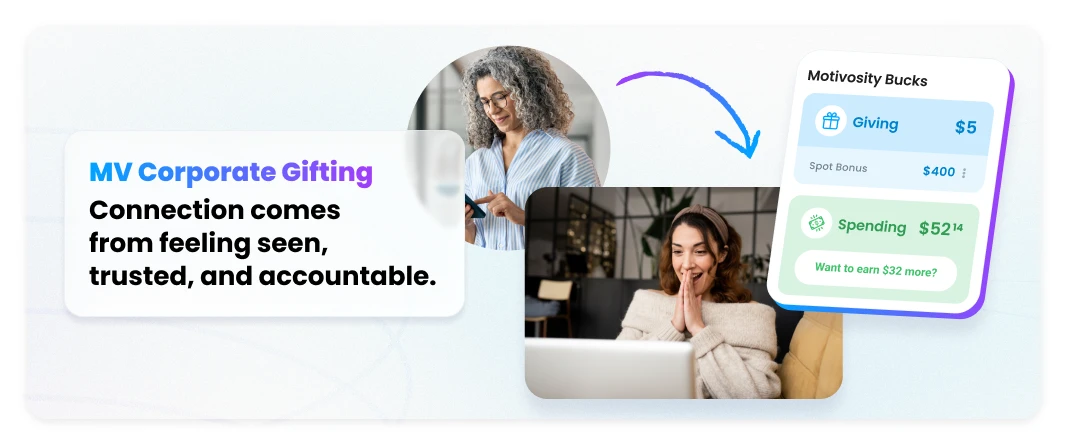
That can also include a more meaningful recognition spot bonus paired with a thoughtful gift. Options like curated corporate gifting can make recognition feel more personal and memorable, especially when the reward reflects the person behind the contribution.
But the real impact still comes from the message around it: employees want to feel seen, trusted, and accountable to something bigger than the transaction itself.
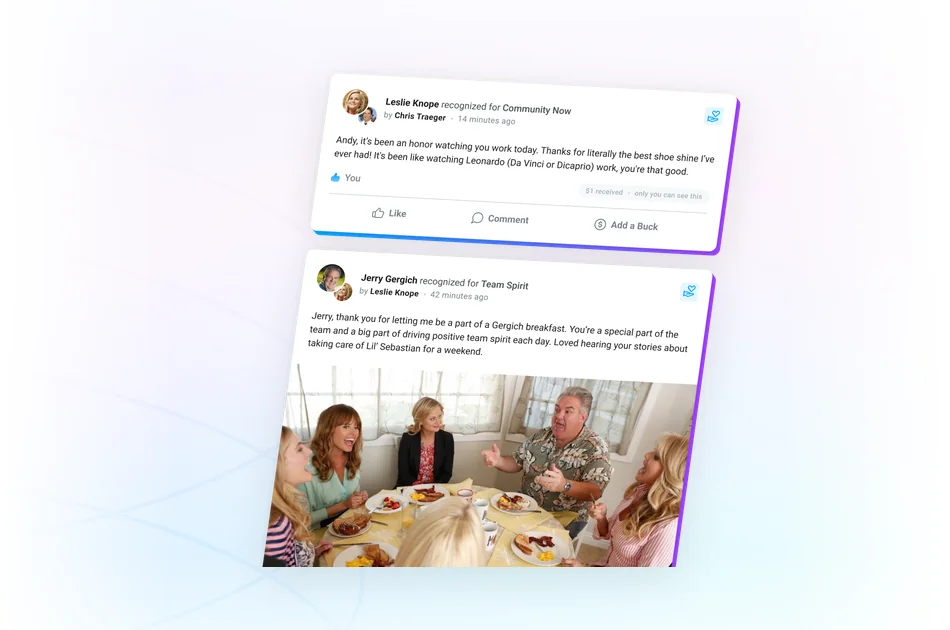
Motivosity's Social Platform feed turns private appreciation into shared cultural moments. Peer recognition becomes visible across the organization and shows which behaviors matter by creating social proof that makes gratitude contagious and keeps employees rooted in connection.
1. Public Good Job Recognition in Team Meetings
What It Is: Verbal recognition during all-hands or team meetings.
The visibility of the recognition matters more than its formality. Employees feel valued when their work gets acknowledged, where others can see it.
2. Handwritten Thank-You Notes
What It Is: Personal, tangible appreciation from managers or executives.
The effort signals genuine gratitude rather than automated acknowledgment.
3. CEO or Leadership Shadowing
What It Is: High performers spend time shadowing executives to observe decision-making, strategy sessions, and leadership in action.
Junior employees get access to executive insights and mentorship, while leaders stay connected to frontline perspectives.
4. Flexible Work Hours
What It Is: Employees get the opportunity to adjust their schedules for better work-life balance.
Autonomy over time demonstrates trust and addresses individual employee needs.
5. Reserved Parking Spot for the Month
What It Is: A designated parking spot near the entrance that is reserved for top performers.
This is a small perk with high visibility. Employees experience appreciation every time they arrive at work.
6. Lunch With Leadership
What It Is: One-on-one time with executives to discuss career growth.
Access matters more than the meal itself. Relationships across hierarchy strengthen through direct conversation.
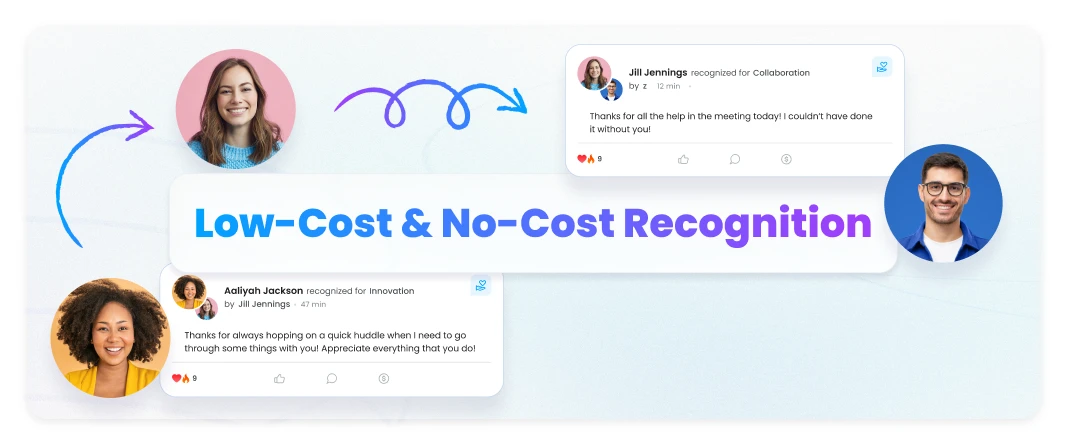
These are just a few types of recognition that don't require a significant budget.
Peer-to-Peer Recognition with Motivosity gives every team member a monthly allowance of points or dollars to give to peers. Recognition becomes self-sustaining rather than dependent on leadership bandwidth.
7. Wellness Stipends
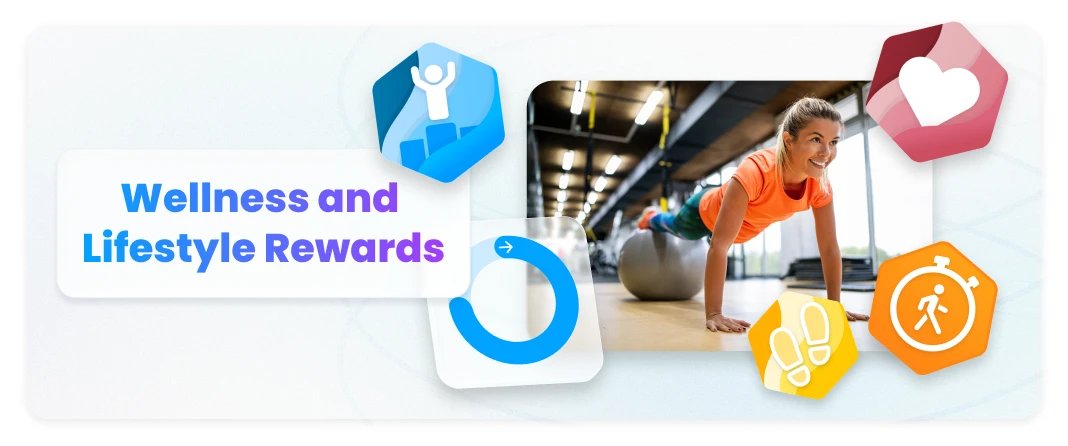
What It Is: Flexible funds for gym memberships, fitness classes, or wellness apps.
Employees choose what wellness means to them rather than defaulting to standard perks.
8. Mental Health Days
What It Is: Additional paid time off (PTO) specifically for mental health and recharging time.
Separating these from standard sick days signals that mental well-being matters as much as physical health.
9. Meditation or Mindfulness App Subscriptions
What It Is: Free access to Calm, Headspace, or similar platforms.
Proactive mental health support becomes part of benefits rather than something employees have to fund themselves.
10. Ergonomic Home Office Upgrades
What It Is: Standing desks, quality chairs, or monitor arms for remote workers.
Physical comfort directly affects productivity and shows investment in long-term employee health.
11. Hobby Funds
What It Is: Personalized stipends for personal interests like art supplies, sports equipment, or music lessons.
Supporting life outside work demonstrates that organizations value the whole person.
12. Lifestyle Spending Accounts (LSAs)
What It Is: Flexible accounts employees customize for childcare, eldercare, pet care, or wellness.
LSAs let employees allocate funds based on their top priorities.
Employees increasingly expect benefits that support their lives beyond work, including wellness, family responsibilities, and personal interests. Motivosity's Lifestyle Spending Accounts automate administration while giving employees freedom over how they use funds. HR reduces manual admin work while still administering meaningful employee rewards.
13. Course or Certification Funding
What It Is: A budget for employees to pursue professional certifications or online learning.
Employees choose growth that aligns with their career goals rather than completing preset required training.
14. Conference or Industry Event Tickets
What It Is: Sending employees to relevant conferences for networking and skill-building.
Exposure to industry trends and peers accelerates professional growth while showing the organization invests in their expertise.
15. Book Stipends or Subscriptions
What It Is: A monthly allowance for professional development books or audiobooks.
Continuous learning becomes accessible and personalized. Employees pursue knowledge at their own pace.
16. Skill-Sharing or Lunch-and-Learn Sessions
What It Is: Employees teach their expertise to others through internal presentations.
These sessions validate employee skills while spreading knowledge across the organization.
17. Mentorship Program Participation
What It Is: Formal pairing with senior leaders for career guidance.
Junior employees gain a strategic perspective while mentors stay connected to emerging talent and fresh ideas.
18. Professional Membership Dues
What It Is: Covering costs for industry associations or professional organizations.
Access to professional communities signals that expertise matters beyond immediate job responsibilities.
Autonomy in learning builds loyalty. Employees stay longer when they see the organization investing in their future rather than just extracting value from current skills. Professional development rewards increase internal mobility and retention by creating clear pathways for advancement.
19. Work Anniversary Celebrations
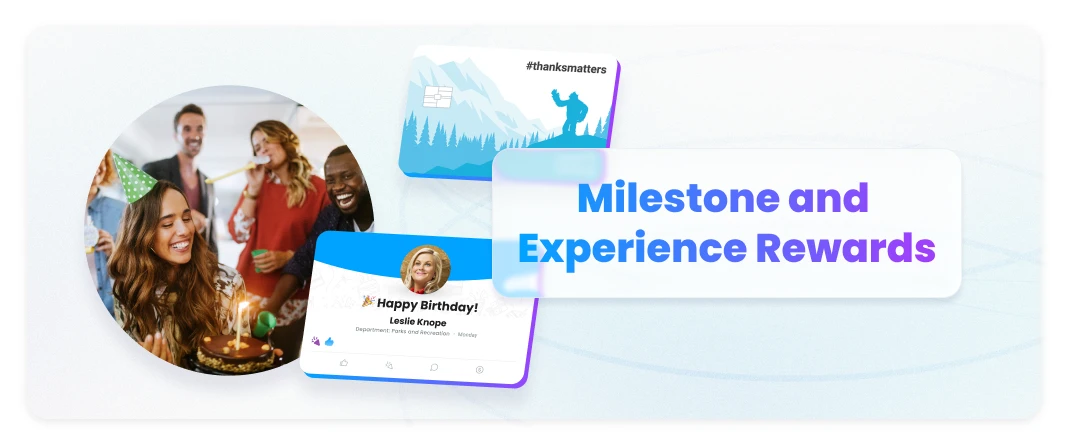
What It Is: Personalized recognition or experiences instead of standard plaques.
Employees remember thoughtful acknowledgment of tenure more than awards that feel mass-produced. Automation removes the HR admin burden of tracking anniversaries and ensures no one gets forgotten.
20. Life Event Recognition
What It Is: Celebrations of milestones like new homes, babies, adoptions, weddings, or personal achievements.
Honoring employees beyond their job title strengthens connection and shows people as individuals.
21. Team Experience Outings
What It Is: Escape rooms, cooking classes, bowling, or adventure activities for team bonding.
Shared experiences build relationships that don't form through project collaboration alone. Teams bond through play.
22. Extra PTO or "Flex Days"
What It Is: Additional vacation time as a reward for exceptional performance.
Time often matters more than money to many employees. Flexibility demonstrates trust and addresses burnout proactively.
23. Travel Vouchers or Weekend Getaways
What It Is: Funding for memorable experiences.
Experiential rewards create memories and a lasting emotional connection to the organization.
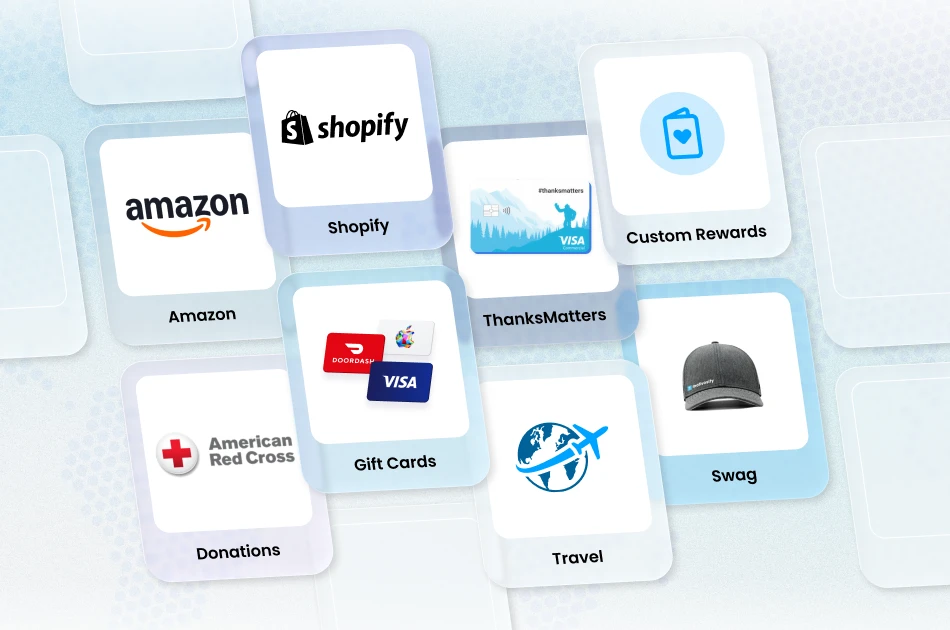
24. ThanksMatters Visa Reward Card
What It Is: Prepaid cards that employees can spend anywhere.
Flexibility makes rewards feel personal rather than prescriptive.
25. Peer-to-Peer Recognition Budgets
What It Is: Distributed monthly allowances so every employee can reward colleagues.
Peer-driven recognition scales culture because appreciation doesn’t depend solely on manager bandwidth. This, in turn, brings visibility for leadership to better be involved.
26. Values-Aligned Awards
What It Is: Awards tied to specific company values like customer focus, innovation, or collaboration. Employees see exactly what living the values looks like through peers who demonstrate them consistently.
27. Spot Bonuses
What It Is: Real-time monetary recognition from managers for embodying company values.
Instant acknowledgment ties reward directly to behavior.
28. Customer-to-Employee Shoutouts
What It Is: Channels for customers to recognize employees directly.
Incorporating outside praise validates impact and connects employees to the "why" of their work.
29. Social Recognition Feeds
What It Is: Public appreciation through visible feeds across departments.
Visibility creates social proof. Teams adopt behaviors they see consistently acknowledged.
30. Monthly Culture Nomination Program
What It Is: A monthly recognition program where employees nominate coworkers who demonstrate company values in meaningful, visible ways. Team members submit nominations to leaders, who review them and select employees to recognize each month.
The focus is on peer-driven recognition that highlights culture in action rather than just performance. Small perks, public recognition, or featured spotlights can make the award feel more meaningful and encourage ongoing participation.
Tying rewards to specific behaviors reinforces cultural expectations and makes abstract values concrete. Motivosity's Spot Bonuses and Peer-to-Peer Giving automate values-based recognition at scale without creating bottlenecks for managers.
Building a sustainable, successful employee recognition program requires more than picking perks from a list.
Here's how to design a program that scales:
Avoid these common employee reward mistakes:
Employee rewards build culture when they reinforce company values, create visible appreciation, and encourage peer-driven recognition.
Ready to implement a rewards framework that works across remote, hybrid, and frontline teams?
Get a demo to see how Motivosity automates recognition while reducing HR admin burden.