Cross-departmental collaboration happens when employees from different teams work together toward a shared goal. When people feel connected to a larger purpose and understand how their work contributes to company success, they develop a stronger sense of belonging.
The benefits extend to both culture and business performance. Most organizations want greater collaboration across teams. Far fewer create the conditions that make it sustainable: clear communication, shared priorities, trust, and opportunities for employees to build relationships outside their team.
Key Takeaways
Cross-departmental collaboration is the practice of bringing together employees from different teams or functions to share expertise and achieve common goals.
Done well, it breaks down silos, strengthens connections across the organization, and helps employees see how their work contributes to something bigger than their individual role.
The opposite of cross-departmental collaboration is a siloed organization. In such an organization, communication between cross-functional teams is minimal, and single-department groups complete most initiatives.
Cross-departmental collaboration requires:
The organizations that do it well treat collaboration as a system — not a culture initiative that gets announced at an all-hands and forgotten by Q2.
Cross-team communication can quickly break down within organizations when work culture and leadership vision don’t support its implementation. A lack of support doesn’t have to be overt, however. It can come in the form of:
Lack of organizational support for cross-team collaboration is more common than most of us would like to admit. But it’s possible to break down silos, align goals, build relationships, improve organizational communications, and shore up leadership support.
If you’ve seen a shift away from collaborative culture (or you suspect it was never there in the first place), you’ll recognize common mistakes that lead to departmental isolation.
Identifying and correcting these common mistakes can establish a cross-functional collaboration culture and processes that benefit the entire organization.
An organization’s lack of cross-team collaboration can waste resources, reduce the effectiveness of both individuals and departments, and ultimately lower revenue numbers.
When done correctly and supported by leadership, cross-departmental collaboration results in stronger team alignment, improved interdepartmental communication, increased innovation, better employee engagement, and higher productivity.
Strong alignment across an organization means that everyone marches toward the same outcomes. Companies that implement cross-team collaboration have teams with different functions working toward shared goals.
This alignment reduces work duplication and lost time from confusing objectives. Because everyone already has a map of the work at hand, they can increase execution speed rather than spending time clarifying goals.
When employees collaborate across teams, information flows more easily across the organization. Often, when teams work in silos, an objective can drift based on team biases. However, when teams work together on projects, they’re more likely to catch and fix goal drift and misunderstandings, therefore reducing delays.
And when transparency rules the organization through clear internal communications, employees feel more informed and included in both the "how" and "why" of company direction and leadership decisions.
Cross-functional collaboration leads to stronger ideas because each team sees the problem differently. When a product manager, engineer, and customer success rep work through the same challenge, they bring different perspectives, skills, and priorities together.
The combination of these viewpoints and ideas helps teams find blind spots, pressure-test assumptions, and create solutions that are more customer-focused.
Employees who have a "best friend" at work are consistently more likely to recommend their company as a good place to work and less likely to search for new positions, according to a 2022 Gallup poll. Cross-departmental collaboration increases the likelihood that employees connect with their non-team peers and build strong relationships with those peers.
These connections make the employees feel part of something bigger, resulting in increased employee engagement. Relationships across teams also reinforce employees’ sense of belonging and the company culture as a whole.
When employees work across departmental lines, the clarity of purpose and direction results in faster decision-making on initiatives of all sizes.
Because the team members have formed relationships, friction between teams is reduced because it’s harder to fight with someone you care about. As a result, the teams that collaborate make better use of time, technology, and human resources across the board by acting decisively and having open and honest discussions.
For organizations interested in implementing or improving their cross-team collaboration, a few best practices can improve success rates even if teams already collaborate.
Cross-team alignment extends beyond a shared initiative; it requires collaboration around optimal outcomes and shared key performance indicators (KPIs) that measure progress toward those outcomes. To share KPIs, everyone on the cross-functional team should understand how KPIs are measured and how they roll up to the ultimate goal.
Have team members from different departments compare their most salient metrics, and align on which of those KPIs contribute to the desired outcome.
Consistent and clear communication contributes to the success of cross-team collaboration. The group that decides on communication channels, frequencies, and platforms early works more efficiently. Everyone knows where to find the most important information (or ask someone who does).
Meeting cadences, asynchronous communication tools like project management or collaborative software, and shared work platforms all contribute to consistent communication, especially in organizations that span multiple locations or multinational barriers.
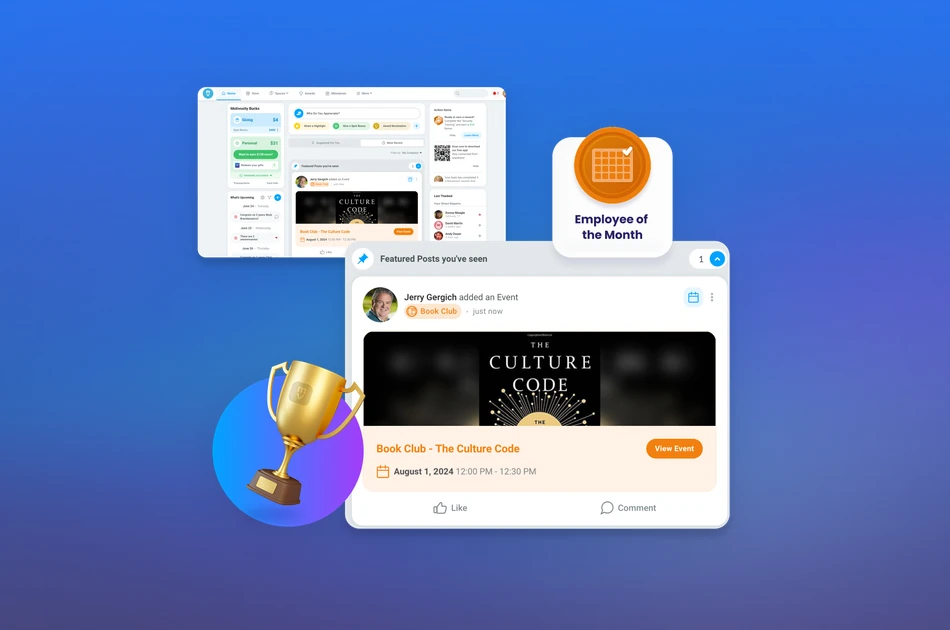
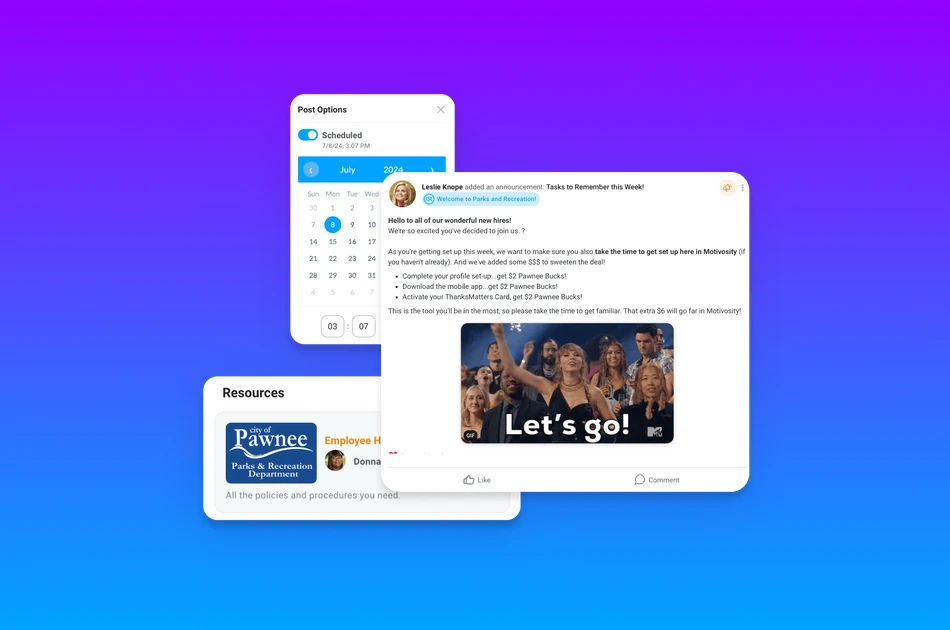
In addition to project-focused collaboration, create employee spaces that focus on recognition, connection, and transparency across teams. These spaces will support the communication that happens within project communication channels.
When organic cross-team communication happens prior to project assignments, the employees experience stronger connections within the project communication channels because of their prior relationships.
In addition to virtual employee spaces that foster informal connections, build relationships between teams by assigning cross-team projects and allowing employees to shadow others outside their department. These relationships raise awareness of each team’s capabilities and strengthen the bonds across teams.
While leadership can define the overall direction of business initiatives, managers should set the tone for cross-team work. This puts managers in a powerful position to lead collaboration in a generative and positive environment.
Give managers the right tools and training to improve performance and collaboration, including access to the right communication, planning, and recognition tools.
HR and business leaders can scale collaboration across departments by putting process first and building collaboration into daily work. Focus on data-driven and proven techniques like:
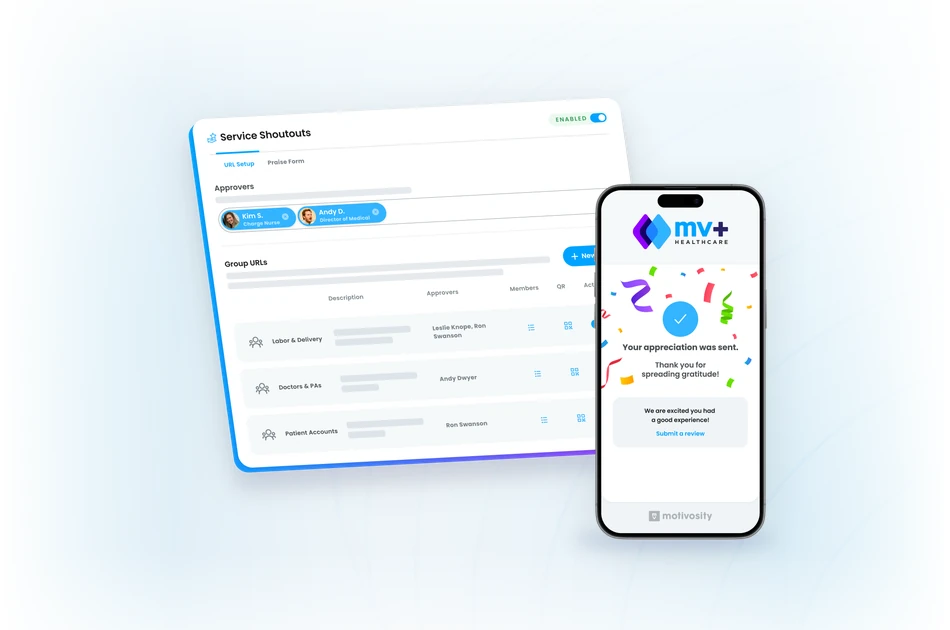
Many companies pass over employee recognition as a systematic support for cross-team collaboration. These organizations miss out on the crucial morale boosts, continued employee engagement, and strengthened company culture that comes from recognition programs.
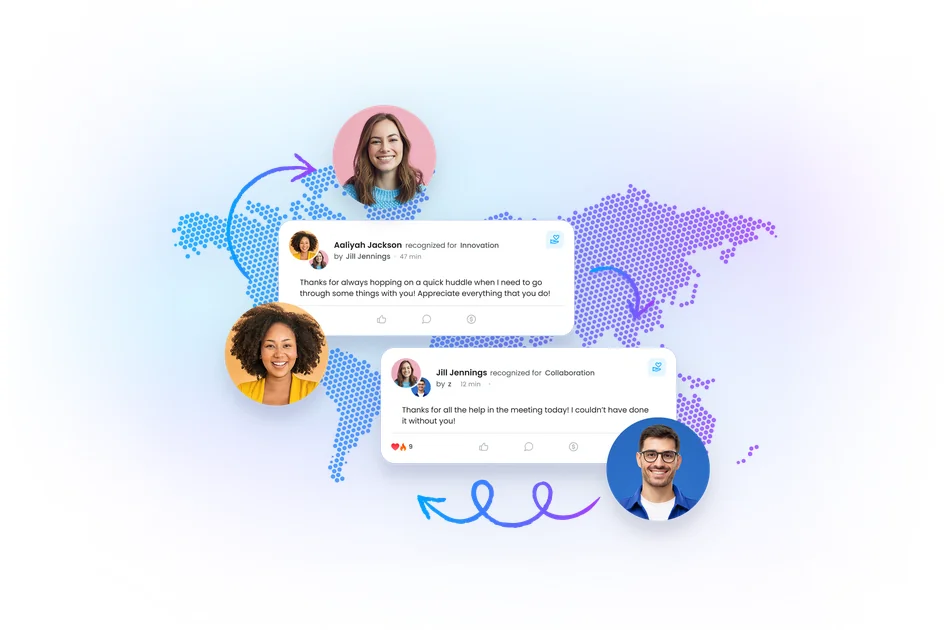
Motivosity makes cross-team collaboration visible. When an engineer in Austin gets recognized by a sales rep in Atlanta for helping close a deal, that moment shows up in a shared feed that the whole company can see. That's not just a nice gesture, it's culture compounding.
Peer recognition, employee spaces, and shared values give teams a reason to interact beyond the project they're assigned to. That's how you build the relationships that make collaboration and connection actually work.
All employees can access and use Motivosity’s simple interface and intuitive tooling, and the software scales to the most complex multinational corporate structures.
Learn how Motivosity helps organizations improve employee engagement across teams today.