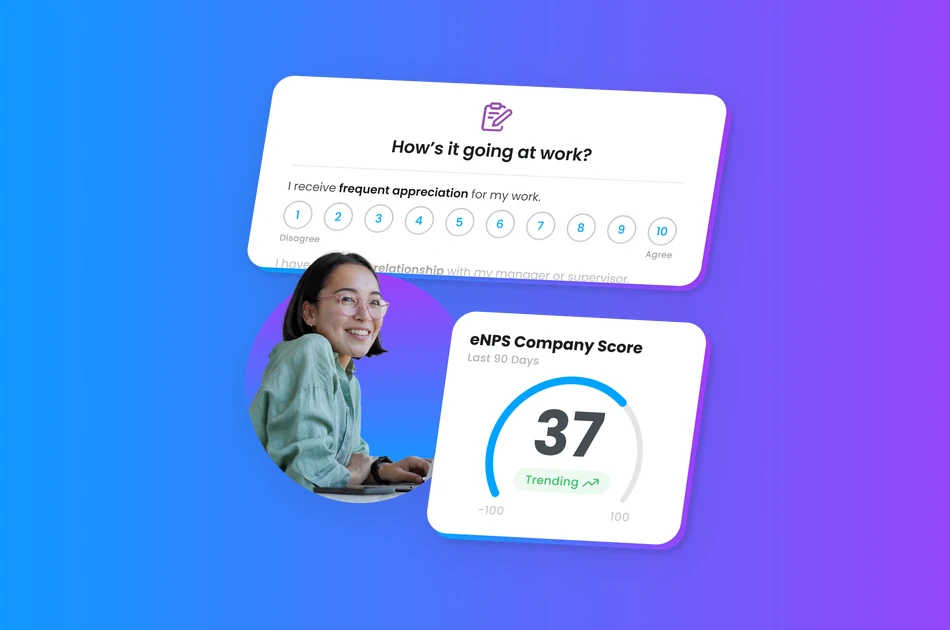
Organizational silos aren’t caused by structure—they’re caused by a lack of connection, visibility, and shared understanding between teams. While many companies try to fix silos through restructuring, real collaboration improves when employees can see, appreciate, and understand each other’s contributions across departments. By focusing on cross-team recognition, shared goals, and relationship-building, organizations can break down silos and create a more connected, high-performing culture without changing org charts. Platforms like Motivosity make this scalable by embedding visibility and appreciation into everyday work.
Key Takeaways:
Silos make it harder for people to collaborate, share ideas, and build trust with each other. But contrary to popular belief, silos don't form because of reporting lines. They happen because teams don't feel connected to each other. When employees can't see how their work supports others, collaboration starts to feel disconnected and less meaningful.
To fix the issue, most organizations approach silos as a structural problem. The assumption is that if teams report to the right leaders or sit in the right departments, collaboration will follow. But breaking down silos isn't about redrawing org charts. It's about helping teams see and value each other's contributions.
According to the State of Workplace Culture Report 2026, 42% of employees don't have enough opportunities to build relationships across teams. That lack of connection solidifies silos.
This article explores what silos really are and why restructuring doesn’t work to fix them. We’ll cover practical ways to break down silos through visibility, peer recognition, and connection-focused strategies.
Organizational silos happen when teams operate independently without understanding how their work connects to what others do. Marketing doesn't see what customer success handles daily. Engineering doesn't understand how sales conversations shape product priorities. Finance operates separately from operations. Teams get their work done, but they don't feel connected to shared outcomes.
Teams tend to drift into silos as their company grows and changes:
Siloed employees feel disconnected from colleagues doing related work. Trust between departments weakens. Shared identity erodes as teams develop "us versus them" thinking, and people don't feel psychologically safe reaching across team boundaries.
Over time, this disconnect starts to show up in real ways:
It’s common to assume that breaking down silos requires reorganizing teams or changing reporting structures. But restructuring changes org charts, not how people actually work together.
Org chart changes don't build trust between people who have never worked together, and they don't create visibility into contributions happening across teams. Restructuring can force teams to work closer together, but it can't force relationships or shared identity.
In fact, disruption from reorgs can sometimes make silos worse. Restructures create uncertainty about roles and responsibilities, and morale drops as people navigate new reporting lines.
Work slows down while teams figure out how everything fits together again. During transitions, employees retreat even further into their teams because those relationships feel stable and familiar.
The root causes of silos can persist even after restructuring:
Teams might report to the same leader, but colleagues don't see how their work matters to one another.
To break down silos, you have to address what’s actually keeping teams apart:
Structure doesn't solve those problems; visibility and belonging do.
Before breaking down silos, it helps to recognize the signs that they’re already there:
If these patterns sound familiar, silos may already be limiting collaboration and weakening trust between teams.
Breaking down silos starts with making contributions visible across departments. When employees see what colleagues in other teams accomplish, they understand how different roles connect to shared success. Public recognition of cross-team collaboration reinforces that connection.
Highlight wins that included multiple departments, especially ones that are tied to company values. This visibility helps break down silos by showing employees what values look like in action as peers demonstrate those values.
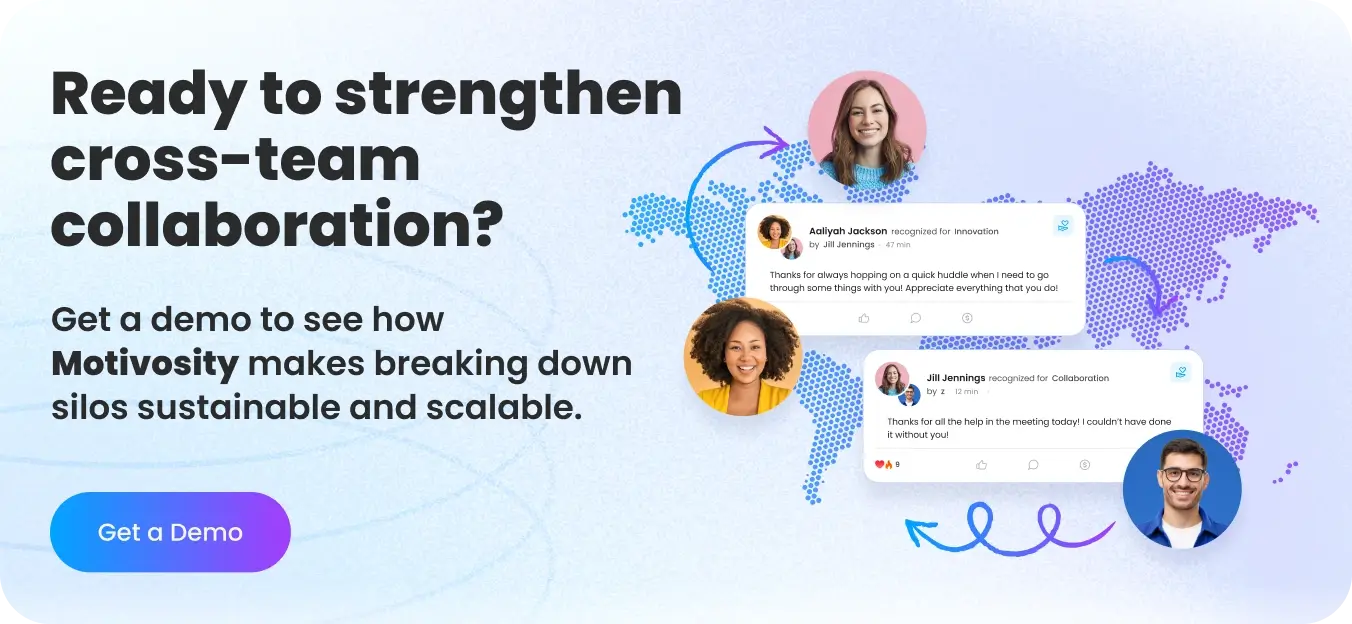
Peer-driven recognition creates visibility at scale. Team members can acknowledge colleagues from other departments directly, and appreciation flows across organizational lines rather than staying focused solely on individual teams. These moments build relationships and help people feel seen beyond their immediate circle.
When teams focus only on their own goals, priorities start to compete instead of aligning. Teams optimize for their own KPIs without understanding how success depends on collaboration. Shared company-wide goals shift that dynamic.
Align recognition with broader impact, not just departmental performance. Encourage employees to acknowledge how colleagues from other teams contributed to company objectives.
Employee recognition tied to shared outcomes helps teams see how much they rely on each other. Appreciation that connects individual contributions to company goals shows employees how their work supports colleagues across the company. As people recognize they're working toward the same mission from different angles, teams start collaborating naturally.
Peer recognition reduces "us versus them" thinking by creating direct appreciation that replaces competition with connection.
Recognition also spotlights work that often goes unnoticed. Support teams rarely get acknowledged for the internal help they provide. Operations handles critical processes that other departments depend on but don't always see.
Peer-driven appreciation across departments makes these contributions visible and valued.
Managers set the tone for cross-team collaboration. Leaders who actively recognize colleagues from other departments signal that collaboration matters. Training managers to model interdepartmental appreciation and communication shows employees that reaching across team boundaries is a normal part of their working day.
Give managers the tools they need to see how teams are connected, so they can strengthen those relationships. Dashboards showing how recognition flows between departments help leaders identify where cross-team relationships are strong and where silos persist. Then, managers can encourage connections in areas where collaboration feels weak or nonexistent.
Build digital spaces for employees to connect around shared interests, hobbies, or employee resource groups rather than only through projects and meetings. Design these channels to operate outside formal reporting structures.
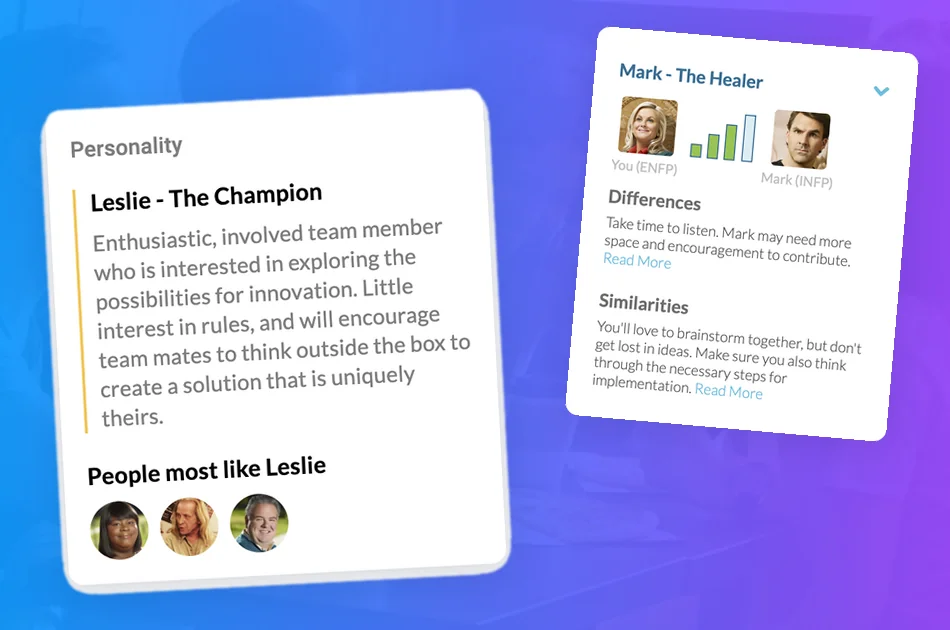
Provide personality insights that show employees how colleagues from other teams work and communicate. Highlight shared interests to create interaction points beyond job responsibilities.
Use these informal touchpoints to build the trust and psychological safety that collaboration requires. Connection as individuals makes cross-departmental collaboration feel natural.
To break down silos consistently, you need systems that make connection visible and easy. Culture-first platforms reinforce connection by creating visibility into contributions, encouraging cross-departmental appreciation, and building psychological safety beyond immediate reporting lines.
Systems that only focus on rewards miss the human connection that actually brings people together. When recognition isn’t visible, it loses its ability to build real relationships.
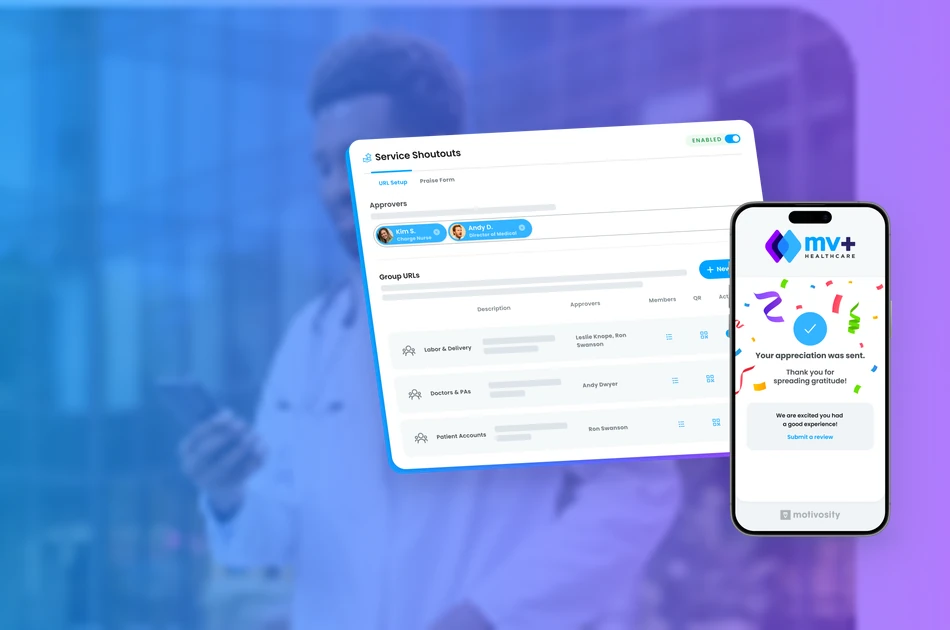
Motivosity strengthens workplace connection through features designed to reduce silos:
Motivosity focuses on strengthening connection, not managing rewards. Employees feel seen by colleagues across departments, contributions become visible beyond immediate teams, and appreciation flows freely across organizational boundaries.
Restructuring your organization isn’t the key to breaking down silos. Instead, make connection, visibility, and appreciation part of how teams operate every day.
Motivosity helps employees see each other’s contributions, recognize great work across teams, and build stronger relationships every day.
The result is that employees see how their work supports colleagues, appreciation crosses departmental boundaries naturally, and teams celebrate shared wins together. Real collaboration comes from genuine connection, not where people sit on an org chart.