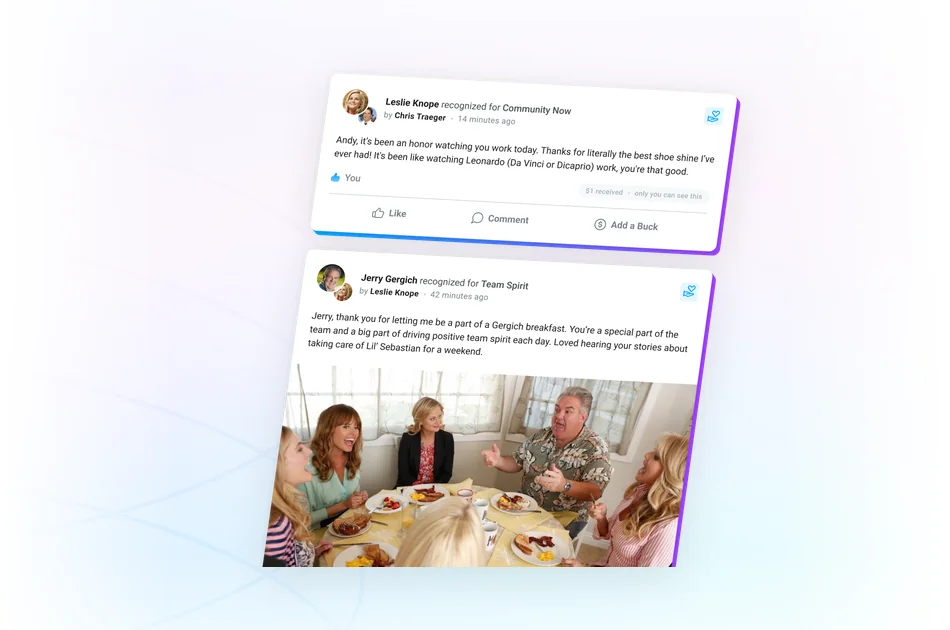

A comprehensive total rewards strategy goes far beyond salary. It combines competitive compensation, meaningful benefits, career development, work-life integration, and consistent employee recognition to drive engagement, retention, and performance. When recognition is embedded into a company’s culture, organizations see measurable improvements in productivity, loyalty, and business outcomes.
Recognition remains one of the strongest drivers of employee engagement—reducing turnover by 31% and increasing the likelihood that employees will repeat high-performing behaviors. Companies that centralize and automate their rewards and recognition programs create a scalable, culture-driven system that strengthens belonging, improves morale, and delivers clear ROI.
At the heart of every business, in every industry, in every part of the world, is the most important piece of any company—the people. As the most expensive line item on the budget, the lifeline to productivity, and often the reason for success of an organization, employees are critical and necessary for any business to thrive.
But what keeps employees engaged in their work, happy to be in their role, and less likely to leave? These are questions every motivated business wants to answer. The answer is simple: implement meaningful and consistent recognition and rewards.
As one of the top drivers of employee engagement, recognition is imperative for organizations that want to keep employees. Recognition is so important, it directly results in a 31% lower turnover rate, helping companies keep good employees.
When employees are recognized for good work, they’re more likely to be engaged. Recognition helps employees be more satisfied with their jobs, work harder in their role, and repeat specific actions again and again.
When employees are recognized for good work (and see how much the company appreciates them), the business is more likely to be successful. HR professionals agree that recognition programs directly impact retention in a positive way and employees report that they work harder (increasing their productivity) when they feel valued.
Showing employees how much they’re appreciated is the first step in improving employee engagement. And for most, that means building an employee rewards strategy.
An employee rewards strategy, sometimes called a total rewards strategy, is a comprehensive way to show employees how much the business recognizes their efforts and boost employee motivation—through benefits, compensation, development opportunities, and recognition.
Employee reward strategies can take many different forms or even be a combination of several programs. Consider these examples:
Companies that implement formal recognition programs have a clear way to reward employees that align to their company values, directly impact the business, and more.
To incentivize employees to meet specific goals, companies often implement rewards for performance in the form of bonuses, commissions, profit-sharing, etc.
Company swag or other physical gifts aren’t just for new hires; they can be a great addition to an employee rewards strategy and highlight good work.
Another key way companies can showcase their appreciation for employees and/or reward them for hard work is to offer funding for professional development—certifications, conferences, courses, and more.
Paid experiences—whether they be paid vacations, events, or team outings—can be an effective option in an employee rewards strategy.
Employee rewards are a critical piece of employee engagement and employee satisfaction at work. The reason? It all boils down to respect. When you combine meaningful, flexible rewards with genuine employee recognition, your people feel seen for their contributions and they feel aligned with the business, everyone wins. Employees work harder, stay in their jobs longer, and the business earns more without the added burden of hiring new people.
→ A Gallup poll of more than 10,000 professionals found that employees are 7x more likely to report they are treated with respect at work when they believe the recognition they receive from the business is authentic.
In more detail, employee rewards are more important because they:
Employees are 4.6x more likely to perform their best work when they feel heard and understood by their employer.
94% of employees who feel highly appreciated say they love their company and 91% love their role.
81% of employees who say they are very satisfied at work report that their employer has built a culture of appreciation.
Profits increase by at least 21% when employees are more engaged and feel valued at work.
Employee belonging directly impacts turnover, reducing it by 50%—and in employee sick days—decreasing the total count by 75%.
While it might seem like an employee rewards strategy doesn’t require much thought or creativity, best-in-class businesses follow a more formal process to ensure they’re building a rewards strategy that compliments their culture and really helps engage their employees through purposeful, meaningful rewards and recognition.
If you’re ready to create and implement a total rewards strategy, consider these steps:
Start with an assessment of what you have in place today. Are you rewarding employees in any way? Do you have a formal recognition program? Do you offer wellness initiatives? Do you track employee engagement or satisfaction? Once you have a clear idea of how you are compensating employees—in all ways (benefits, rewards, recognition, salary, etc)—you can build a plan that will include all of the key areas to make it successful.
A total rewards strategy won’t work in the long run if it isn’t aligned to the business’s mission, vision, goals, and values. Without a deep understanding of who your business is, what it’s working towards, and why you value employees in the first place, you can’t build an employee rewards strategy that will last.
Identify the areas your organization needs some improvement in order to maximize engagement and get the most out of your total rewards and recognition initiative.
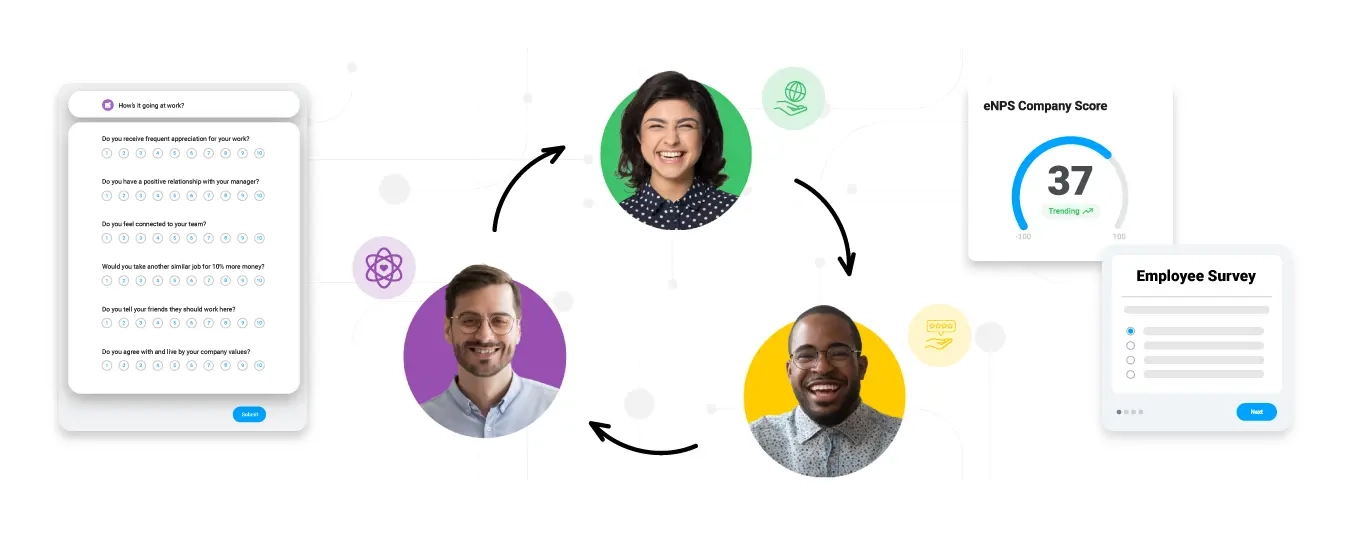
Survey your employees to understand how they feel appreciated and what they view as recognition (and a reward) from the business. Consider offering a few suggestions that they can select from—tangible rewards, compensation, benefits, physical products, etc.
Plus, when you ask for employee feedback, you'll likely find out some areas for improvement that weren't on your radar and help your team members feel valued. If you want to increase tenure and keep your rockstar employees, start by listening to their needs and building their total rewards strategy around the things that are important to them.
Send out an employee survey to get feedback from your workforce on what rewards mean the most to them. By surveying your employees, you can prioritize the reward options that will be the most impactful to employees and the business.
For help with creating, editing, and reviewing a survey, check out this help article.
Armed with the areas you've identified for improvement, employee feedback, and information about what you’re currently offering your workforce, you can design an effective rewards strategy for your business. This will likely look different for each company, but most will often include a mix of benefits, performance-based rewards, milestone gifts, a recognition program (best if it’s aligned to company values), and rewards (e.g. physical gifts, travel and experiences, company swag, perks, and more).
Take Note:
While an employee rewards strategy is a great first start, offering meaningful rewards is even better. And for companies that want to reach a best-in-class status—and see the most impact from their total rewards strategy—your employee rewards strategy should include a more comprehensive approach to a culture focused on engagement where rewards and recognition serve a higher purpose.
Company swag, gift cards, and an extra day of PTO are nice, but they’re not the reason employees stay longer. Rewards must be connected to employee needs, company values, and a culture of appreciation in order to make the most impact.
Communicate your new strategy in the way that works best for your employees. For some, this might mean hosting a launch party to celebrate your new benefits package. For others, it could look like a quick training lunch on the new peer-to-peer recognition program. Or, if you've got a distributed team, it might make the most sense to communicate and announce your new total rewards strategy through your company intranet or internal communication tools. Whatever it looks like for you, be sure to communicate (and communicate again) what your strategy is to your employees so they are aware of how you are compensating them (and showing them they are valued).
Pro tip: One way to ensure employees are crystal clear on how much they’re valued at the business is to break down exactly how they are recognized and compensated at work. This could be presented in a single doc that showcases, line-by-line, the monetary value of all the benefits, perks, and compensation they receive from the business (including potential rewards).
Review your program’s success by implementing an annual review of the strategy. This could involve another survey to employees to collect feedback and asking managers to weigh in on engagement changes from their team. One of the best ways to measure the impact of your programs and initiatives is through employee satisfaction surveys and comparing eNPS over time. Collect your findings, look for areas of improvement, and make adjustments as needed to continually improve your total rewards strategy.
A comprehensive rewards strategy will always include a plan for these five areas:
In this pillar, compensation should include all of the ways your business is directly compensating your employee. This likely looks like their base pay, any variable pay (bonuses, commissions, incentives, etc), and any profit-sharing options they are gifted or earn (equity, stock options, etc).
In a total rewards strategy, these items are clearly defined with a talent philosophy (to detail your strategy for compensation), and sometimes in a written form that’s given to an employee so they can see their total compensation. Think of this as the offer letter you would give to a potential new hire, but you’re offering an outline view of total comp to an existing employee.
In the benefits pillar, a total rewards strategy details the non-cash compensation an employee receives from the business. Typically, this includes any wellness programs, lifestyle spending accounts, retirement plans, life insurance, Employee Assistance Programs, disability coverage, etc.
For your total rewards strategy, it’s critical that you define which benefits align with employee needs (and the company’s values/goals), and how each of these benefits are managed. For example, the retirement plans and insurance benefits will come with some legal requirements whereas the wellness initiatives or other similar programs might change year-to-year and won’t require legal oversight.
Benefits that help employees balance their work life and their home life fit into the work-life integration pillar. They might include paid time off (PTO), family support programs (child care assistance, eldercare support, etc.), flexible work schedules, and company culture initiatives (those that promote community and connection among employees).
While some of these rewards are easier to quantify (for example, it’s easy to see how much the value is of one day of PTO for each employee based on their salary), others are more difficult to price (such as your company book club that encourages employees to engage with each other and improves employee satisfaction at work).
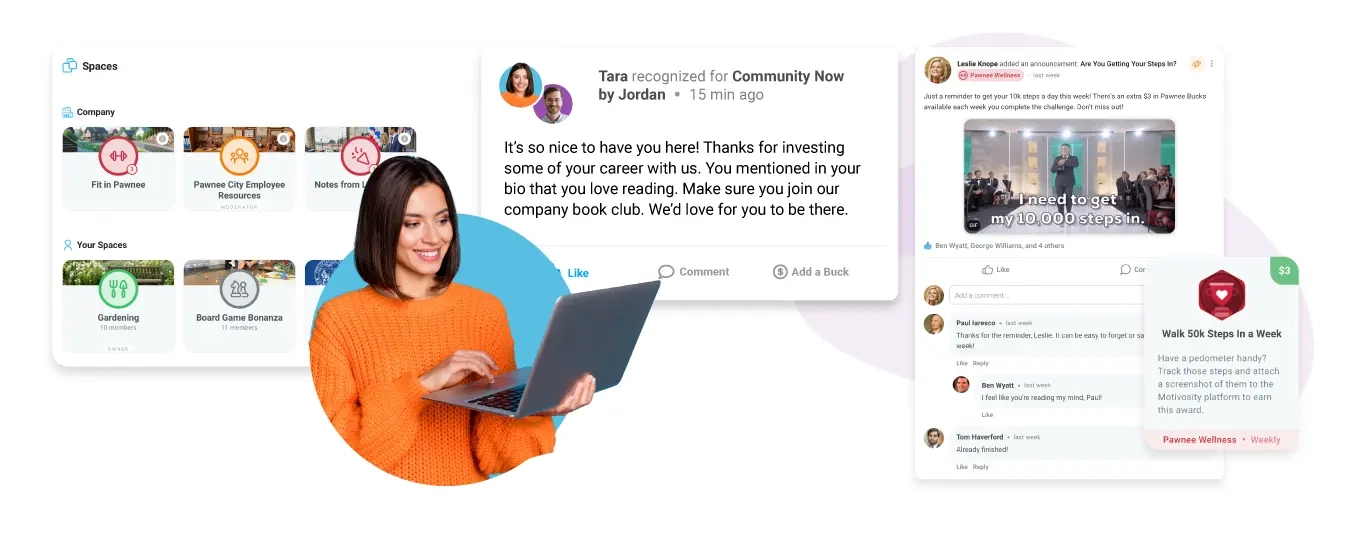
Managing all of your employee rewards is easier if it’s in one place. With Motivosity, you can offer employee rewards that run the gamut—physical products, swag, gift cards, and even intangible rewards like an extra day of PTO or a day for service. And with Spaces, it’s easy to build community and connection programs for your employees like book club, lunch and learns, wellness programs, and more.
For help with setting up a Space in Motivosity, check out this help article.
Professional development and leadership opportunities fall under the career development and growth pillar in a total rewards strategy. These initiatives vary by company and should be outlined based on the company’s overall mission and values—selecting the rewards that make the most sense for the business and the employees.
More specifically, you might see organizations offering a stipend to employees that continue their education at workshops, certificate training programs, skill-building conferences, etc. But any career progression strategies you also employ—succession planning, promotions, etc.—also fall under this pillar’s umbrella. Mentorship and coaching opportunities should also be included.
Use Motivosity to build a specific Space for your mentorship programs, manager/leader development initiatives, and professional growth opportunities. Include resources for each group, select specific employees (and manage permission levels), and more.
Learn more about Spaces here.
A total rewards strategy without a recognition and appreciation initiative isn’t fully complete. It’s clear that recognition and appreciation are key motivators for employees to stay in their jobs longer, work harder in their role, and increase productivity, helping the business grow and earn more. To promote better recognition in the workplace, organizations need formal recognition programs and ways to celebrate employees for excellent performance and for reaching specific milestones (time employed at the business, anniversaries, birthdays, etc).
An employee rewards strategy should outline how each of these programs are run at your business and the value they bring to the employees (and the business). For employees, highlight each opportunity as a separate line item, attaching a monetary value when possible. For the business, track retention rates and employee satisfaction scores for employees that engage more in peer-to-peer recognition programs to prove ROI.
Recognition is both easy-to-do and integrated into a robust platform with Motivosity. Integrate peer-to-peer recognition, public or private recognition, global rewards (that include physical, digital, points, or dollar options), and so much more.
Learn how to create an employee recognition program in this article.
Each of the five pillars of an employee rewards strategy outline how rewards can take a lot of different forms at a business—PTO, community-based events, benefits, peer recognition, professional development, bonuses, the list goes on and on. Because there are so many reward options and categories, it can get chaotic to manage everything, especially if each program is siloed in a separate program or tool.
The best solution? Tying rewards to their employee recognition programs. This keeps everything in the same place, helping employees know where to go to see their total value from the company (and reducing admin burden on the teams managing the rewards—most often hiring managers and HR teams).
Employee recognition, in its most simple terms, is the act of highlighting employees when they work hard, go above and beyond, or meet a specific milestone. Recognition can take many forms—verbal or written praise, physical gifts, monetary benefits, or even intangible offerings (e.g. a day for service, an early out day, etc).
Employee recognition impacts every area of the business—and it might be the single most important initiative that businesses can invest in to improve their company overall (seriously, that’s how far reaching recognition is in the workplace).
At Motivosity, we love employee recognition. It's the cornerstone of an unforgettable culture that your employees will stay for. When you make your employees feel appreciated, valued, and seen for their contributions, you do more than just say thanks. You build their confidence and, in turn, create a loyal employee that wants to help your business succeed.
When employees get consistent recognition, they say they’re more satisfied with their jobs.
When employees receive praise for their work, they don’t look for a new job as often, reducing turnover by 31%.
When employees get recognized for their performance, employees self-reportedly admit they are more connected to the business—nearly 40% of employees say it’s the fastest way to improve their engagement.
When employees are valued and appreciated at work, more than 90% say they are more likely to repeat a specific action and 80% say they are more productive.
The bottom line: employee recognition is powerful. It’s the driver best-in-class businesses recognize as key to their success.
Employee recognition works best when it follows best practices:
Achievements should be recognized as soon as possible, showing employees that the company values their work and hasn’t forgotten or dismissed the success.
Check out this resource to learn more about employee milestone recognition opportunities: Employee Milestones…What, Why, and How?
Recognition should clearly state why the employee is getting recognized by the company and why the company values the work.
Authentic recognition is critical for employees to feel valued and when recognition is viewed as inauthentic, employees are less likely to feel respected and appreciated at work.
Connecting employee recognition to company values helps employees see what the business values, promotes a better company culture, and makes it easier to see work worth recognizing.
While some employees want more formal, public recognition, others prefer a quiet, more informal recognition approach.
Need more ideas on how to build a robust recognition program? Check out this white paper: How to Bring Your Recognition Program into the 21st Century.
Just as employee recognition should follow best practices for the largest impact, rewards also need to follow a similar set of best practices:
Just as recognition should be timely, rewards should be delivered quickly as well. When employees are left to wait for a reward—company swag, a bonus, etc.—they quickly feel passed over and dismissed.
Generic, mass-produced rewards work great for some situations (e.g. onboarding and swag giveaways), but in general, employees all have different likes and dislikes (and needs). Rewards should be personalized to give employees the opportunity to get something they will actually use (and that they actually want).
Build personalized reward catalogs for every need—onboarding, wellness, service anniversaries, etc. Add items from your inventory, connected stores, Amazon, gift cards, intangible items—like extra PTO days—and more!
Rewards that are selected out of a sterile catalog, offered to anyone anywhere, are more likely to be viewed as the company just checking off a box for recognition. Instead, rewards should be meaningful—items or ways that showcase how much thought the business has put into the good work of recognition.
With a global workforce, in-office employees, hybrid work environments, and fully remote people on your payroll, rewards that only work for one section of your talent won’t promote positive feelings—they’ll alienate the group that doesn’t get to partake of the reward (e.g. only offering gym benefits to in-office folks that can use the in-office gym).
Don’t leave anyone out—Motivosity’s global rewards makes it easy to gift rewards across country lines and timezones. Shop at more than 1,000 connected Shopify sites in the Motivosity directory, add your own private site, or use the connector to get access to more than 1 million stores. Products from all over the globe are available with local shipping and fulfillment for intentional employees.
Employees' interests and needs change frequently. And with these changes come different ideas on their preferred reward. Companies that recognize this follow this best practice, making rewards flexible, allowing employees to pick the rewards that work best for them.
Motivosity makes it easy to give employees flexible rewards. You can gift employees specific items, allow them to choose from a selection you’ve chosen, or give them dollars or points to purchase items of their choice from Amazon, using their ThanksMatters Visa Card, and more. Plus, it’s easy to maintain complete control over expiration, cash options, and gift selections.
The vast list of employee reward types can feel daunting. Here’s a consolidated list, organized by category for a quick reference:
Personalized gifts are a great reward option. These could look like Employee of the Month trophies, a specialized plaque recognizing a great quarter or specific achievement, a printed certificate, or even customized company swag with the employee’s name or department name added.
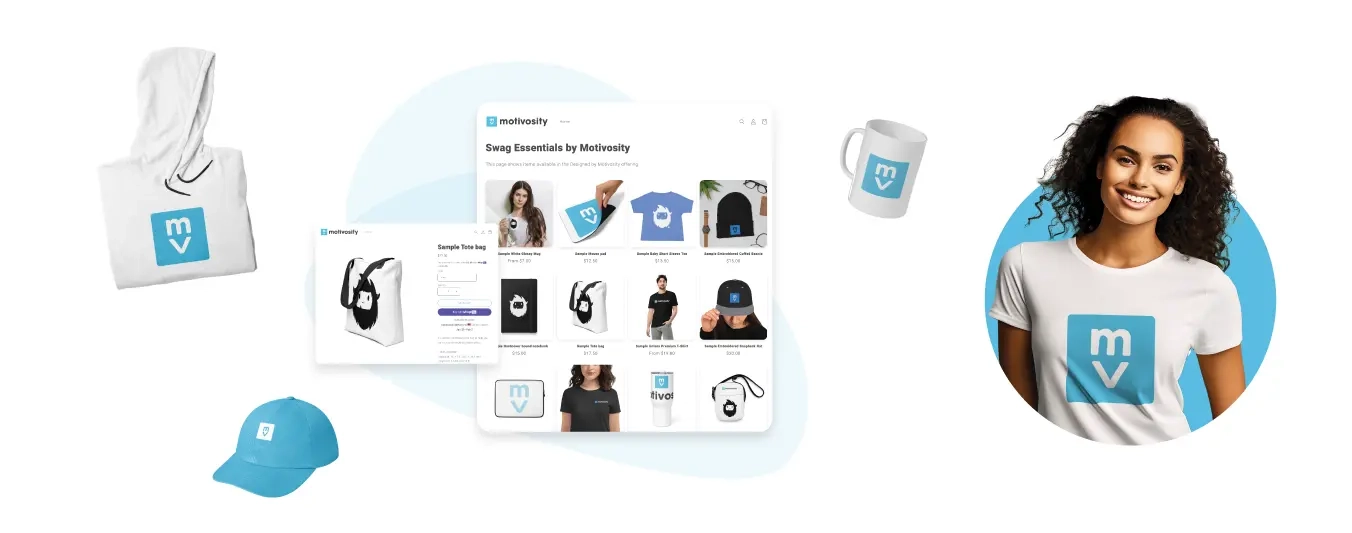
Company-branded swag is a great reward to offer employees—at many different points in their employee journey. Good options for swag often include branded sweatshirts, hats, tees, water bottles or coffee mugs, pens, power banks, etc.
Offer branded merch and swag to your employees. Link your existing swag store and display featured items with a Shopify connector or leverage a partner to create a new, turnkey store. Add custom catalogs with custom swag or hire Motivosity to create a custom swag store that fits your unique needs.
While physical items are a great reward option, gift cards allow employees to have more control over the type of reward that works best for them. Offer a library of gift cards to an employee’s favorite restaurant, retail store, hotel or airline, and more.
Shop digital gift cards and give employees the power to choose the amount they want from their spending balance. Select from hundreds of options from your favorite retailers like Nike, Apple, and more.
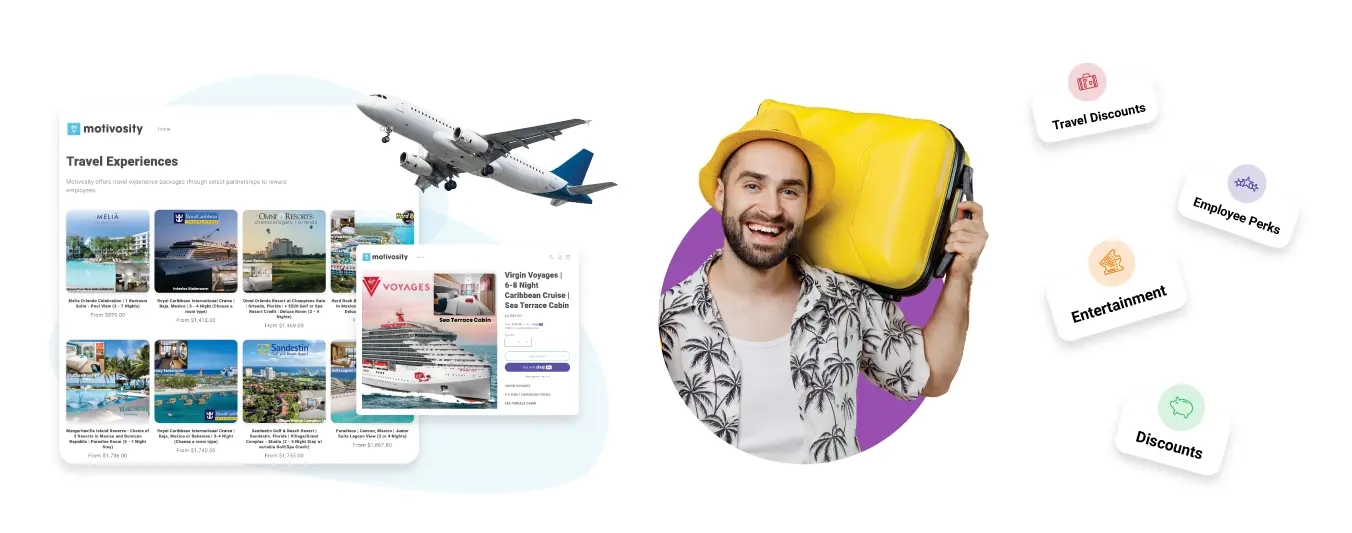
Some companies decide that travel experiences are a great way to reward employees. This might look like paying for an employee’s personal vacation, sponsoring a team getaway, gifting a wellness retreat, or even taking high achieving employees on an all-inclusive vacation to a tropical resort.
Offer unique, once-in-a-lifetime travel experiences to your team through Motivosity. Allow your employees to book travel directly in the Motivosity Store or gift them a trip from the company to celebrate a major accomplishment!
Just as gift cards offer more flexibility than a physical reward, dollars and points give employees the ultimate control. Businesses who use this reward type give out dollars or points based on specific recognition situations—maybe a smaller amount for recognizing good effort on a recent project with larger amounts reserved for big milestones.
Sometimes an intangible reward is the best option for a specific recognition opportunity. These could include an extra day of PTO, lunch with the CEO, an early-out day, Fridays off in the summer, or even a no-meeting policy implemented on a specific day of the week.
Employee rewards get their magic in a few ways—following the best practices outlined earlier, and by showing up at specific moments for an employee. Consider these options as you review when to give employee rewards:
Celebrating special moments for an employee is a critical piece of any successful employee rewards strategy. By highlighting milestones, the company is directly communicating how important the employee is to the business. Milestones could include birthdays, service anniversaries, new baby/adoption, new pet, a wedding, or even a big move.
Why celebrate employee milestones? Check out this bonus resource: Celebrate Work Anniversaries and Inspire Your Team
The experience of starting a new job is overwhelming for everyone. New hires feel more connected to the business if they’re welcomed in the right way, right from the start. View onboarding as the first milestone that an employee should be recognized for—and consider the rewards that make the most sense for a new hire (examples: company swag, commuting benefits, home-office stipend, team lunch, breakfast with the c-suite, etc).
When employees show extra effort, put in longer hours, find efficiencies, or help a team get a big project across the finish line, they should be recognized for their hard work. Any type of work achievement—reaching a sales quota, implementing a new software solution, closing a new deal, improving customer satisfaction scores, etc.—are worthy of recognition.
Special events offer a great opportunity for employee recognition and holidays set the perfect stage. Consider major holidays like Christmas, Halloween, and even Valentine’s Days as an excuse to recognize and reward your employees. But don’t forget to incorporate other less-known holidays, like Employee Appreciation Day (check out this blog post for 100 ideas on how to celebrate this holiday).
Need ideas on how to celebrate holidays at work? Check out these bonus resources: Creative Ways to Celebrate Halloween at Work and Holiday Gift Guide for Employees and Remote Teams.
Don’t forget to include rewards for initiative participation at your organization. This could look like buying the book for everyone in your company-sponsored book club, giving out water bottles to the first 100 people to complete your wellness challenge, or sponsoring a finance lunch-and-learn during the day for employees to attend.
Build a rewards program that works best for your team, supports your mission, and reinforces your company values. If your company celebrates a half birthday, incorporate that into your plan. And if recognizing employees on holidays doesn’t align with your company culture, find a new way to highlight good work and reward employees consistently instead.
Ready to offer total rewards to your employees? With Motivosity, it’s easy. And the results are pretty clear.
Motivosity customers report that employees feel at least 2x more connected to their company and they’re 2.3x more likely to stay at their company (even when offered a raise to leave).
Use Motivosity to upgrade your:
Start building your employee recognition solution today.