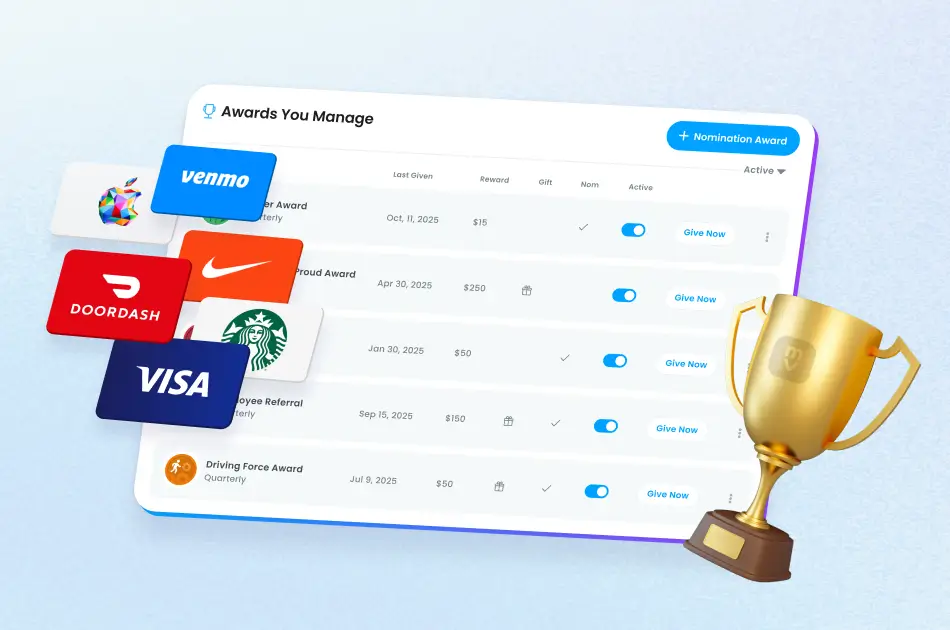
Most employee rewards programs fail because they treat rewards as the strategy.
The programs that actually drive engagement start with recognition and connection — and use rewards to reinforce it. Five models consistently drive results:
Audit what you have. Fix the biggest gap. Make recognition frequent, visible, and aligned with what your culture actually stands for.
Today’s strongest reward systems look very different than they did even a few years ago.
Companies stopped treating rewards as “employee incentive programs” and started treating them as a strategic culture pillar. They're asking better questions now — not “What can we afford to give?” but “What will make people feel genuinely valued?”
Your rewards system needs to be all of these things:
When you get those four things right, recognition stops feeling like a perk and starts building real connection across the organization.
The five examples we’ll focus on here show how reward systems can drive real connection. Each one builds genuine engagement. Each one strengthens relationships. And each one proves that when reward systems are designed around people instead of budgets, you see stronger retention, higher participation, and better engagement scores.
Annual bonuses have their place. But on their own, they rarely build sustained engagement. Because they’re infrequent and expected, their impact fades quickly.
Relational rewards work differently. A peer thanking you publicly for helping close a tough deal, a manager recognizing how you mentored a new hire, a company-wide shoutout for living your values during a hard week — those moments stick. They happen because someone noticed, cared, and said something.
Transactional rewards have their place. But if you're only relying on them, you're missing the crucial connection that drives performance, particularly in hybrid and remote work. When people aren't sharing physical space, connection becomes the missing link in performance.
Successful reward systems solve that. They make appreciation visible, frequent, personal, and values-aligned.
Most employee rewards and recognition programs fall into four categories:
The best employee reward systems combine all four, and also focus on the 3 Rs of retention:
Get those three right, and you build a remarkable culture people want to stay in.
Not all employee reward systems work the same way. Traditional programs often center on occasional awards or tenure-based gifts, while modern recognition programs make appreciation more visible, frequent, and meaningful.
The system: Every employee gets a monthly budget to reward colleagues. In this system, employees can recognize teammates for meaningful contributions and tie appreciation to shared values and even monetary rewards. The recognition shows up on a company-wide social feed where others can add comments and additional dollars.
Why it works: Peer recognition removes the manager bottleneck. Your manager might see 10% of what you actually do. Your teammates see the other 90%.
Manager-only recognition unintentionally limits visibility. Peer recognition feels more authentic because there's no performance review attached to it. Someone's thanking you because they genuinely appreciate what you did.
Platforms with peer-to-peer giving, like Motivosity, make peer recognition scalable by giving employees a small monthly budget to thank teammates publicly. Recognition becomes visible across the company instead of staying inside private messages.
The social feed keeps recognition visible instead of buried in private threads. And integrations with tools like Microsoft Teams mean people can give appreciations without switching platforms.
The system: Instead of only celebrating time served, reward specific behaviors that bring your values to life. Someone demonstrates “radical transparency” by surfacing a problem everyone else ignored? They get recognized.
Birthdays and anniversaries still get automated recognition. But the real focus is on catching people in the act of being the kind of employee you want more of.
Why it works: “Five years of service” tells you someone stayed. “Going the extra mile by mentoring three new hires during their busiest quarter” tells you how they showed up.
When you tie rewards to specific behaviors, you make abstract values concrete. Instead of a poster in the break room that says, “Act with Integrity,” you have 15 real examples from this month of what integrity actually means in practice.
Motivosity's Automated Milestones handle the basics (birthdays, anniversaries, onboarding), so nothing falls through the cracks, but the platform also lets you create custom awards tied directly to your values.
You can set up nomination programs, filter milestones by team or department, and let employees choose whether they want a public or private celebration. The automation removes administrative burden while keeping recognition personal and meaningful.
The system: Employees get pre-funded accounts they can spend on whatever matters most to them — like wellness classes, childcare, mental health support, gym memberships, work-from-home equipment, or learning budgets.
Companies define eligible categories and spending limits. Employees decide how to use their allocation within those boundaries.
Why it works: One employee uses their stipend for therapy sessions. Another pays for their kid's after-school program. Someone else buys standing desk equipment. Same budget, completely different needs, all equally valid and important.
Generic perks often miss the mark because employees value different things. A free gym membership might be great for some team members, while others would rather spend that money on yoga classes, hiking gear, or mental health apps.
Personalization drives utilization. When employees control how they spend their benefits, they actually use them instead of letting them expire unused.
Motivosity's Lifestyle Spending Accounts (LSAs) integrate directly with our ThanksMatters Visa Card. Employees can spend their benefits in the Motivosity store, through custom catalogs, or anywhere Visa is accepted.
Your HR team automates top-ups, sets controls, and tracks usage from one dashboard — without manual reimbursement tracking.
The system: Recognition happens the moment the work does. Manager sees great work, sends a spot bonus, and the money hits the employee's account instantly. No waiting for end-of-quarter reviews or approval chains. The feedback loop closes in minutes, not months.
Why it works: Delayed recognition loses its impact. When you thank someone three weeks after they stayed late to fix a critical bug, they've already mentally moved on. The moment that mattered has passed. Real-time recognition reinforces the behavior while it's still fresh.
Behavioral research shows that immediate feedback strengthens the connection between action and reward. When someone is recognized instantly for a behavior, they're more likely to repeat it because the cause-and-effect relationship is clear and immediate.
The ThanksMatters Visa Card makes instant rewards possible. Employees can use their rewards immediately, when it matters most. Recognition is meaningful because employees can use it right away, in their real lives — not weeks later and not through a limited catalog.
The system: Not every reward needs a price tag. Some of the most meaningful rewards are experiences and access:
These opportunities are awarded to recognize meaningful contributions and leadership. Employees can be rewarded through nominations, peer votes, or even manager discretion.
Why it works: Monetary rewards alone rarely create a lasting emotional connection. Access and experiences build emotional connection in ways money can't replicate. When a senior leader takes time to have lunch with you, the signal is clear: You matter here.
Public recognition amplifies the impact. When your team sees leadership celebrating your work in a company-wide meeting, it validates your contribution and shows everyone else what excellence looks like. Visibility creates aspiration. People want to be the next person who gets recognized.
Motivosity's Social Feed makes non-monetary recognition visible and lasting. Recognition posts, announcements, and shoutouts all live in one central feed where employees can react with comments and emojis. Recognition becomes part of your shared culture — visible, searchable, and lasting.

Your reward system needs regular evaluation to stay effective. Ask yourself:
If you answered "no" to any of these, you've found your starting point.
Going back to basics: the most effective rewards are the ones that feel personal. Points-based systems, gift cards, time off, and unique experiences all work when employees get to choose what's meaningful to them.
Successful reward systems blend five types of recognition:
Make your employee reward system visible, frequent, and tied to your values. That's what separates programs that work from ones employees rarely use.
Data turns good intentions into defensible budget items. Here's how to use platform analytics to track return on investment (ROI):
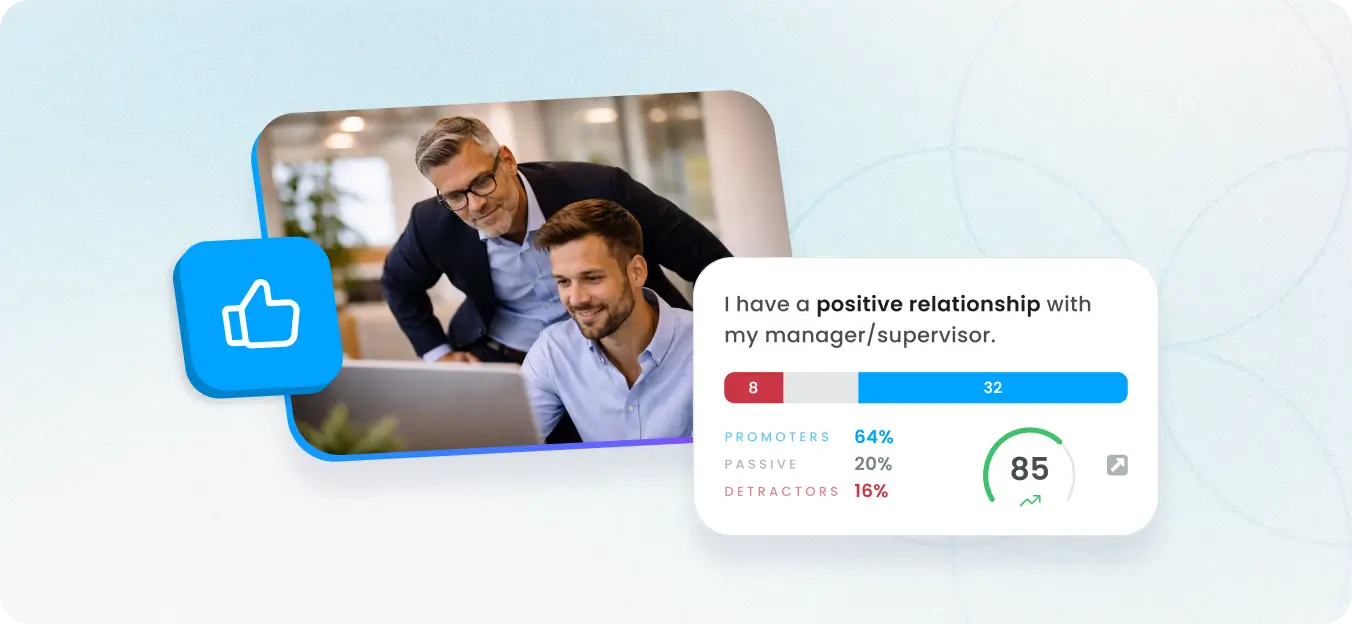
Motivosity's reporting and dashboards give you real-time visibility into all of this. You can drill down by team, department, or location to see who's participating and where engagement is slipping.
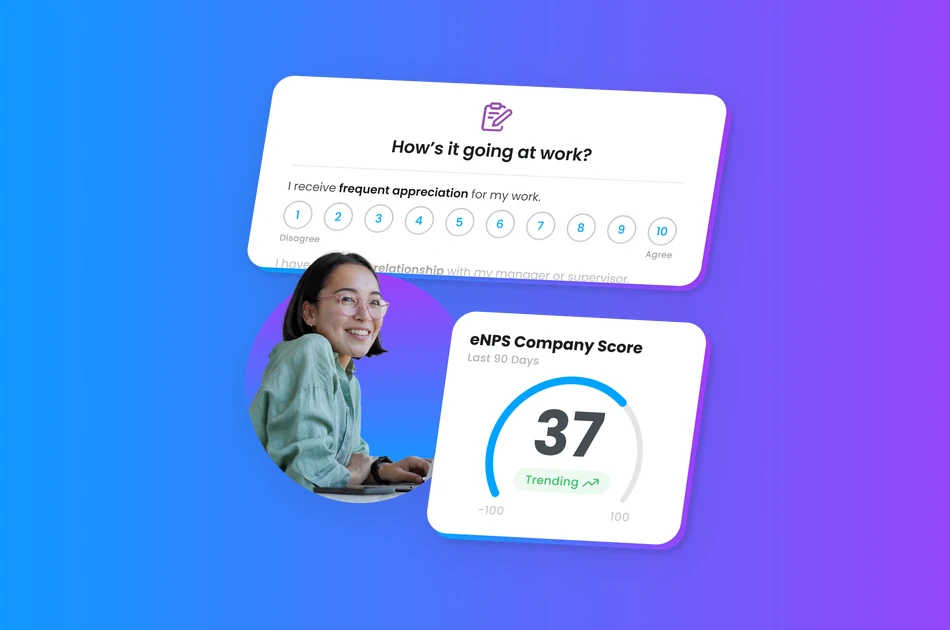
Budget tracking shows redemptions, balances, and liabilities, which gives finance clarity and confidence in spend. And eNPS trend analysis helps you act before small issues become big ones.
The employee reward systems that last are the ones that build relationships, not just hand out perks.
Connection beats transactions. Frequency beats annual events. Values-based recognition beats generic praise.
When you design rewards around how people actually want to feel at work — seen, valued, connected — you create a contagious, connected culture.
Start by auditing your current system using the checklist above. Pick one of the five models above that fits your biggest gap. You might need peer-to-peer recognition to break the manager bottleneck. Or real-time rewards to close the feedback loop.
In some cases, the biggest shift is simply making recognition visible, so employees feel connected to their work and their teams.
Culture doesn't scale by accident. It scales through intentional design.