
Employee recognition isn't a nice-to-have anymore. It's one of the clearest levers you have on retention, performance, and trust. Our State of Workplace Culture & Connection Report 2026 found that 83% of employees stay for the culture and the people, not the paycheck. And yet 37% say they rarely or never hear from their manager that they're doing a good job. That gap, between what keeps people around and what companies actually deliver, is the whole story of this article. Below, we break down what the numbers say about recognition frequency, who's giving it, what it does to performance and retention, and what leaders should do next with a real employee recognition platform.
Recognition used to get filed under "nice culture stuff," something HR ran once a quarter and called it done. The 2026 numbers make it hard to keep believing that. When 83% of employees say culture and people are the reason they stay, recognition stops being a soft perk and becomes a retention strategy with a number attached to it.
Here's the tension though: 49% of organizations say recognition is a priority, but only 44% actually have a platform built to deliver it consistently. That's not a huge gap on paper. In practice, it's the difference between a program that runs every week and one that lives in a Slack channel nobody checks after the first month.
Start with the plainest number in the whole report: 37% of employees rarely or never receive recognition from their manager. Nearly the same share, 35%, say the same about their peers. That's more than a third of your workforce going weeks, sometimes longer, without hearing that their work landed.
This isn't a "some companies have a recognition problem" statistic. At more than a third of the workforce, it's the default experience for a lot of people, at a lot of companies, most weeks.
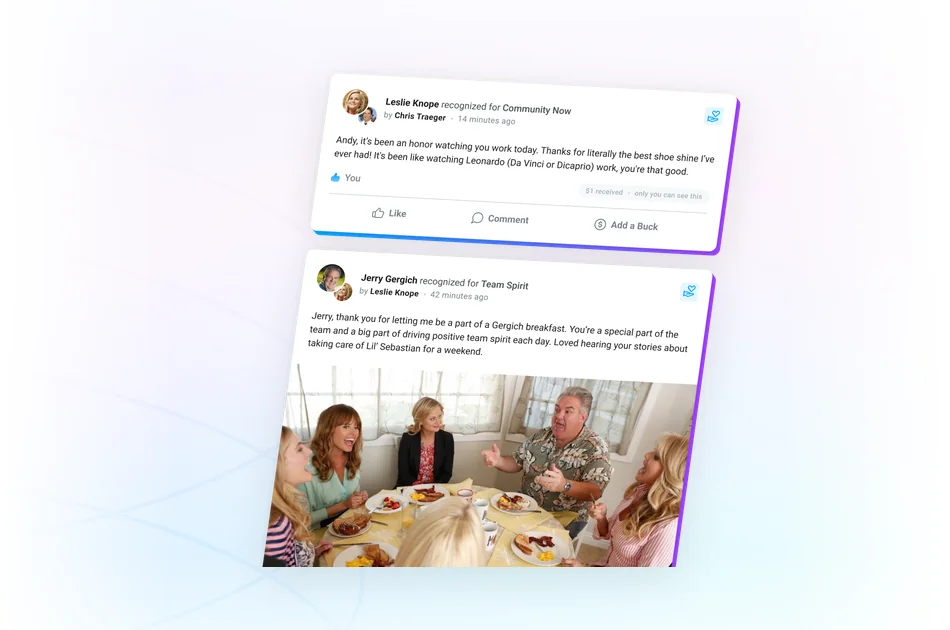
Here's where it gets interesting: 38% of employees receive peer recognition weekly or daily, compared to 35% who get that same frequency from a manager. Peer-to-peer recognition is quietly doing more of the heavy lifting than top-down programs are.
That's not a knock on managers. It's math. One manager might have eight, twelve, twenty direct reports and thirty other things on their plate. Peers see each other's work in real time, all day, every day. The lesson isn't "managers don't matter." It's that recognition works best when it isn't gated behind one person's calendar.
A once-a-year "employee of the month" plaque doesn't move these numbers. Culture isn't something people experience annually, they experience it daily, in the small moments between the big reviews. When recognition is rare, even well-meaning recognition, it reads as disconnected from the actual day-to-day. Frequency is the whole game here.
Peers are out-recognizing managers, and it's worth asking why. Three things tend to explain it: capacity (managers are stretched thin and recognition is the first thing that slips), training (most managers were never actually taught how or when to recognize someone well), and systems (without a platform prompting it, recognition depends entirely on a manager remembering to do it).
None of those are personality problems. They're structural, which is good news, because structural problems have structural fixes.
This is the number that should get budget approved: 90% of employees say feeling appreciated improves their performance. Not "would be nice." Actually changes how they work.
Recognized employees put in more discretionary effort. They show up to the harder project without being asked twice. And it compounds: a team where recognition is visible and frequent builds its own momentum, because people can see what good work looks like and see it get noticed. That's a morale lift and a productivity lift, from the same lever.
Circle back to the number that opened this article: 83% of employees stay for culture and people. Recognition is one of the most direct ways you build that culture, day to day. When it's missing, you're not just risking a bad quarter of morale, you're risking the people who'd otherwise stay.
Perks matter here too: 37% of employees say perks directly drive their decision to stay. That's where employee rewards come in, not as a replacement for recognition, but as the tangible half of it. Recognition tells someone they're seen. A reward backs that up.
Trust in leadership is thinner than most executives probably assume: roughly 47–48% of employees report moderate to low trust, and only 16% report very high trust in leadership. That's a real credibility gap, and it's one recognition can actually help close.
When leaders recognize people consistently and visibly, it does double duty. It tells the individual they matter, and it tells everyone watching that leadership is paying attention to real work, not just results on a dashboard. Frequent, visible recognition is one of the more direct ways to move that trust number, because it's proof leadership is engaged, not just present.
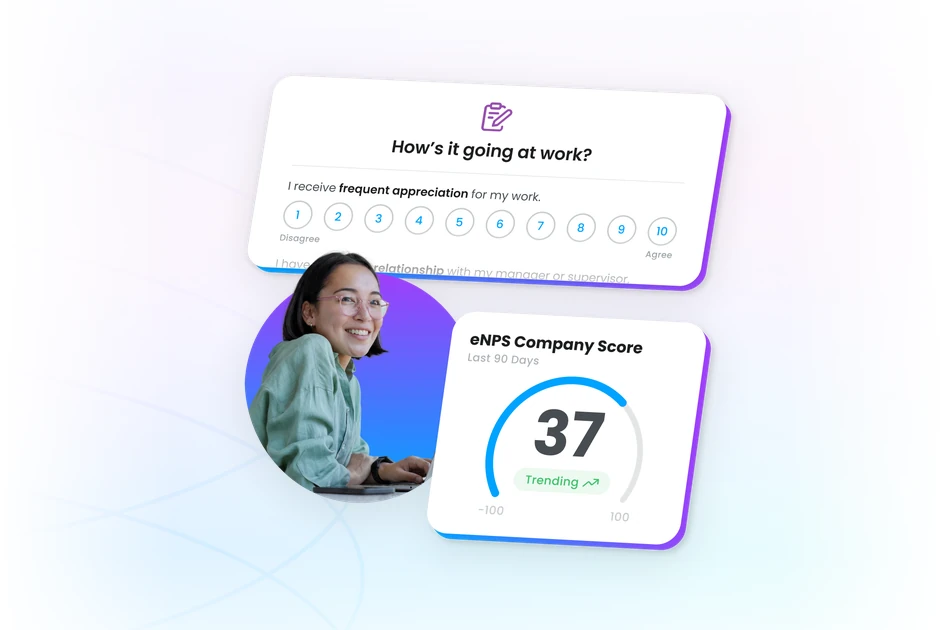
Pull all of this together and the direction is pretty clear. Recognition has to become a daily habit, not a quarterly event; the frequency numbers make that non-negotiable. Managers need systems that prompt recognition, because relying on memory and good intentions is exactly why the manager-recognition gap exists in the first place. Recognition should be visible and social, not private and one-off, since visibility is part of what builds culture and rebuilds leadership trust. And you should actually be measuring it: frequency, participation, and the gaps between departments or manager teams, so this doesn't stay a vibe and starts being a metric you can move.
| Strategy | How to Apply It |
|---|---|
| Make recognition frequent and structured | Set weekly or daily expectations, not annual ones |
| Enable peer-to-peer recognition | Normalize it across every team, not just the outgoing ones |
| Train managers on recognition behaviors | Give them the "how," not just the "you should" |
| Use technology to embed recognition into workflows | Recognition platforms that live where work happens; integrations with tools like Slack and Teams so it's not one more login |
How Employee Recognition Can Help with Burnout
The Benefits of Employee Recognition: Boost Morale, Productivity, and Retention